


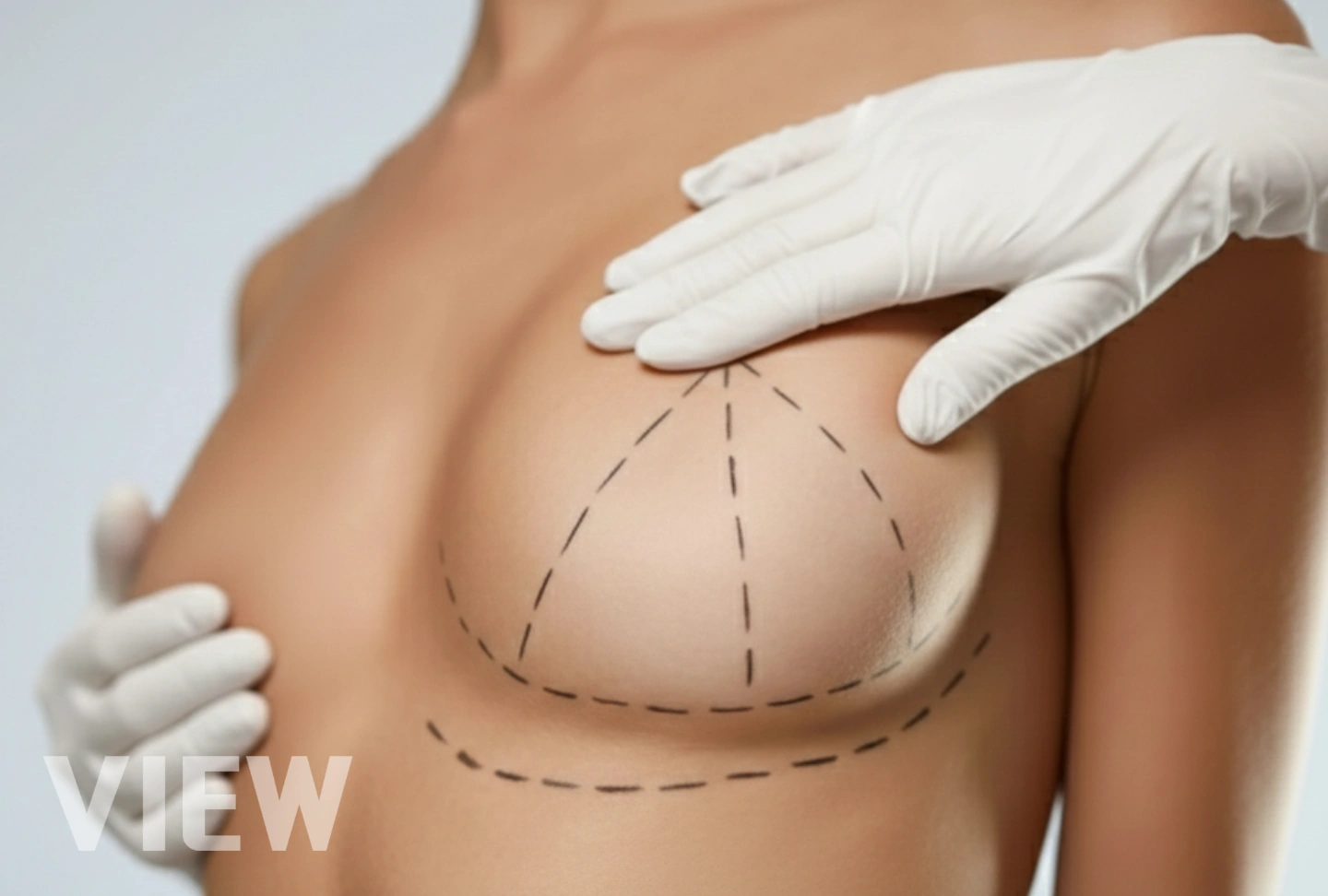
For many women, the journey through pregnancy, breastfeeding, significant weight fluctuation, or simply the natural aging process brings about profound changes to the body. One of the most common complaints we hear at View Plastic Surgery concerns the loss of breast volume and firmness. However, there is a distinct difference between a breast that is simply small and a breast that has descended.
A common misconception is that a simple breast augmentation (using implants) will solve all aesthetic concerns. While implants add volume, they cannot correct significant ptosis (sagging). In fact, placing a heavy implant into a sagging breast without correcting the skin envelope can lead to aesthetic deformities, such as the “double bubble” or “waterfall effect.” This is where Breast Lift Surgery (Mastopexy), often combined with augmentation, becomes the gold standard for restoring a youthful, perky silhouette.
What is Breast Lift Surgery (Saggy Breast)?
Defining the Procedure
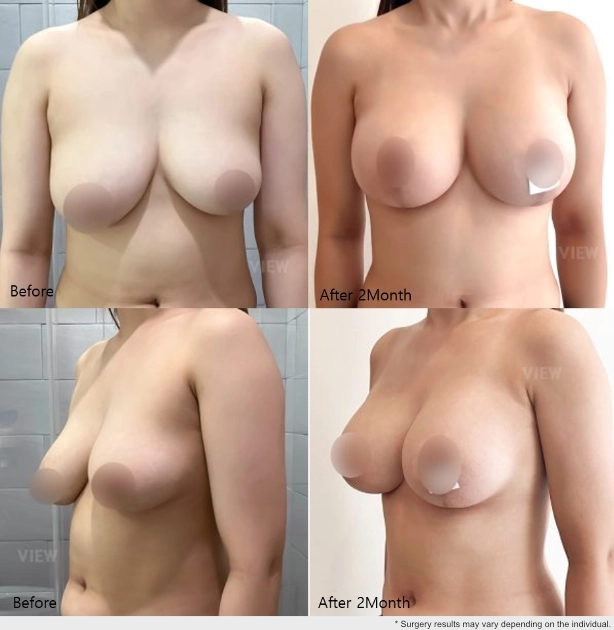
A Breast Lift, or Mastopexy, is a surgical procedure designed to raise and reshape sagging breasts. Unlike a simple augmentation which only addresses size, a lift addresses position and shape. The procedure involves removing excess skin, tightening the surrounding tissue to reshape the breast contour, and relocating the nipple-areola complex to a higher, more youthful position.
Why It Is Considered a High-Difficulty Surgery
While breast augmentation is technically straightforward for experienced surgeons, a breast lift—especially when combined with implants—is considered a high-difficulty procedure requiring advanced expertise. This is because the surgeon must navigate three critical factors simultaneously:
- Shape & Symmetry: The surgeon must act as a sculptor, removing the exact amount of skin to lift the breast without creating tension that could distort the shape or widen scars.
- Vascular Preservation: Moving the nipple requires meticulous dissection to ensure the blood supply and nerve sensation remain intact.
- Volume Management: If an implant is added, the surgeon must calculate how the added weight will interact with the tightened skin envelope to prevent bottoming out.
At View Plastic Surgery, our specialists in Korean Breast Surgery utilize precise preoperative mapping to ensure these complex factors are managed safely.
Candidates for Breast Lift Surgery & Self-Diagnosis
Not everyone needs a lift, but ignoring the need for one often leads to dissatisfaction. You may be a candidate for a breast lift (with or without implants) if you fall into the following categories:
- Post-Pregnancy Changes: Your breasts have lost volume and drooped significantly after childbirth and breastfeeding.
- Nipple Position: Your nipples point downward or sit below the inframammary fold (the crease under the breast).
- Skin Elasticity: You have stretched skin with striations (stretch marks) that cannot support an implant alone.
- Asymmetry: One breast hangs significantly lower than the other.
- Pseudoptosis: You had naturally small breasts, but they have deflated and sagged due to aging.
How to Perform a Breast Sagging Self-Diagnosis
You can assess the degree of sagging accurately by measuring the distance between the nipple and the breast crease (inframammary fold). Based on the severity of sagging, we offer personalized 1:1 solutions, including breast augmentation, correction, or reduction procedures.
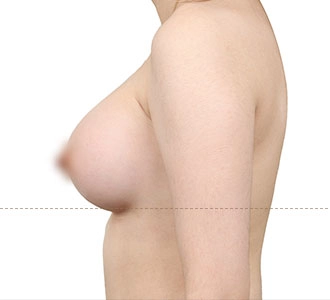
Normal Breast
The nipple is positioned 4-5cm
above the breast crease
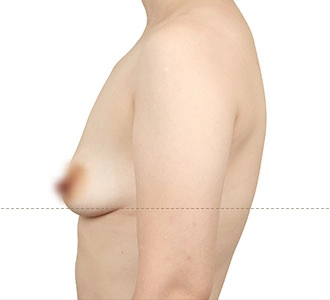
Grade 1
The nipple is within
1cm of the breast crease
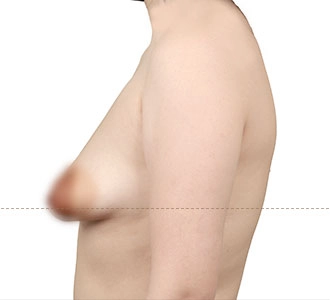
Grade 2
The nipple has sagged 1-3cm
below the breast crease
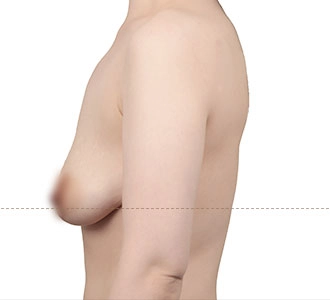
Grade 3
The nipple has sagged more than 3cm
below the breast crease
Comparing Surgical Methods
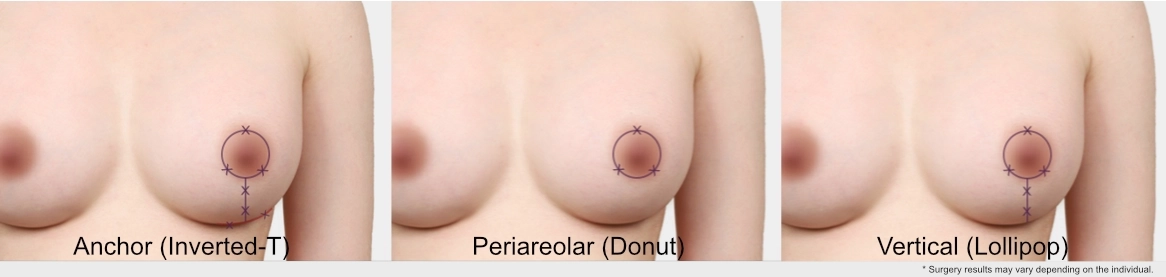
Understanding the difference between simple augmentation and a combined lift is crucial for setting realistic expectations.
| Feature | Simple Breast Augmentation | Mastopexy + Augmentation |
|---|---|---|
| Primary Goal | Increase Volume | Increase Volume + Correct Sagging + Reposition Nipple |
| Nipple Position | Remains roughly the same (or moves slightly forward) | Moved higher to a youthful position |
| Incision Types | Inframammary fold, Periareolar, or Axillary | Periareolar (Donut), Vertical (Lollipop), or Anchor (Inverted-T) |
| Surgery Time | Approx. 1 hour | Approx. 3 to 4 hours |
Incision Techniques
The choice of incision depends largely on the degree of ptosis:
- Periareolar (Donut): For mild sagging (Grade 1). The incision is made only around the areola.
- Vertical (Lollipop): For moderate sagging (Grade 2). The incision goes around the areola and vertically down to the crease.
- Anchor (Inverted-T): For severe sagging (Grade 3). This allows for maximum skin removal and reshaping. While it involves more incisions, the dramatic improvement in shape often outweighs the presence of scars, which fade over time.
The VIEW Advantage: Safety and Aesthetics
Choosing where to undergo surgery is as important as the surgery itself. View Plastic Surgery integrates comprehensive safety protocols with aesthetic precision.
Pre-and-Post-Op Ultrasound Screening
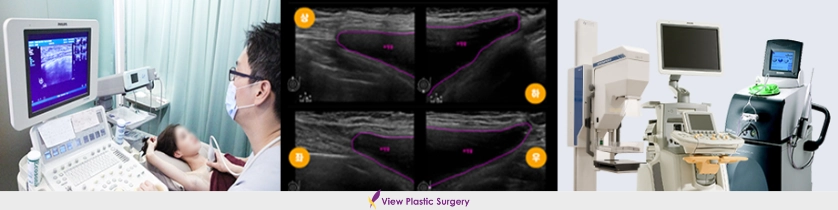
We do not simply insert implants. We perform thorough breast ultrasound examinations before surgery to check for any existing masses or abnormalities. Post-surgery, regular ultrasounds ensure the implant is seated correctly and that there are no complications like seromas.
Premium Scar Management
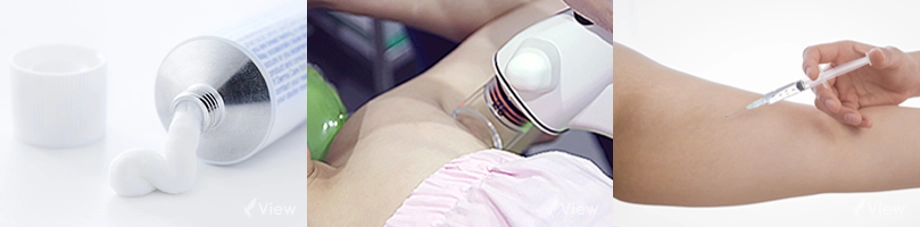
Since breast lifts involve more incisions than simple augmentation, scar management is a top priority. Our “Scar Care Program” includes:
- Dermatology Collaboration: Immediate post-op laser treatments to minimize redness.
- Injection Therapies: To prevent hypertrophic scarring.
- Ointment Protocols: Customized regimens to ensure scars fade to thin, barely visible lines.
Comprehensive Aftercare
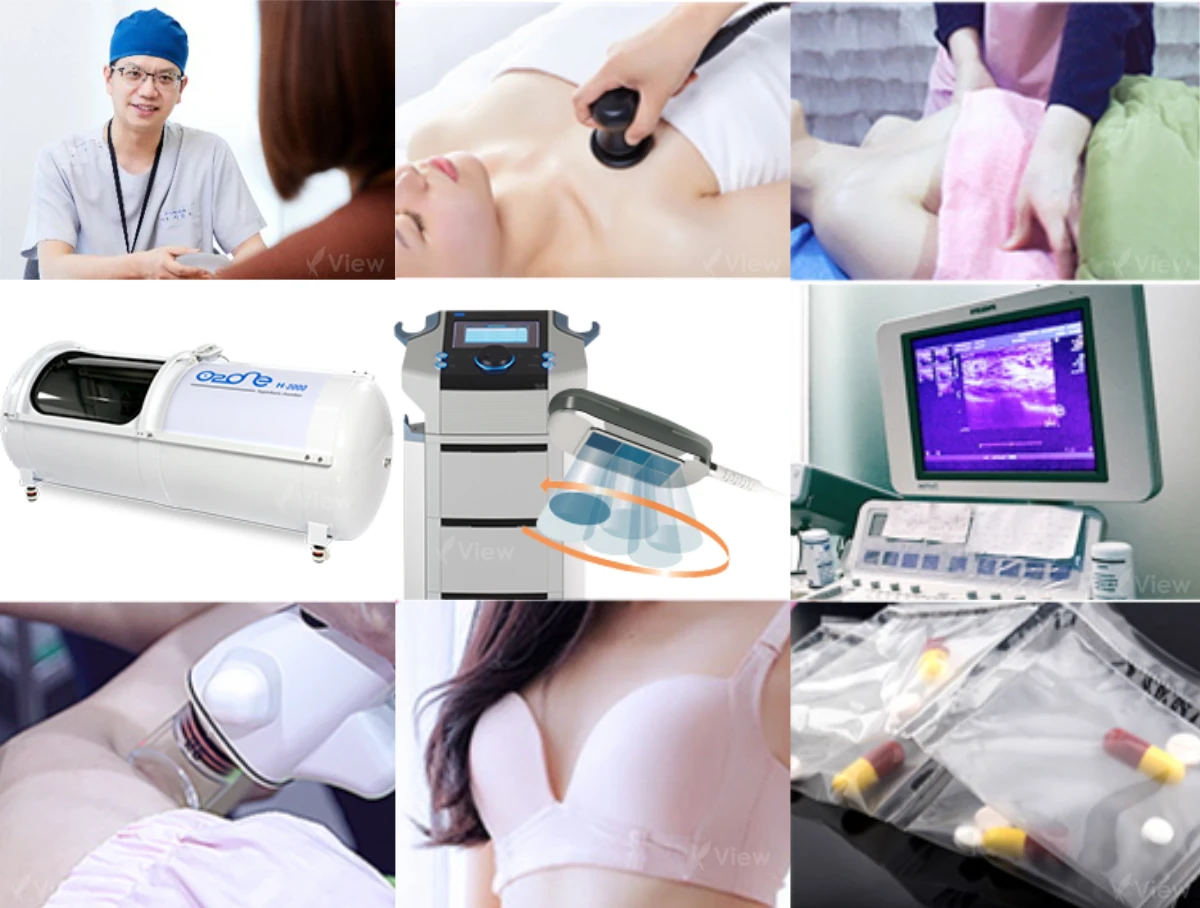
From deswelling treatments to 24-hour nursing care for inpatient stays, our system is designed to accelerate recovery so international patients can return home safely.
Recovery from a lift plus augmentation is slightly longer than augmentation alone due to the skin tightening aspect.
- Hospital Stay: Usually 1 night (recommended for monitoring).
- Stay in Korea: We recommend a stay of 10 to 14 days to allow for stitch removal and follow-up checks.
- Return to Work: Desk jobs can be resumed after 5-7 days.
- Full Activity: Heavy lifting and gym activities should be avoided for 1 month.
If you are considering this life-changing procedure, please reach out to us directly via WhatsApp for a fast assessment.
FAQ
Most patients feel “normal” enough to do light desk work within 5 to 7 days. However, full tissue healing takes about 6 weeks. You will need to wear a surgical compression bra for about 1 to 2 months to support the new shape. Swelling gradually subsides over 3 to 6 months.
Light walking is encouraged immediately to promote circulation. However, you must avoid heavy lifting (over 5kg), strenuous gym workouts, and swimming (due to infection risk in incisions) for at least 4 weeks. High-impact cardio should be delayed until 6 weeks post-op.
Swelling is managed through our aftercare deswelling injections and laser therapy, along with wearing your compression garment. Temporary loss of nipple sensation or hypersensitivity is common in the first few weeks but typically returns to normal as nerves regenerate over 3 to 6 months.
This depends on the extent of the surgery and the amount of bleeding during the procedure. At View Plastic Surgery, we use “Dry Dissection” techniques to minimize bleeding. While some patients may require drains for 1-2 days to prevent seroma, many undergo the procedure without them. This is determined on a case-by-case basis.
Yes, you can. However, future pregnancy and breastfeeding can alter the results, potentially causing the breasts to stretch or sag again. Ideally, we recommend this surgery after you have finished your family planning to ensure the longest-lasting results.