


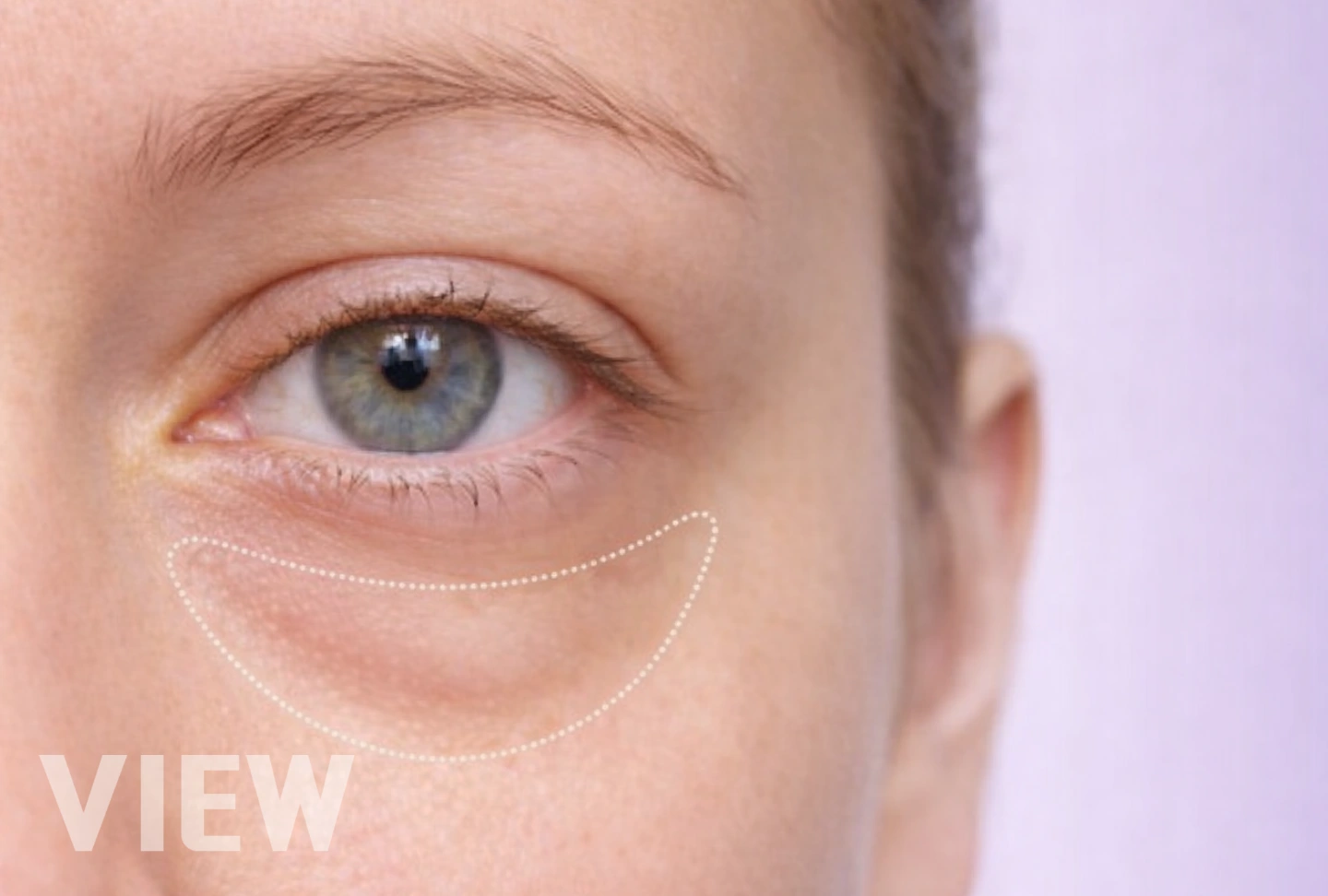
The Power of a Refreshed Gaze: Why It’s the #1 Anti-Aging Secret
Under Eye Surgery in Korea is often considered because the eyes are the first area of the face to betray our age. While many focus on wrinkles or skin texture, the structural changes in the periorbital (eye) region have the most profound impact on your overall appearance. The “First Impression” area is critical; a smooth, bright under-eye area signals vitality and youth, whereas bags and shadows signal exhaustion.
Many patients attempt to mitigate these issues with high-end skincare. However, eye creams and serums operate only on the epidermal surface. They cannot address the structural herniation of orbital fat or the deepening of the tear trough ligaments. Under Eye Surgery is not merely a cosmetic preference; it is the only method to fundamentally correct the anatomical structures causing the “tired look.”
At View Plastic Surgery, we understand that achieving a youthful look requires more than just skin tightening—it requires structural restoration.
Red Flags: Signs You Need Under Eye Surgery
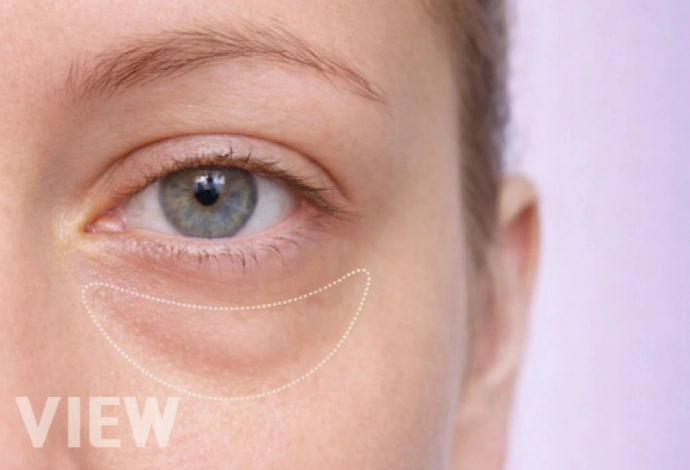
How do you distinguish between temporary fatigue and a condition requiring surgical intervention? If you find yourself constantly relying on concealers or filters to hide shadows, you may be a candidate. Here are the clinical red flags:
Persistent Puffiness (Pseudo-herniation)
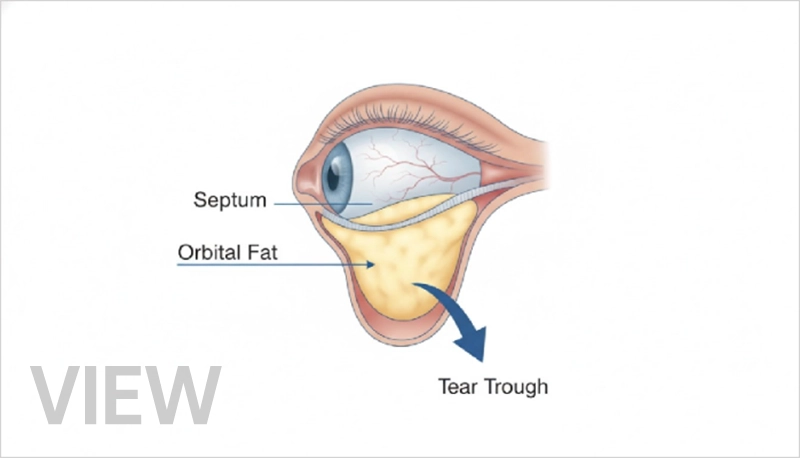
This is characterized by orbital fat pads that protrude forward. Unlike fluid retention which fluctuates with salt intake or sleep, this structural puffiness is permanent. It occurs because the orbital septum—the membrane holding the fat back—weakens over time.
Deep Tear Troughs
The tear trough is the groove that sits between the lower eyelid and the cheek. As we age, tissue volume loss and the descent of the malar (cheek) fat pad can make this groove pronounced, creating a dark shadow that no amount of sleep can erase.
The "Tired" Look
This is the most common subjective complaint. Even after a full week of rest, friends or colleagues might ask, “Are you tired?” or “Did you not sleep well?” This is a classic indication of structural dark circles caused by shadows rather than pigmentation.
Why Korea Leads the World in Under Eye Aesthetics
Korea is often termed the “Plastic Surgery Capital of the World,” but regarding Eye Bag Surgery, the distinction lies in the detail.
The "Natural-Born" Finish
Korean aesthetic standards prioritize a result that looks indistinguishable from natural beauty. The goal is not to look “operated on,” but to look “well-rested.” Surgeons at View Plastic Surgery are trained to avoid over-correction, which can lead to an unnatural, stiff expression.
Advanced Medical Tech: Dual-Septum Reinforcement
One of the reasons for Korea’s high success rate is the technique of reinforcing the orbital septum. After repositioning the fat, the weakened wall (septum) is tightened. This acts as a dam, preventing remaining fat from bulging forward again in the future.
Global Trust and Safety
With thousands of international cases, clinics like View Plastic Surgery have protocols specifically designed for overseas patients, ensuring rapid recovery so you can enjoy your trip. For immediate inquiries, you can connect via WhatsApp.
The Solution: Precision Under Eye Fat Repositioning
The gold standard for addressing these issues in Korea is Under Eye Fat Repositioning. It is crucial to understand that this is distinct from old-fashioned “fat removal.” Simply removing the fat can lead to a hollowed-out, gaunt appearance later in life. Instead, we preserve the volume but move it to where it is needed.
| Feature | Traditional Fat Removal | Fat Repositioning (View Method) |
|---|---|---|
| Technique | Excising protruding fat only. | Relocating fat to fill hollow tear troughs. |
| Volume | Loss of volume (risk of hollowness). | Preservation of volume for youthfulness. |
| Tear Trough | Remains visible or deepens. | Smoothed out and filled. |
| Recurrence | Possible if remaining fat shifts. | Low (secured by orbital septum reinforcement). |
The Procedure Breakdown
Through a Transconjunctival Approach, an incision is made inside the lower eyelid. This means there are absolutely no visible scars on the face. Through this micro-incision, the surgeon releases the ligaments creating the tear trough and spreads the bulging fat into that hollow space. The fat is then sutured in place to prevent it from sliding back, creating a smooth, flat canvas under the eye.
If you are unsure if this specific technique applies to you, we recommend you book a consultation for a personalized assessment.
Safety First: Risks, Precautions, and Contraindications

While Under Eye Surgery is considered safe, it is a medical procedure requiring strict adherence to safety protocols.
Risk Management
Common temporary side effects include bruising and swelling (chemosis). Rare complications can include ectropion (outward turning of the eyelid), usually caused by excessive skin removal in traditional Lower Blepharoplasty. However, with the transconjunctival fat repositioning method (which does not remove skin), this risk is virtually eliminated.
Who Should Avoid It?
- Severe Dry Eye Syndrome: Surgery can temporarily exacerbate dry eyes.
- Coagulation Disorders: Patients must have normal blood clotting capabilities.
- Extreme Skin Laxity: If the skin is extremely loose (common in patients over 60), fat repositioning alone may not be enough. In these cases, a Lower Blepharoplasty involving skin excision is more appropriate.
Maximum Impact: Complementary Synergistic Procedures
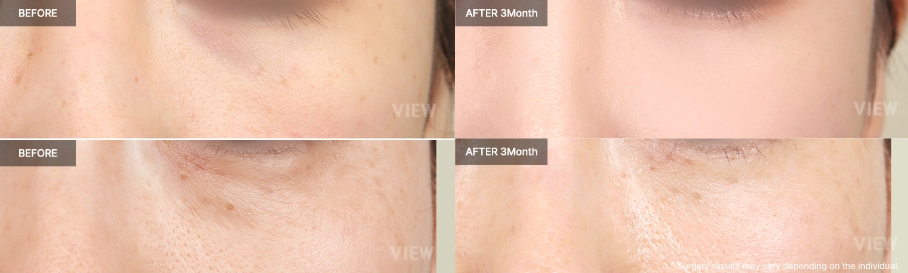
To truly turn back the clock 10 years, treating the eye bags alone might not be enough if the surrounding areas are aging. Synergistic procedures can enhance the result.
Fat Grafting: The Mid-Face Volume
Often, eye bags are accompanied by flattened cheeks. Performing micro-fat grafting to the anterior cheek (apple zone) supports the under-eye area and creates a smooth, youthful O-curve to the face profile.
Upper & Lower Blepharoplasty
If you have drooping upper eyelids obstructing your vision, combining the under-eye surgery with Upper Blepharoplasty ensures a balanced rejuvenation of the entire periorbital region.
Brightening Lasers
Surgery corrects the shape, but not the color of the skin. If your dark circles are caused by pigmentation (brownish tone), a post-operative laser treatment can polish the final look for a truly bright-eyed result.