


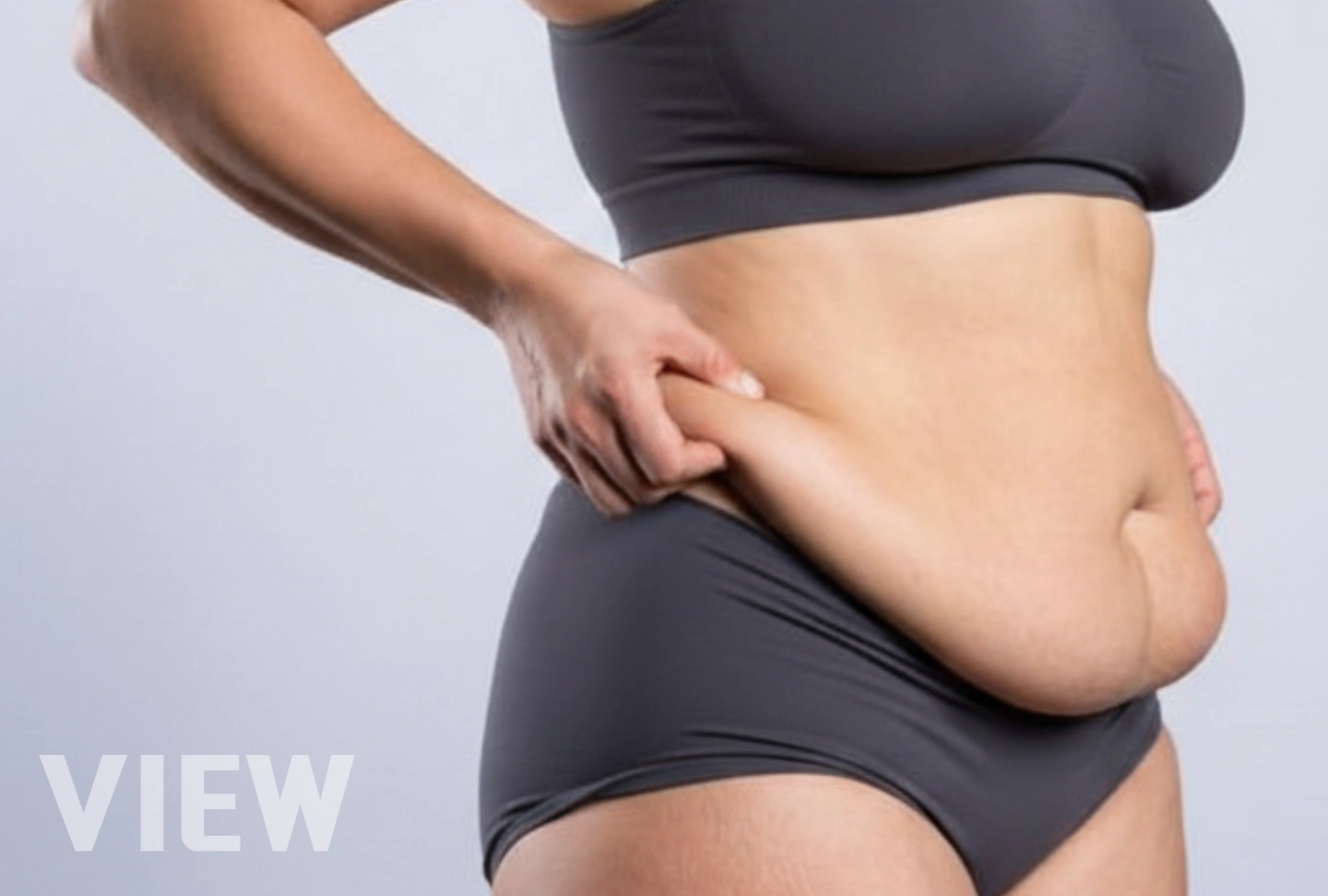
For many women, the journey of motherhood is the most rewarding experience of their lives. However, the physical toll pregnancy takes on the body is undeniably significant. Despite rigorous diet and exercise regimens, many mothers find that their abdominal area simply refuses to return to its pre-pregnancy state. This persistent change is often not a failure of lifestyle, but a structural alteration of the anatomy that requires medical intervention.
In recent years, South Korea has emerged as a premier destination for post-partum body contouring. Renowned for its meticulous surgical techniques and aesthetic philosophy that prioritizes natural harmony, Korea attracts mothers from around the globe seeking Tummy Tuck Surgery (Abdominoplasty). At View Plastic Surgery, we understand that this procedure is not just about vanity; it is about restoring function, confidence, and a sense of self.
Why the Belly Doesn't "Bounce Back" After Childbirth
The frustration regarding post-pregnancy bodies often stems from a misunderstanding of anatomy. During pregnancy, the uterus expands significantly, placing immense pressure on the abdominal wall. This leads to three distinct changes that exercise alone cannot fully correct.
Structural Changes: Skin, Muscle, and Fat
First, the skin is stretched beyond its elastic limit. Like a rubber band that has been overstretched, the collagen and elastin fibers may break, resulting in loose, crepey skin and stretch marks (striae distensae). Once the skin has lost its elasticity to this degree, no amount of abdominal crunches will tighten it.
Second, and perhaps most critically, is the separation of the abdominal muscles. The rectus abdominis muscles (the “six-pack” muscles) separate at the midline to accommodate the growing baby. This condition, known as Diastasis Recti, weakens the core and creates a permanent bulge or “pooch,” regardless of the patient’s body fat percentage.
Third, hormonal changes during pregnancy encourage the body to store visceral and subcutaneous fat in the abdominal region as a reserve for breastfeeding. This fat is often metabolically resistant to diet and exercise.
When is Tummy Tuck Surgery Necessary?
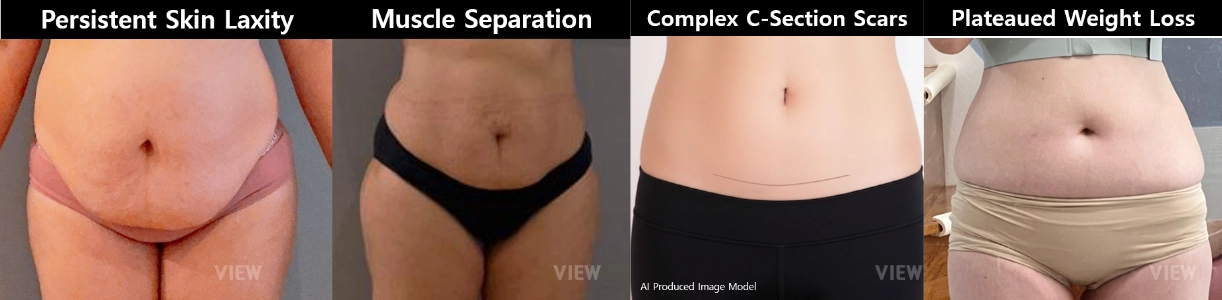
While some women recover their figure naturally, others require surgical intervention. A Tummy Tuck is generally indicated for mothers experiencing specific structural issues that non-invasive treatments cannot address.
Key Indications
- Persistent Skin Laxity: If you have an “apron” of skin hanging over your C-section scar or pubic area, surgical excision is the only effective treatment.
- Diastasis Recti (Muscle Separation): If you can feel a gap between your abdominal muscles or if your belly protrudes when you eat, the fascia connecting the muscles likely needs surgical tightening (plication).
- Complex C-Section Scars: Many mothers have tethered or indented C-section scars. A tummy tuck can often remove the old scar entirely or revise it into a thinner, lower incision.
- Plateaued Weight Loss: When a patient is near their ideal weight but retains a localized abdominal deformity that disproportionately affects their silhouette.
Tummy Tuck vs. Liposuction: A Crucial Distinction
One of the most common misconceptions is that Liposuction and Tummy Tuck surgery are interchangeable. They are fundamentally different procedures with different goals. Liposuction removes fat; Tummy Tuck reconstructs the abdominal wall.
| Feature | Liposuction | Tummy Tuck Surgery |
|---|---|---|
| Primary Goal | Removal of subcutaneous fat deposits. | Removal of excess skin and tightening of muscles. |
| Muscle Repair | No effect on muscles. | Repairs Diastasis Recti (muscle separation). |
| Skin Handling | Relies on natural skin elasticity to retract. | Surgically excises loose, hanging skin. |
| Best Candidate | Good skin elasticity, localized fat pockets. | Post-pregnancy, significant weight loss, loose skin. |
For mothers, pure liposuction can sometimes worsen the appearance of the abdomen by deflating the volume inside loose skin, causing it to hang more noticeably. Therefore, for most post-partum cases, a combination or a full abdominoplasty is preferred.
Why Many Mothers Choose Korea for Tummy Tuck Surgery
Korea is globally recognized for its high standard of medical care, but for plastic surgery, it offers unique advantages that appeal specifically to mothers.
Holistic Aesthetics and Scar Management
Korean plastic surgeons are obsessed with minimizing visible scarring. The incision for a Tummy Tuck is meticulously planned to sit extremely low on the pubic mound, ensuring it can be hidden by even the smallest bikini bottoms or underwear. Furthermore, the suturing techniques involve multi-layered closure to reduce tension on the skin, which results in finer, fainter scars.
Understanding the Post-Partum Body
Surgeons at View Plastic Surgery approach the “Mommy Makeover” with a deep understanding of how childbirth changes the entire torso, not just the front of the belly. The goal is a feminine, soft curve rather than an overly athletic or rigid look, restoring the patient’s pre-pregnancy silhouette naturally.
Tummy Tuck Procedure
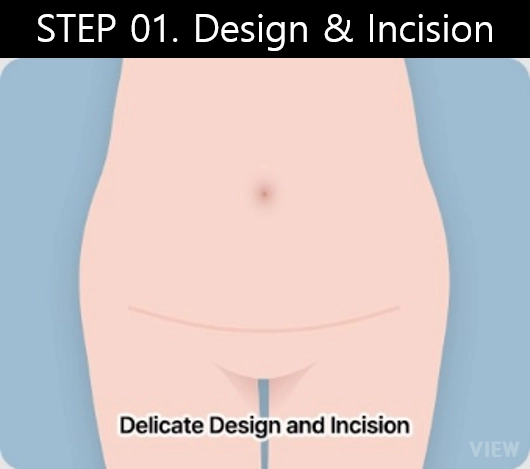
STEP 01. Design & Incision
The surgeon marks the treatment area and makes a low horizontal incision just above the bikini line for minimal visibility.
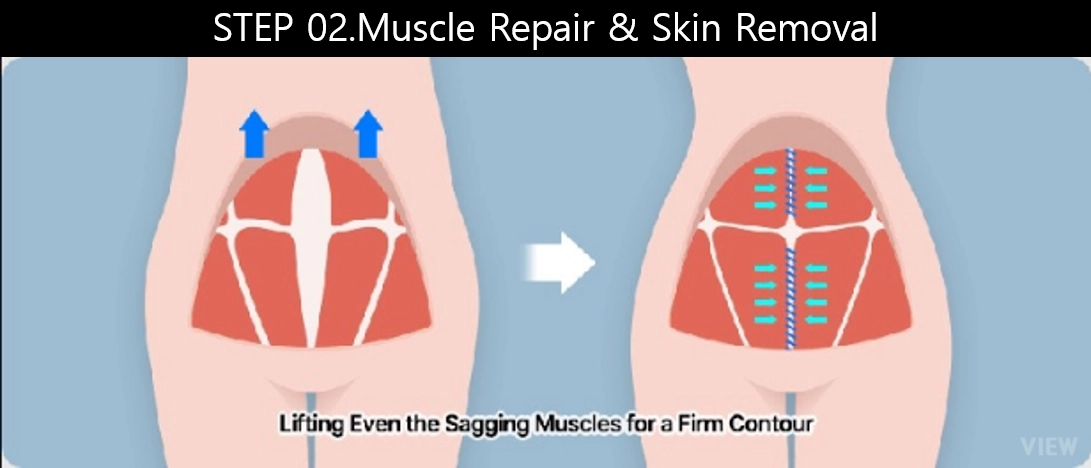
STEP 02.Muscle Repair & Skin Removal
Separated abdominal muscles (rectus diastasis) are sutured together, and loose, stretched skin is trimmed to improve contour and firmness.
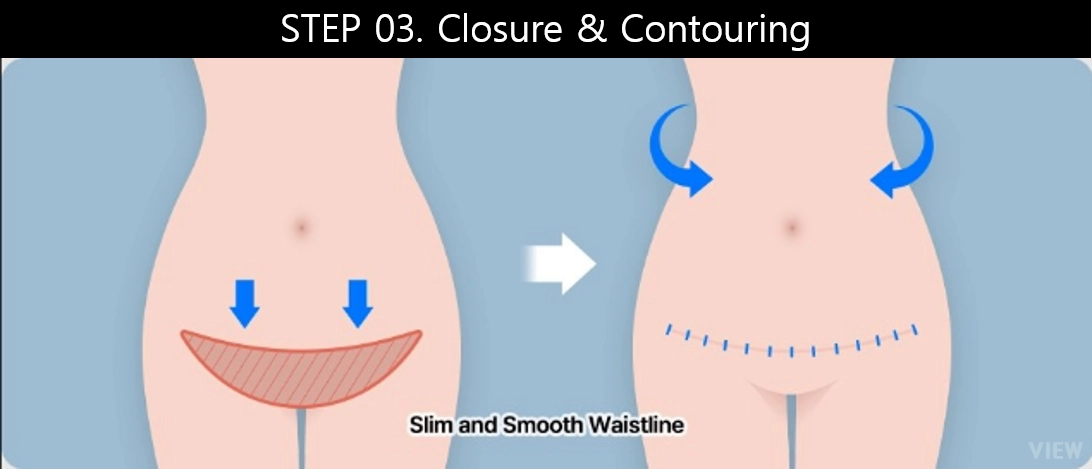
STEP 03. Closure & Contouring
The remaining skin is pulled downward and closed meticulously, ensuring a smooth, natural-looking abdominal contour. In full tummy tucks, the belly button may be repositioned for optimal aesthetics.
Procedures to Combine with Tummy Tuck
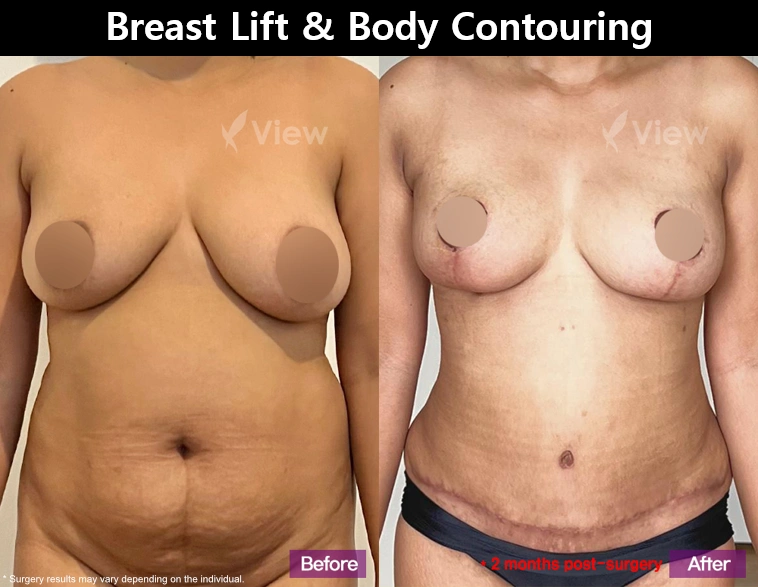
To achieve a complete transformation, many mothers opt for a “Mommy Makeover,” combining the Tummy Tuck with other synergistic procedures.
Flank and Waist Liposuction
Tightening the front of the abdomen can sometimes make the hips or “love handles” appear more prominent by comparison. Performing waist liposuction simultaneously contours the hourglass figure, restoring the waistline that is often lost after pregnancy.
Breast Lift or Augmentation
Breast volume loss and ptosis (sagging) are common after breastfeeding. Combining a Breast Lift (Mastopexy) with abdominal surgery balances the upper and lower body proportions in a single recovery period.
C-Section Scar Revision
If you have an existing C-section scar that is indented, wide, or hypertrophic, it is usually removed during the Tummy Tuck. The new incision is closed with plastic surgery precision, resulting in a much superior aesthetic outcome.
Skin Quality and Recovery Therapies
View Plastic Surgery integrates advanced post-op care, including high-frequency lasers and sometimes stem cell therapies to accelerate healing, reduce swelling, and improve the quality of the skin and scar tissue.
Recovery and Returning to Daily Life
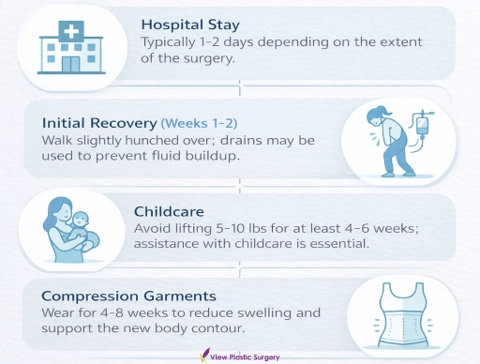
For mothers, the biggest concern is often the downtime. “When can I pick up my child?” is a frequent question.
- Hospital Stay: Typically 1-2 days depending on the extent of the surgery.
- Initial Recovery (Weeks 1-2): Patients must walk hunched over slightly to protect the incision. Drains may be used for a few days to prevent fluid accumulation.
- Childcare: You must avoid lifting anything heavier than 5-10 lbs for at least 4-6 weeks to ensure the muscle repair (plication) heals correctly. Having help with childcare is essential during the first month.
- Compression Garments: These must be worn for 4-8 weeks to control swelling and support the new body contour.
Choosing to undergo Tummy Tuck surgery in Korea allows mothers to recover in a supportive, medical-tourism-friendly environment before returning to the demands of home life.
If you are struggling with a post-pregnancy belly that doesn’t reflect your healthy lifestyle, schedule a consultation with View Plastic Surgery today. Our team is ready to help you reclaim your confidence.
For direct inquiries, you can also contact us via WhatsApp.