

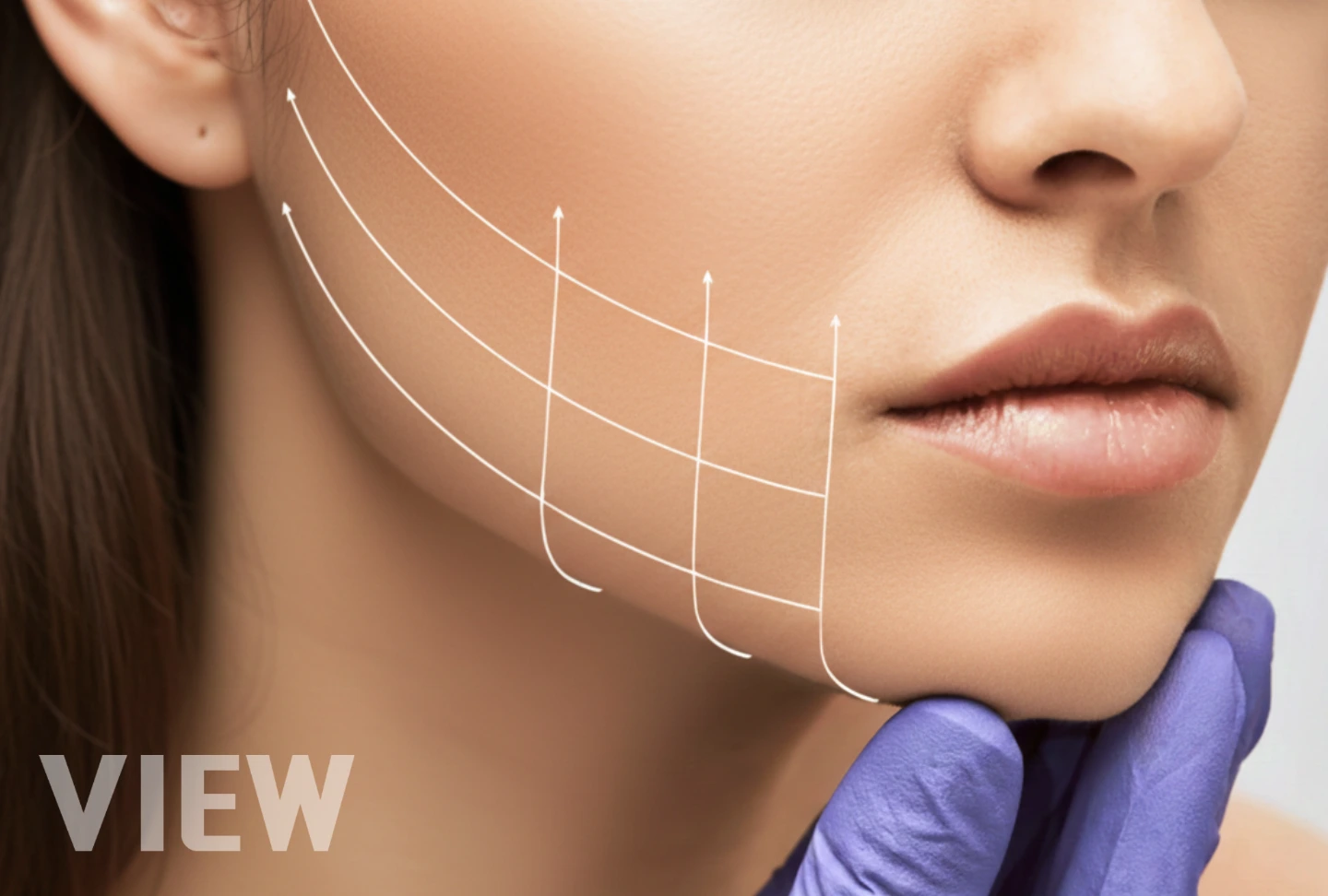
Thread-Lifting in Korea has become increasingly prominent in aesthetic medicine as the paradigm shifts toward minimally invasive interventions that offer immediate efficacy with reduced downtime. In particular, Thread-Lifting in Korea has emerged as the cornerstone of non-surgical facial rejuvenation, particularly within South Korea’s advanced medical infrastructure. For international patients seeking to address tissue ptosis and collagen depletion without the latency of traditional rhytidectomy (facelift surgery),Thread Lifting at View Plastic Surgery represents an optimal intersection of biotechnological innovation and logistical convenience.
This clinical review provides an exhaustive analysis of thread lifting protocols, material science, and perioperative management, specifically tailored for medical tourists planning a short-term itinerary in Korea.
What is Thread Lifting?
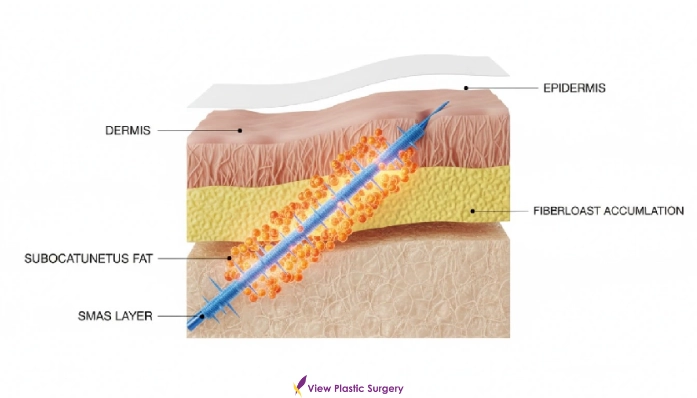
Thread lifting is a minimally invasive aesthetic procedure designed to reposition ptotic soft tissue and induce neocollagenesis through the subcutaneous insertion of bio-absorbable sutures. Unlike a surgical facelift, which involves the excision of redundant skin and extensive dissection of the SMAS (Superficial Musculo-Aponeurotic System) layer, thread lifting utilizes mechanical fixation via barbs or cones to elevate tissue, coupled with a biochemical response that improves dermal density.
The procedure operates on two primary physiological vectors:
- Mechanical Lift: Immediate physical elevation of the skin and subcutaneous fat via cogged or cone-shaped threads anchored in the fascia.
- Biostimulation: The gradual hydrolysis of the thread material triggers a mild inflammatory response, stimulating fibroblasts to produce Type I and Type III collagen. This results in sustained tissue tightening and improved skin texture even after the thread has dissolved.
Anatomical Targets and Procedure Areas
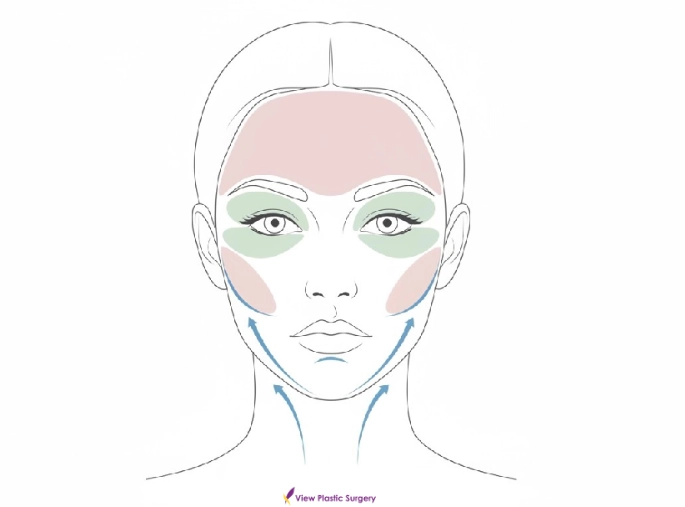
The versatility of modern thread lifting allows for precise targeting of various facial vectors. The selection of vectors is critical for restoring the “Triangle of Youth” (inverted triangle) versus the “Pyramid of Age.”
- Mid-Face: Correction of nasolabial folds and malar flattening. Threads are typically inserted from the temporal fascia toward the nasolabial line to elevate the malar fat pad.
- Lower Face (Jowls): Addressing the disruption of the mandibular borderline. Threads anchor the sagging skin along the jawline, redefining the cervicomental angle.
- Submental Area (Double Chin): Tightening of the platysma and submental skin to reduce submental fullness.
- Periorbital and Brow: Use of thinner, mono-threads for fine lines (crow’s feet) or specialized cogs for a non-surgical brow lift (Fox Eye lift).
Comparative Analysis of Thread Types
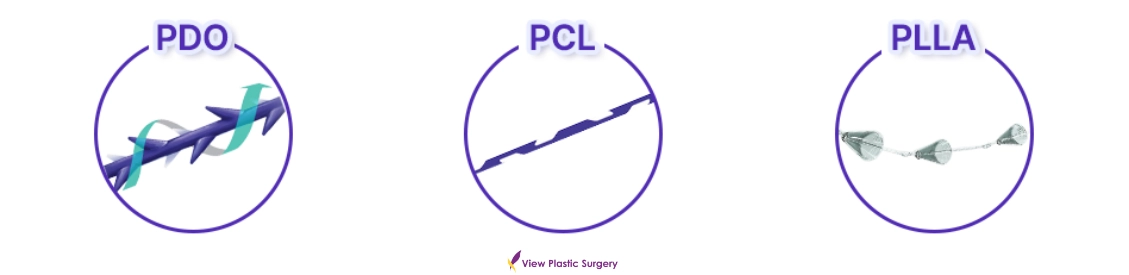
The efficacy of a thread lift is heavily contingent upon the material composition and the structural design of the filament. View Plastic Surgery utilizes FDA and KFDA-approved materials tailored to patient-specific tissue characteristics.
Classification by Chemical Composition
| Material | Full Name | Duration In-Vivo | Characteristics |
|---|---|---|---|
| PDO | Polydioxanone | 6 – 12 Months | High safety profile. Primarily stimulates collagen production. Best for skin tightening and mild lifting. |
| PLLA | Poly-L-Lactic Acid | 12 – 18 Months | Higher tensile strength. Excellent for volumizing effects in hollow areas due to robust collagen stimulation. |
| PCL | Polycaprolactone | 18 – 24+ Months | Longest lasting. Slower degradation allows for sustained lift and tissue support. |
Classification by Morphology (Structure)
- Mono Threads: Smooth filaments used primarily for skin tightening and texture improvement (mesh technique).
- Cog/Barb Threads: Filaments with laser-cut or molded barbs that hook into the tissue to provide physical lifting. Examples include MINT™ Lift and Blue Rose Lift.
- Cone Threads (Silhouette Soft): Utilize bi-directional cones for 360-degree tissue engagement, offering superior anchoring for heavier tissues.
Ideal Candidates for the Procedure
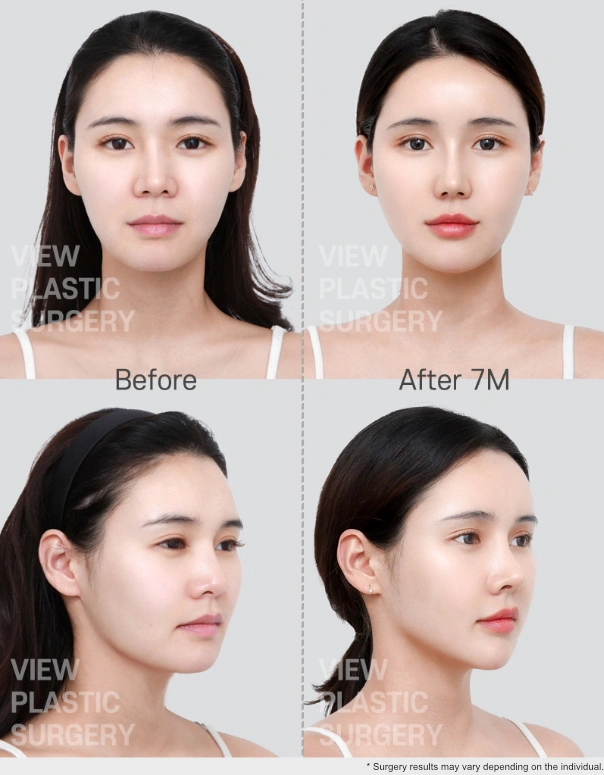
While versatile, thread lifting is not a universal substitute for surgery. The ideal candidate typically presents with:
- Mild to Moderate Ptosis: Early signs of gravity-induced sagging in the jowls or cheeks.
- Good Skin Quality: Patients with excessive skin laxity or very thin skin may require surgical intervention or Fat Grafting for optimal coverage.
- Age Group: Typically 30s to 50s. Patients in their 60s+ may benefit if seeking subtle improvements or if medically ineligible for general anesthesia.
- Realistic Expectations: Understanding that results are temporary (1-2 years) compared to the permanence of surgical facelifts.
Synergistic Anti-Aging Protocols
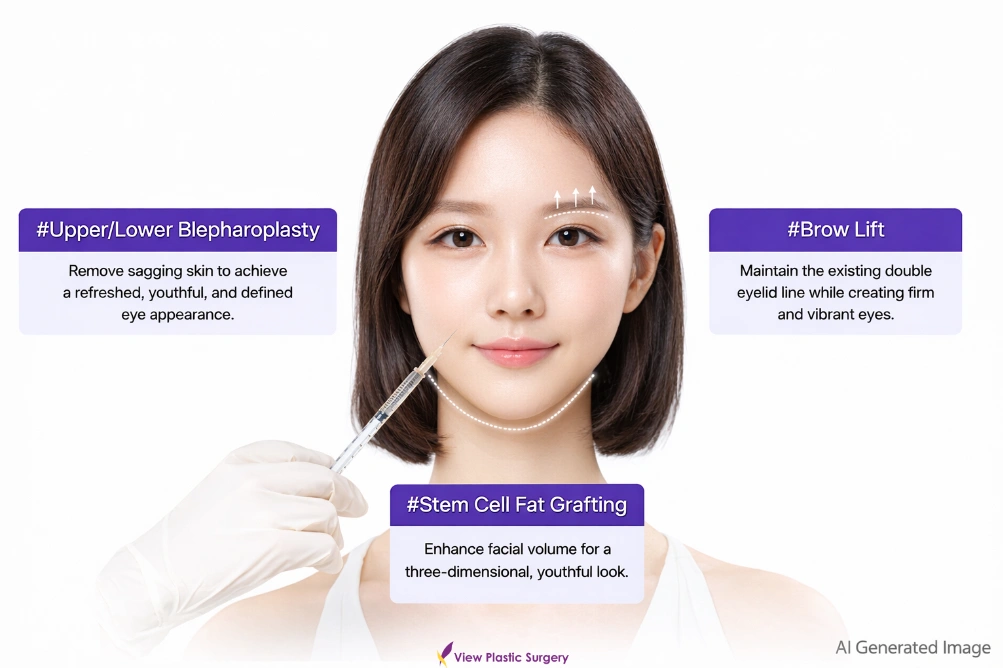
To maximize facial rejuvenation, View Plastic Surgery often combines thread lifting with other procedures. This multimodal approach addresses different layers of aging: bone resorption, fat loss, and skin elasticity.
Upper and Lower Blepharoplasty
Periorbital aging often accompanies mid-face sagging. Combining threads with Upper and Lower Blepharoplasty provides a comprehensive refresh. While threads lift the cheeks, blepharoplasty removes excess eyelid skin and orbital fat, opening the gaze.
Sub-Brow Lift
For patients with heavy brows causing eyelid hooding, a Sub-Brow Lift is an excellent adjunct. This creates a harmonious elevation of the upper third of the face, complementing the mid-face lift provided by threads.
Stem Cell Fat Grafting
Volume loss is a key component of aging. Thread lifting repositions existing tissue, but it does not replace lost volume. Stem Cell Fat Grafting restores youthful contours to the forehead and temples. The stem cells further enhance skin quality, working synergistically with the collagen stimulation from the threads.
Why Thread Lifting in Korea Is Preferred by Medical Tourists
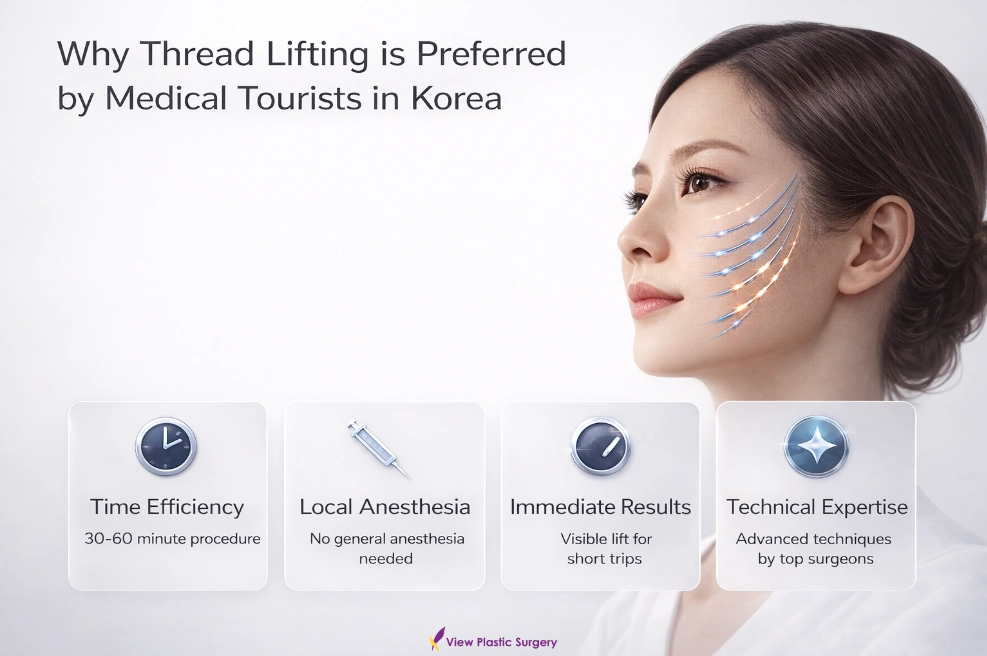
Korea is the global epicenter for thread lifting innovation. The technique is immensely popular among travelers for several reasons:
- Time Efficiency: The procedure takes 30 to 60 minutes.
- Local Anesthesia: No need for general anesthesia or overnight hospitalization.
- Immediate Results: Patients can see the lift immediately, making it gratifying for short trips.
- Technical Superiority: Korean surgeons perform high volumes of these procedures, leading to advanced vector designs and minimized complication rates.
Traveler’s Recovery Guide: Itinerary Planning
For patients visiting View Plastic Surgery, we recommend a minimum stay of 3 to 5 days, though the procedure can be accommodated in shorter trips.
| Timeline | Activity & Medical Status |
|---|---|
| Day 1: Arrival & Procedure | Consultation with specialist to design vectors. Procedure performed under local anesthesia. Immediate discharge. Mild swelling may begin. |
| Day 2-3: Recovery & Sightseeing | Swelling and minor bruising may peak. Pain is manageable with OTC analgesics. Light walking (shopping) is encouraged to reduce swelling. Avoid saunas or strenuous exercise. |
| Day 4-7: Departure | Swelling subsides significantly. Dimpling at insertion points (if any) resolves. Safe to fly. Makeup can be applied to cover minor bruises. |
To schedule your consultation or discuss your travel itinerary, please contact our international team via WhatsApp or book directly through our Consultation Page.
FAQ
The longevity depends on the thread material. PDO threads typically last 6–12 months, while PLLA and PCL threads can last 18–24 months. However, the collagen stimulation induced by the threads can prolong the visible rejuvenation effects for up to 2 years.
Yes, it is generally safe to fly 24 to 48 hours after the procedure. However, we recommend staying at least 3 days for a follow-up check to ensure no infection or asymmetry exists before departure.
The procedure is performed under local anesthesia, so the insertion itself is painless. Patients may feel some pressure or tugging. Post-procedure discomfort is usually mild and manageable with over-the-counter painkillers.
Thread breakage or migration is rare when performed by experienced board-certified surgeons like those at View Plastic Surgery. If migration occurs, the thread can be trimmed or removed. Minor asymmetry due to swelling usually resolves within two weeks.
It is generally recommended to wait at least 4 weeks after thread lifting before undergoing high-intensity laser treatments (like Ultherapy or Thermage) to avoid accelerating the dissolution of the threads due to heat.