


Facial asymmetry is a condition where the left and right sides of the face do not match perfectly. While minor asymmetry is common in almost everyone, severe skeletal asymmetry can lead to significant functional issues—such as temporomandibular joint (TMJ) disorders and malocclusion—as well as psychological distress. A common trajectory for patients is to first seek orthodontic treatment, hoping to align their bite and face without invasive procedures. However, many find that after years of braces, the fundamental asymmetry of the chin and jawline remains unchanged.
As a leading institution in craniofacial reconstruction, View Plastic Surgery provides a clinical analysis of why non-surgical methods often reach a plateau and why Double Jaw Surgery (Orthognathic Surgery) is the definitive solution for skeletal discrepancies. Understanding the various types of jaw surgery is the first step toward achieving a balanced facial structure.
Why Orthodontics Has Limits in Correcting Facial Asymmetry
It is crucial to distinguish between dental asymmetry and skeletal asymmetry. Orthodontics is designed to move teeth within the alveolar bone. If the asymmetry is caused solely by the misalignment of teeth (dental), braces or clear aligners can be highly effective.
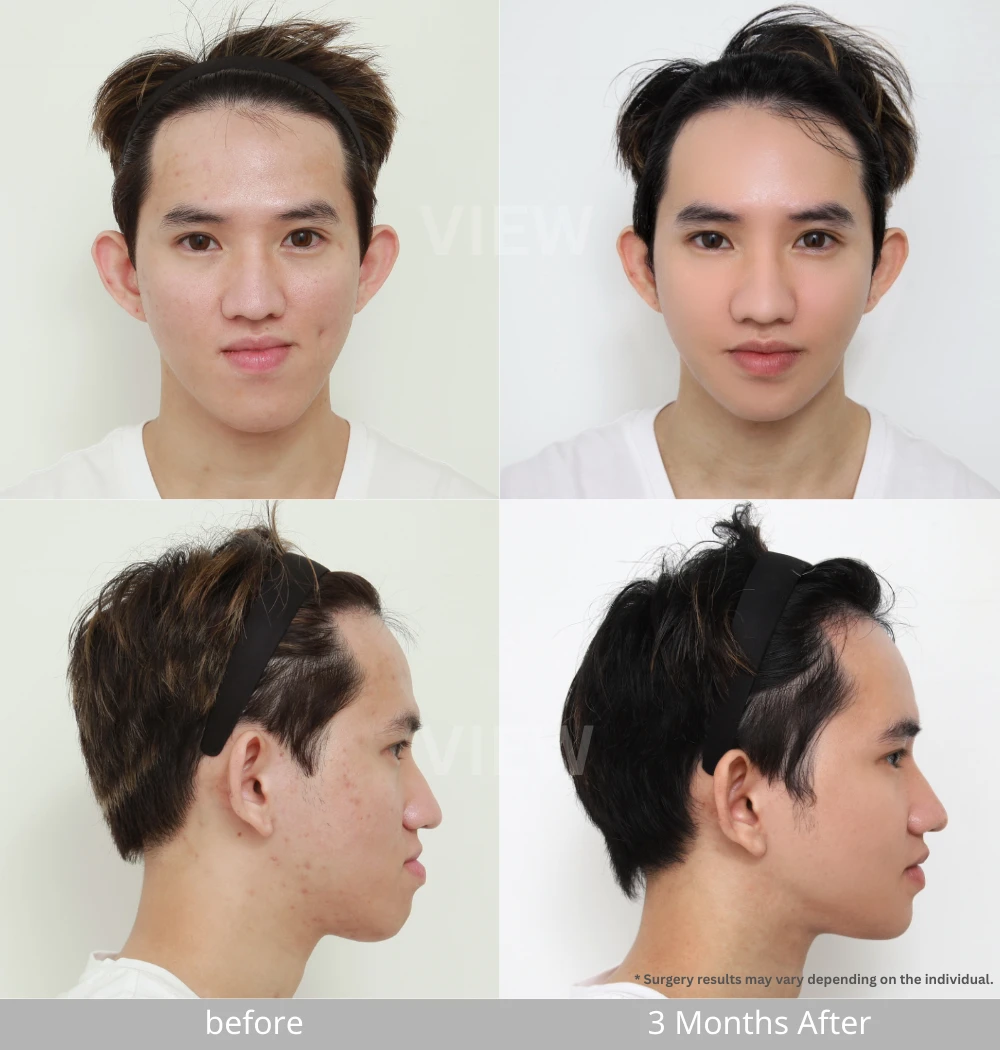
However, severe facial asymmetry often stems from the basal bone structure—the length and position of the maxilla (upper jaw) and mandible (lower jaw). When the jawbones themselves are different lengths or are rotated (yaw, pitch, or roll), moving the teeth cannot correct the position of the chin or the canting of the occlusal plane.
- The Camouflage Effect: Orthodontics on a skeletal asymmetry patient is often referred to as “camouflage treatment.” It aligns the teeth to mask the underlying skeletal problem, but the chin remains deviated. This often leads to “dental tipping,” where teeth are angled unnaturally to compensate for the jaw’s position.
- Limits of Dental Compensation: There is a biological limit to how much teeth can be tipped to compensate for jaw discrepancy. Pushing beyond this limit can compromise periodontal health and lead to root resorption.
- The Relapse Factor: Because the underlying bone structure is still mismatched, the muscles of mastication may exert uneven pressure, leading to a higher risk of orthodontic relapse once the braces are removed.
If you have completed orthodontic treatment but still perceive significant facial deviation, the issue is likely skeletal, requiring surgical intervention to reposition the bone foundation itself.
Representative Cases Requiring Double Jaw Surgery
Double Jaw Surgery is indicated when the maxilla and mandible are not harmoniously aligned. Depending on the clinical diagnosis, different types of jaw correction may be applied. The following clinical presentations typically require orthognathic intervention rather than simple orthodontics or facial contouring alone:
- Canting of the Occlusal Plane: When you bite down on a stick, it tilts to one side. This indicates the upper jaw is tilted, requiring Le Fort I osteotomy to level the plane.
- Facial Midline Discrepancy: The centerline of the upper teeth and the face do not match, often accompanied by a deviated chin (menton) that sits off-center.
- Crossbite with Asymmetry: The lower teeth sit outside the upper teeth on one side or both (Class III malocclusion), combined with lateral deviation of the mandible.
- Long Face with Lip Incompetence: Vertical maxillary excess often accompanies asymmetry, leading to a gummy smile and inability to close lips effortlessly, often causing “mouth breathing” issues.
- Mandibular Prognathism or Retrognathism: Cases where the lower jaw is significantly overdeveloped (underbite) or underdeveloped (receding chin) in addition to being shifted to one side.
For a preliminary assessment of your specific case, you can reach out directly via our global consultation channel for a quick review by our medical team.
Does Double Jaw Surgery Fix Facial Asymmetry?
Yes, Double Jaw Surgery is the gold standard for correcting skeletal asymmetry. Unlike other procedures that mask the issue, this surgery physically detaches and repositions the jawbones to a neutral, functional, and aesthetic position.
The procedure generally involves:
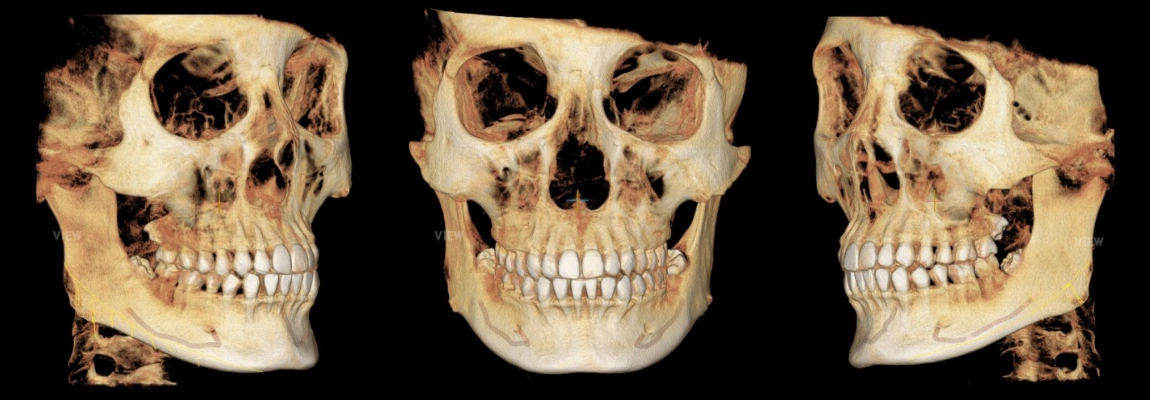
- Le Fort I Osteotomy (Maxilla): The upper jaw is separated, allowing surgeons to adjust its vertical position, inclination (correcting canting), and anterior-posterior position. This is critical for centering the midface.
- SSRO (Sagittal Split Ramus Osteotomy) or IVRO (Intraoral Vertical Ramus Osteotomy) (Mandible): The lower jaw is split to allow movement. It is then rotated and set back or advanced to match the new position of the upper jaw. SSRO is often preferred for its stability and faster healing due to larger bone contact areas.
By rotating the entire Maxillo-Mandibular Complex (MMC), the surgeon corrects the yaw and roll of the facial structure, effectively centering the chin and leveling the bite. At View Plastic Surgery, we utilize 3D-CT bone analysis and 3D printing of surgical wafers to ensure sub-millimeter precision.
Double Jaw Surgery vs. Facial Contouring: Criteria for Selection
A common misconception is that facial contouring (shaving the bone) can fix asymmetry. While facial contouring can camouflage minor discrepancies by reducing the volume of the prominent side, it cannot fix the functional axis of the face or correct a malocclusion.
| Feature | Double Jaw Surgery (Orthognathic) | Facial Contouring (V-Line/Zygoma) |
|---|---|---|
| Primary Target | Position of the jaws and occlusion (bite). | Shape of the outer cortical bone (outline). |
| Functional Correction | Corrects chewing, breathing, and speaking. | None (Aesthetic only). |
| Asymmetry Correction | Corrects the central axis and bite plane. | Camouflages asymmetry by shaving the wider side. |
| Nerve Involvement | Involves splitting bone near major nerve canals. | Shaves bone surface; avoids major nerve split. |
The Effects and Considerations of Simultaneous Surgery
For optimal aesthetic results, many patients undergo Double Jaw Surgery combined with Facial Contouring. While Double Jaw surgery aligns the axis, the actual shape of the mandible bone might still be uneven due to years of asymmetric growth. For example, the muscle and bone on the side you chew more frequently might be more developed.
Adding V-line surgery (Mandible reduction + Genioplasty) refines the jawline borders after the axis is corrected. This ensures that once the bite is centered, the jawline silhouette is also smooth and symmetrical from every angle.
Benefits: Dramatic transformation, reduced total recovery time (one anesthesia period), and comprehensive symmetry.
Considerations: Increased surgical time and swelling. This complex combination requires a highly experienced craniofacial surgeon and an in-house anesthesiologist, a standard protocol at View Plastic Surgery to ensure patient safety.
Changes to Expect After Double Jaw Surgery
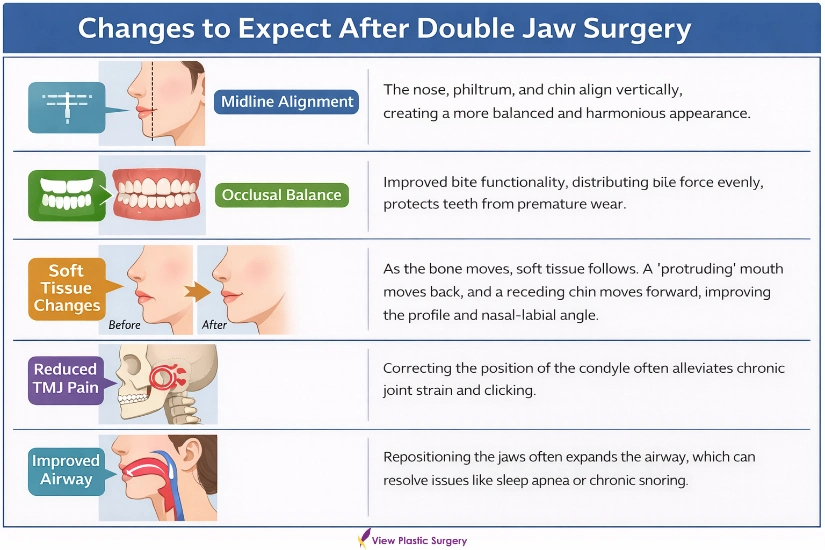
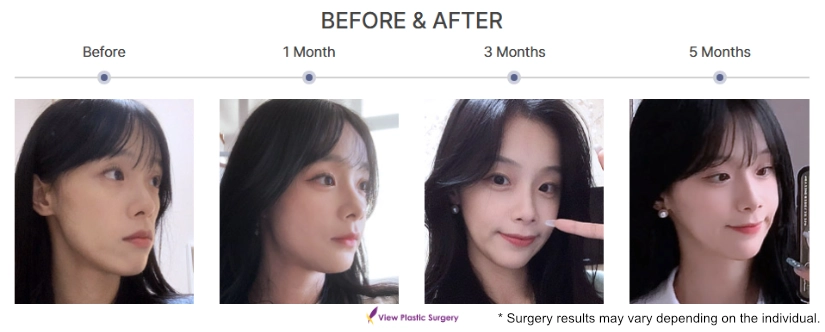
Post-surgery, the structural changes are profound. Patients can expect:
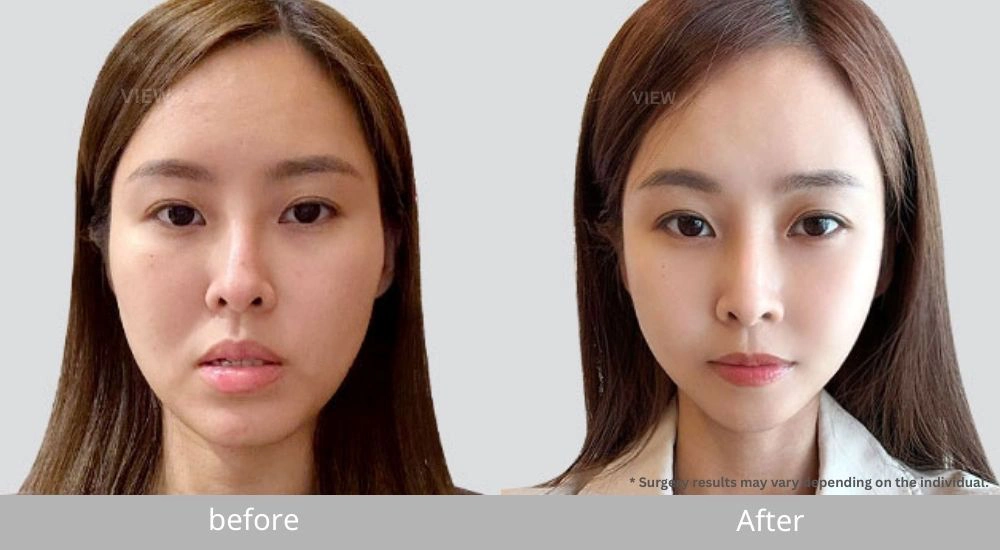
- Midline Alignment: The nose, philtrum, and chin align vertically, creating a more balanced and harmonious appearance.
- Occlusal Balance: Improved bite functionality, distributing bite force evenly, which protects teeth from premature wear.
- Soft Tissue Changes: As the bone moves, soft tissue follows. A “protruding” mouth moves back, and a receding chin moves forward, improving the profile and nasal-labial angle.
- Reduced TMJ Pain: Correcting the position of the condyle often alleviates chronic joint strain and clicking.
- Improved Airway: Repositioning the jaws often expands the airway, which can resolve issues like sleep apnea or chronic snoring.
Process for International Patients
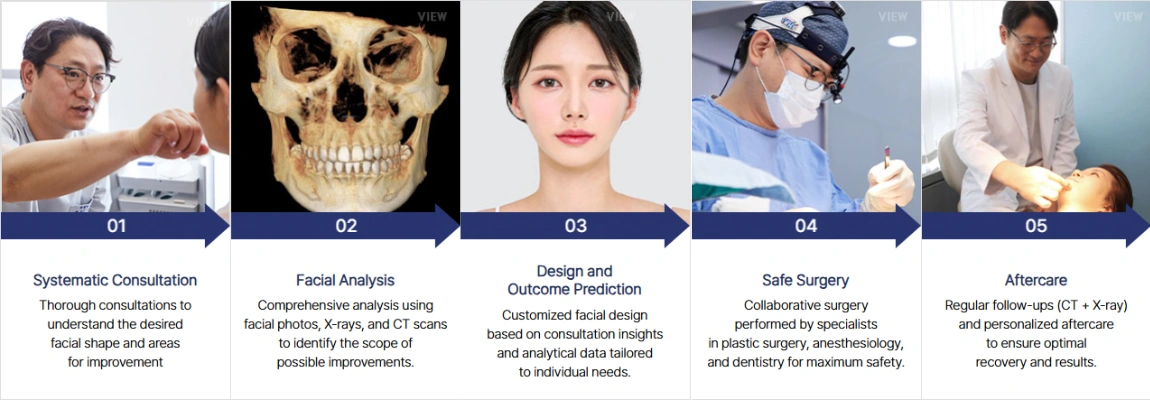
Undergoing major surgery abroad requires meticulous planning. View Plastic Surgery offers a streamlined pathway for international visitors:
- Remote Consultation: Submission of X-rays and photos via our secure consultation portal.
- Arrival & Analysis: Upon arrival in Korea, a 3D CT scan and mock-surgery simulation (3D printing of wafers) are conducted to plan the exact bone movements.
- Surgery & Hospitalization: Typically requires 2-3 nights of hospitalization with 24-hour nursing care.
- Recovery Stay: Patients usually stay in Korea for 2-3 weeks to remove stitches and ensure occlusion stability before flying home. We provide post-operative swelling management (laser/LED therapy).