

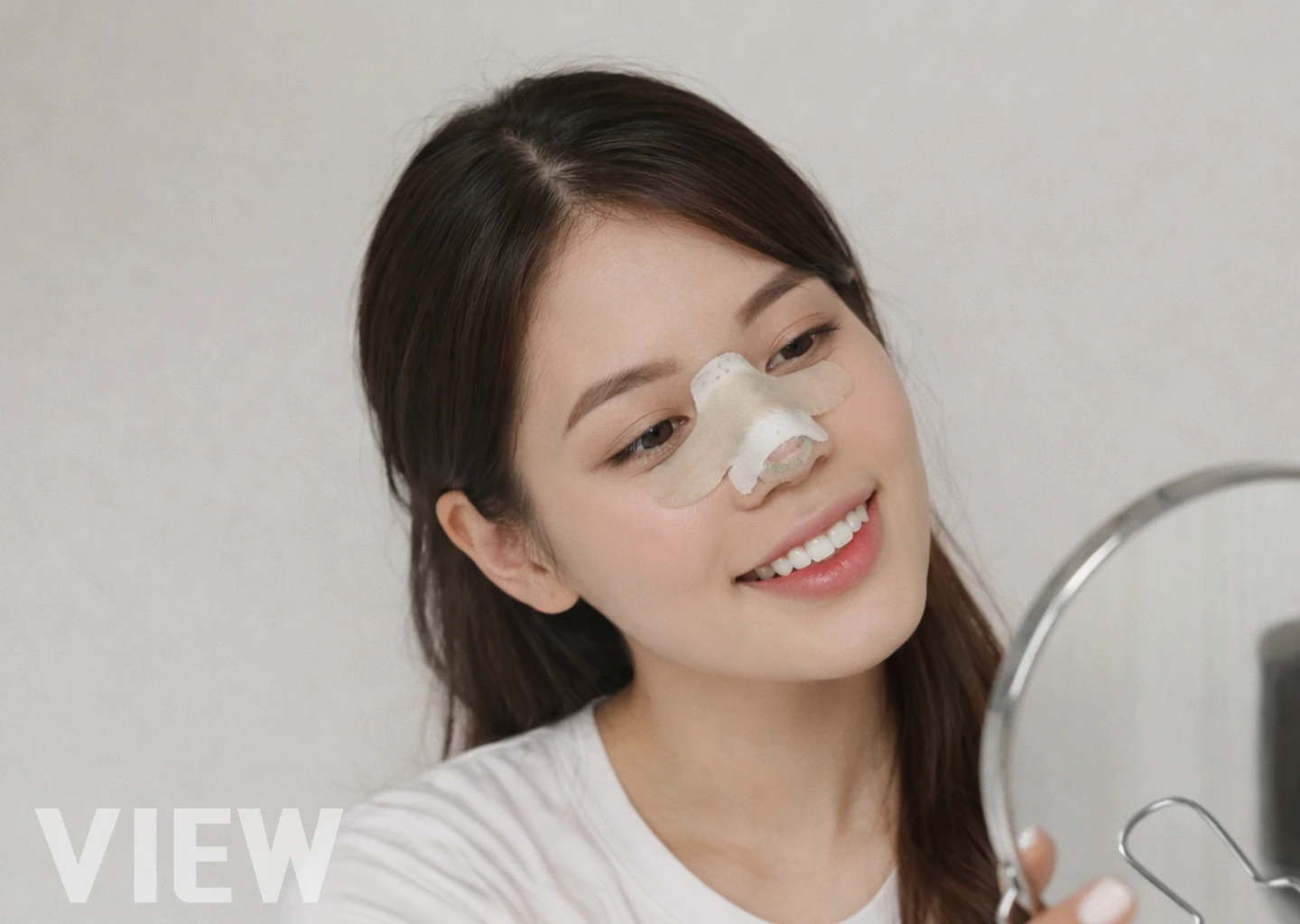
At View Plastic Surgery, our clinical approach integrates surgical precision with an advanced post-operative management system designed to accelerate the resolution of edema and ensure optimal aesthetic outcomes. Below is a detailed clinical breakdown of what patients can anticipate during their recovery journey.
Rhinoplasty Recovery Korea: The Acute Phase (0–24 Hours)
The immediate postoperative period, defined as the first 24 hours following surgery, is critical for hemostasis and the stabilization of the surgical site. Upon transfer from the operating theater to the recovery room, patients will experience the cessation of general anesthesia or deep sedation. Clinically, this phase is characterized by acute inflammation.
Anesthesia Clearance and Vital Monitoring
As the anesthesia dissipates, patients are monitored for hemodynamic stability. It is standard protocol at View Plastic Surgery to utilize real-time monitoring to ensure oxygen saturation and blood pressure remain within optimal ranges, minimizing the risk of postoperative hematoma. Patients may experience grogginess and mild nausea, which are transient.
Hemostasis and Packing
To prevent epistaxis (nosebleeds) and support the internal nasal valve, hemostatic packing or septal splints may be utilized. While this causes obligatory mouth breathing, it is a necessary intervention to stabilize the septal mucosa. Patients are advised to keep the head elevated at 30–45 degrees to facilitate venous drainage and reduce hydrostatic pressure in the facial tissues, thereby limiting edema.
For immediate assistance or concerns during this critical window, international patients have direct access to our support team via WhatsApp.
Week 1: Splint Removal and the Clinical Inflammatory Peak
The first week marks the transition from the acute reactive phase to the early proliferative phase of healing. Understanding the fluctuation of swelling is essential for managing patient expectations.
The Trajectory of Edema and Ecchymosis
Post-surgical edema (swelling) typically peaks between Day 2 and Day 3 due to the inflammatory cascade releasing cytokines and histamines. Periorbital ecchymosis (bruising around the eyes) may occur, particularly if lateral osteotomies (breaking of the nasal bones) were performed. By Day 5, this bruising generally transitions from purple/blue to yellow/green as hemoglobin breaks down.
Day 5-7: Splint Removal and Suture Excision
The external dorsal splint (cast), which protects the nasal pyramid and maintains osteotomy alignment, is typically removed between Day 5 and Day 7. This is a significant psychological milestone for the patient.
- Columellar Sutures: If an open rhinoplasty approach was utilized, the trans-columellar sutures are removed at this stage.
- Internal Packing: Any remaining internal silicone sheets or cotton packing are extracted, immediately improving airway patency.
The "Socially Ready" Phase
Once the splint is removed, patients enter the “socially ready” phase. While residual edema is present, it is often socially acceptable, especially in Seoul where mask-wearing is ubiquitous. Patients can comfortably venture out for light walks, which encourages lymphatic drainage.
For a detailed assessment of your specific case, we recommend a pre-operative consultation to discuss expected downtime based on surgical complexity.
Weeks 2 to 4: Re-epithelialization and Return to Routine
During weeks 2 through 4, the initial reparative collagen synthesis begins. The structural integrity of the nose increases, allowing for a gradual return to daily activities.
Flight Clearance and Barotrauma Risks
One of the most frequent inquiries regarding rhinoplasty recovery Korea is flight safety. Medical guidelines generally suggest:
- Short-haul flights: Permissible after 7–10 days (post-splint removal).
- Long-haul flights: Recommended after 14 days.
The cabin pressure changes can induce transient expansion of gases within the sinus cavities. Ensuring the mucosal lining has sufficiently healed mitigates the risk of barotrauma or minor bleeding.
Resuming Physical Activity
Light cardiovascular exercise (walking, stationary cycling) can be resumed to promote circulation. However, any activity that significantly raises blood pressure (heavy lifting, high-intensity interval training) or carries a risk of facial trauma must be avoided to prevent epistaxis or graft displacement.
| Timeframe | Clinical Status | Allowed Activities | Restrictions |
|---|---|---|---|
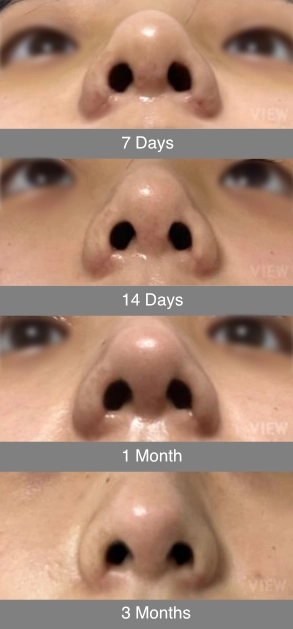
| Week 2 | Visible bruising fades; 70% of acute swelling subsides. | Returning to office work; light makeup; short flights. | No glasses; no smoking; no alcohol. |
| Week 4 | Internal mucosa healing; nasal bones stable. | Light cardio; wearing glasses (with caution/taping). | Avoid contact sports; limit sodium intake. |
Months 1 to 3: The Refinement Period and Deswelling
This period is characterized by the maturation of the scar tissue and the resolution of subtle edema, particularly in the supratip area.
The Dynamics of Tip Deswelling
The nasal tip, possessing thicker sebaceous skin and dependent lymphatic drainage, is the last area to resolve. Between months 1 and 3, patients will notice the definition of the nasal tip improving. It is common to experience minor asymmetry during this phase due to uneven rates of lymphatic drainage; this is typically transient.
Sensory Recovery
Numbness at the nasal tip is a sequela of the trans-columellar incision and elevation of the skin-soft tissue envelope. By the third month, sensory nerves regenerate, and normal sensation begins to return. Learn more about the anatomical considerations on our dedicated Rhinoplasty Overview page.
6 Months to 1 Year: Finalizing Before and After Results
The long-term recovery phase involves the remodeling of collagen fibers and the final settling of the skin envelope over the underlying cartilaginous framework.
Tissue Stabilization
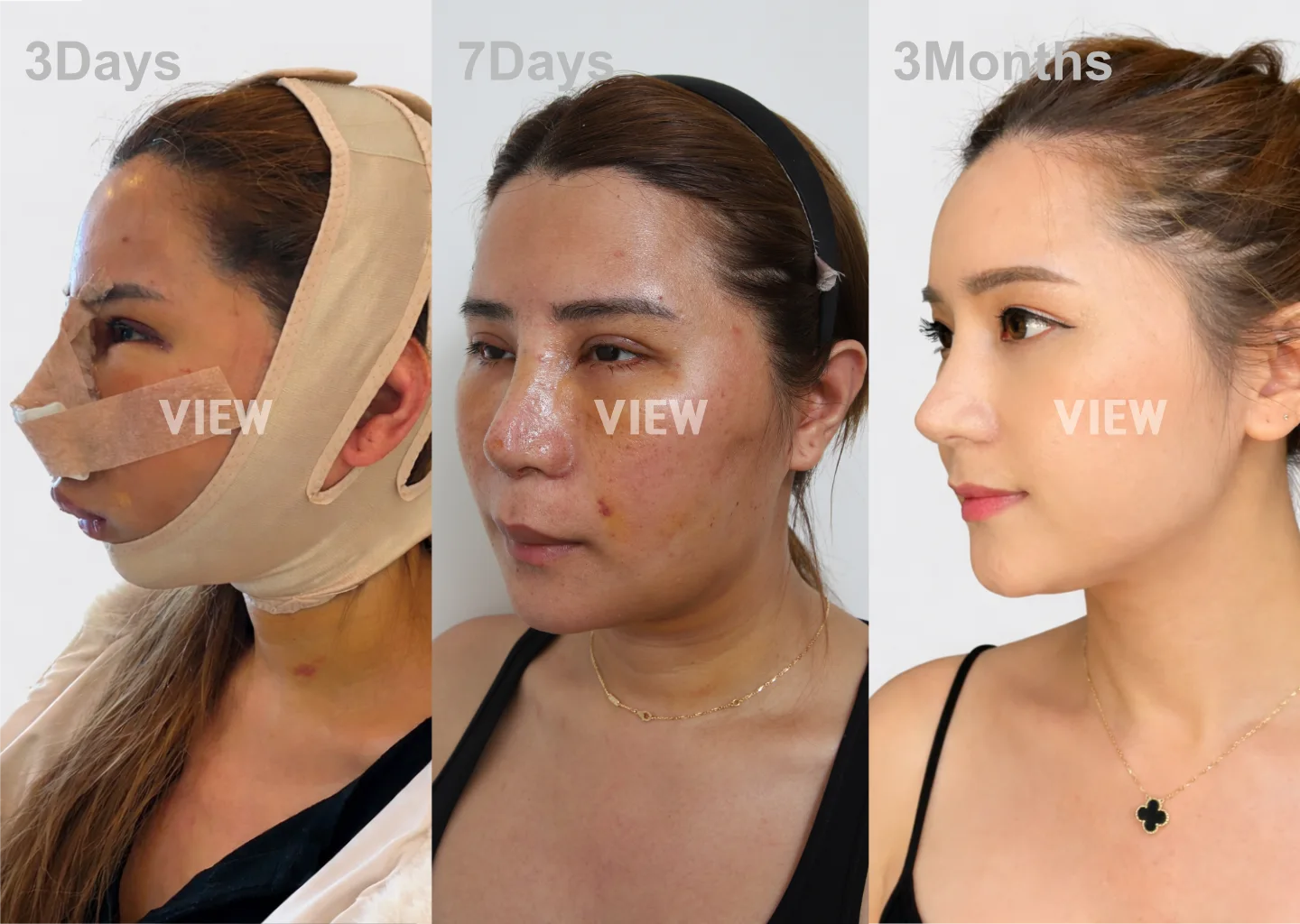
By the 6-month mark, approximately 90% of the swelling has dissipated. The nasal bones are completely consolidated. However, for patients with thick skin or those who underwent revision rhinoplasty, subtle changes can continue up to 12 to 18 months post-operatively. This is the period where the “final” result is clinically evaluated.
Why View Plastic Surgery Offers the Best Aftercare System in Seoul
Successful rhinoplasty is not solely dependent on surgical technique but also on rigorous postoperative management. View Plastic Surgery employs a proprietary Safe Surgery System and a dedicated aftercare center.
Advanced Deswelling Modalities
Unlike standard clinics, View Plastic Surgery integrates medical-grade technology to expedite healing:
- Smartlux (Light Therapy): Utilizes specific wavelengths to stimulate mitochondrial activity in skin cells, enhancing cell regeneration and reducing inflammation.
- Hyperbaric Oxygen Therapy: Increases plasma oxygen concentration, promoting angiogenesis (formation of new blood vessels) and accelerating wound healing in compromised tissues.
- Deswelling Injections: Targeted corticosteroid injections may be administered if supratip fullness (pollybeak deformity risk) persists.
For a full breakdown of our protocols, visit our After-care System page.