


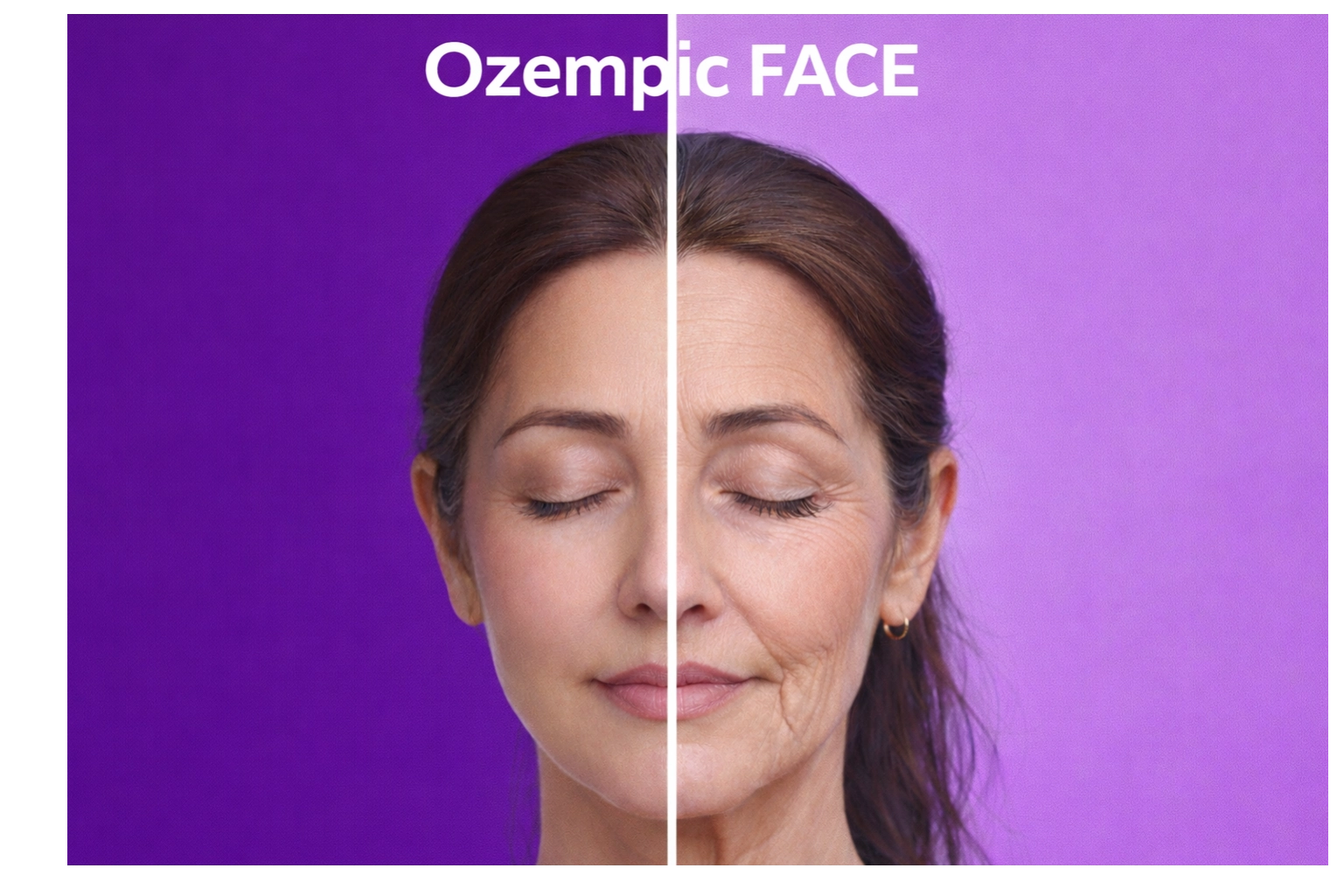
Lost Weight, Looked Older?
In the contemporary landscape of metabolic health and aesthetics, the rise of GLP-1 receptor agonists (such as semaglutide) has revolutionized weight management. However, this rapid reduction in body mass index (BMI) often precipitates a distinct and clinically significant aesthetic sequela known colloquially as “Ozempic Face.” While the body achieves a leaner silhouette, the face may succumb to accelerated aging characteristics due to acute volume depletion.
At View Plastic Surgery, we approach this phenomenon not merely as a cosmetic concern but as a structural restoration challenge. This comprehensive analysis explores the pathophysiology of rapid facial weight loss and details why Facial Fat Grafting (Autologous Fat Transfer) is the gold standard for reversing these effects, particularly when combined with synergistic modalities like Ulthera and Thermage.
What is "Ozempic Face"? A Clinical Definition
“Ozempic Face” is a lay term describing the facial lipodystrophy-like changes associated with rapid, pharmacologically induced weight loss. Unlike gradual weight reduction, where the skin has time to retract and adapt to the diminishing subcutaneous volume, rapid weight loss often outpaces the skin’s elastic capability.
Clinically, this presents as:
- Hollowing of the Temples and Cheeks: A marked reduction in the lateral deep cheek fat and buccal fat pads.
- Increased Skin Laxity: The “deflated balloon” effect, where the skin envelope becomes too large for its underlying contents.
- Prominence of Dermatochalasis: Exaggerated nasolabial folds and marionette lines due to the descent of remaining soft tissue.
- Skeletalization: Increased visibility of orbital rims and zygomatic arches, creating a gaunt or haggard appearance.
While the weight loss is often celebrated, the paradoxical result is that patients may feel they look biologically older despite being physically healthier.
The Pathophysiology:Why Weight Loss Accelerates Facial Aging
To understand the solution, one must understand the anatomy of facial aging. The face is not a uniform block of tissue; it is composed of distinct fat compartments (superficial and deep) that provide volume, contour, and support to the overlying skin.
The Role of Deep Fat Pads
Deep fat pads act as a gliding plane for muscles and provide anterior projection. When a patient undergoes rapid weight loss, these deep compartments atrophy preferentially. Without this structural support, the superficial fat pads and skin succumb to gravity, sliding downward and inward. This mimics the natural aging process but at a significantly accelerated rate.
Collagen and Elastin Integrity
Furthermore, significant caloric restriction can sometimes lead to a catabolic state that impacts collagen synthesis. If the skin lacks sufficient elasticity to retract around the new, smaller facial volume, the result is profound ptosis (sagging). This is why non-surgical volume restoration is often a prerequisite before, or in conjunction with, skin tightening procedures.
Why Fat Grafting (Autologous Fat Transfer)?
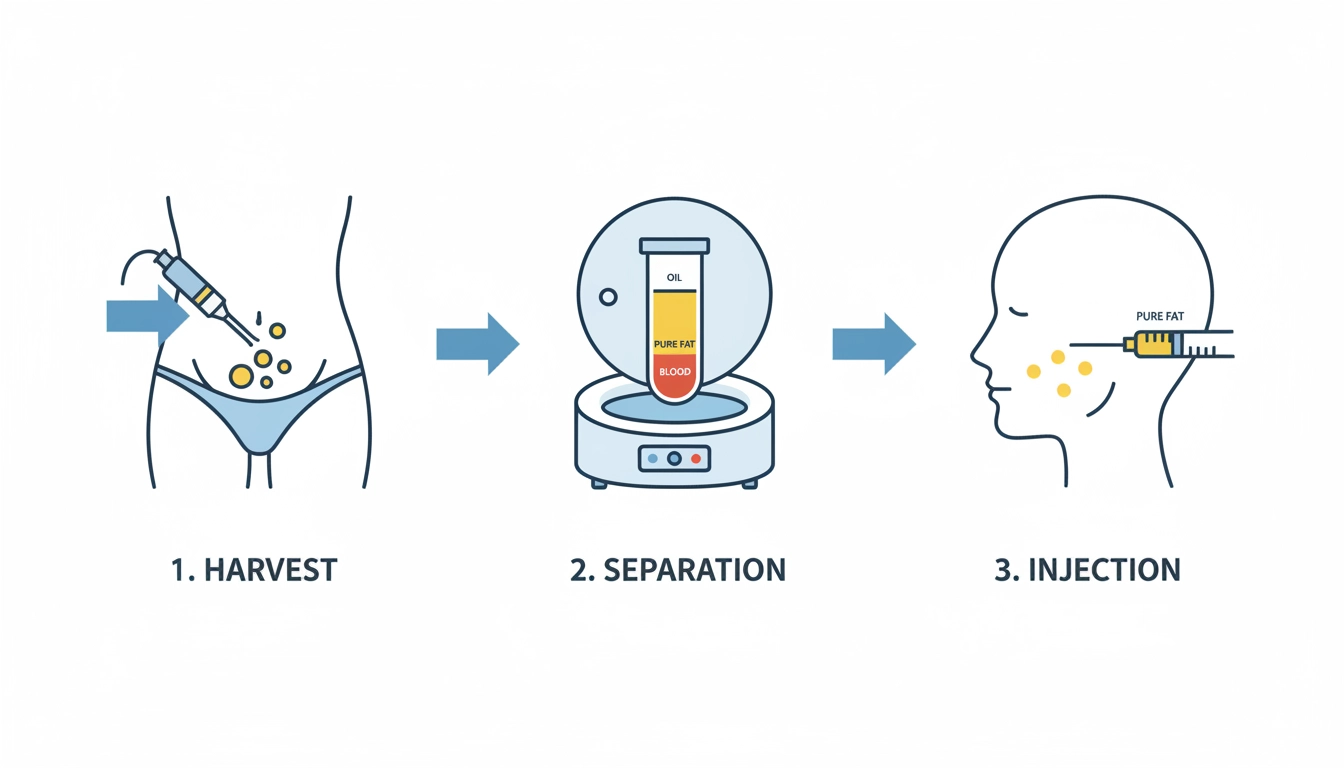
While dermal fillers (Hyaluronic Acid) are a common quick fix, Fat Grafting stands as the superior, long-term clinical solution for significant volume loss associated with Ozempic Face. This procedure involves harvesting fat from the patient’s own body (typically the abdomen or thighs), purifying it, and re-injecting it into the face.
Key Clinical Advantages
1. Biocompatibility and Safety:
Since the tissue is autologous (from the patient’s own body), there is zero risk of allergic reaction or immune rejection. The integration is seamless, creating a natural look and feel that synthetic fillers cannot perfectly replicate.
2. Regenerative Potential (ADSCs):
Adipose tissue is rich in Adipose-Derived Stem Cells (ADSCs). Upon transfer, these cells contribute to neovascularization and tissue regeneration. Patients often observe an improvement in skin texture and luminosity overlying the grafted areas, a benefit known as the “stem cell effect.”
3. Longevity:
Unlike HA fillers which metabolize over 6 to 18 months, transplanted fat that successfully re-vascularizes (usually 50-70% of the grafted volume) becomes permanent living tissue. This makes it a more cost-effective and biologically sustainable solution for the massive volume replacement often required for Ozempic Face.
| Feature | HA Dermal Fillers | Autologous Fat Grafting |
|---|---|---|
| Source Material | Synthetic Hyaluronic Acid | Patient’s own adipose tissue |
| Longevity | Temporary (6-18 months) | Semi-Permanent to Permanent |
| Volume Capacity | Best for small, precise corrections | Ideal for significant volume restoration |
| Skin Quality | Hydration only | Regenerative improvement (Stem Cells) |
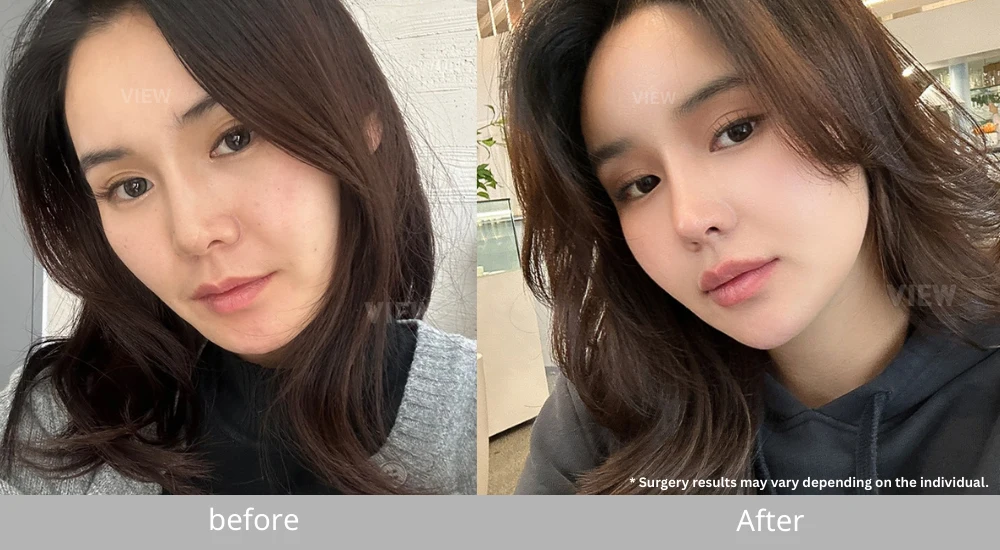
View Plastic Surgery's Fat Grafting Protocol
At View Plastic Surgery, we utilize a High-Retention Micro-Fat Grafting technique designed to maximize cell viability and minimize downtime.
Step 1: Consultation and Design
Through a detailed consultation, we map the facial topography to identify areas of critical volume loss. We plan for a slight over-correction to account for the natural absorption rate.
Step 2: Gentle Harvesting (Liposuction)
Using specialized micro-cannulas, fat is harvested from areas of excess, such as the thighs or abdomen. This step is performed with extreme care to preserve the integrity of the adipocytes (fat cells). For patients interested in body contouring, this can be combined with liposuction procedures.
Step 3: Purification (Centrifugation)
The harvested tissue undergoes a rigorous purification process. We separate the viable fat cells from blood, oil, and tumescent fluid. View Plastic Surgery employs advanced centrifugation protocols to ensure only the healthiest, most dense fat cells are used for grafting.
Step 4: Multi-Layer Injection
This is the most critical step for natural results. Our surgeons inject the fat in minute droplets across multiple planes—deep periosteal, intramuscular, and subcutaneous. This multi-layer technique ensures that each fat droplet has adequate blood supply for survival, preventing calcification and ensuring a smooth, lump-free contour.
Synergistic Procedures: The "Full Face" Restoration
For patients suffering from severe “Ozempic Face,” volume replacement alone may not be sufficient if significant skin laxity exists. To achieve a comprehensive rejuvenation, we often combine fat grafting with lifting and tightening modalities.
Thread Lifting
While fat provides the “fill,” threads provide the “lift.” Absorbable PDO or PLLA threads can physically reposition sagging tissues, locking the newly volumized skin into a higher, more youthful vector.
Energy-Based Devices (EBD)
Ulthera (Ultherapy):
Targeting the SMAS layer (the fibromuscular layer that surgeons tighten during a facelift), Ulthera uses micro-focused ultrasound to tighten the deep foundation of the face. When done before or after fat grafting, it secures the structural framework.
Thermage FLX:
While Ulthera targets deep structures, Thermage utilizes radiofrequency to tighten the dermis itself. This is excellent for improving the “crepey” skin texture often seen after rapid weight loss.
If you have achieved your weight loss goals but feel your face no longer reflects your vitality, contact View Plastic Surgery via WhatsApp today. Our board-certified specialists can design a bespoke volume restoration plan to harmonize your facial aesthetics with your new body.