


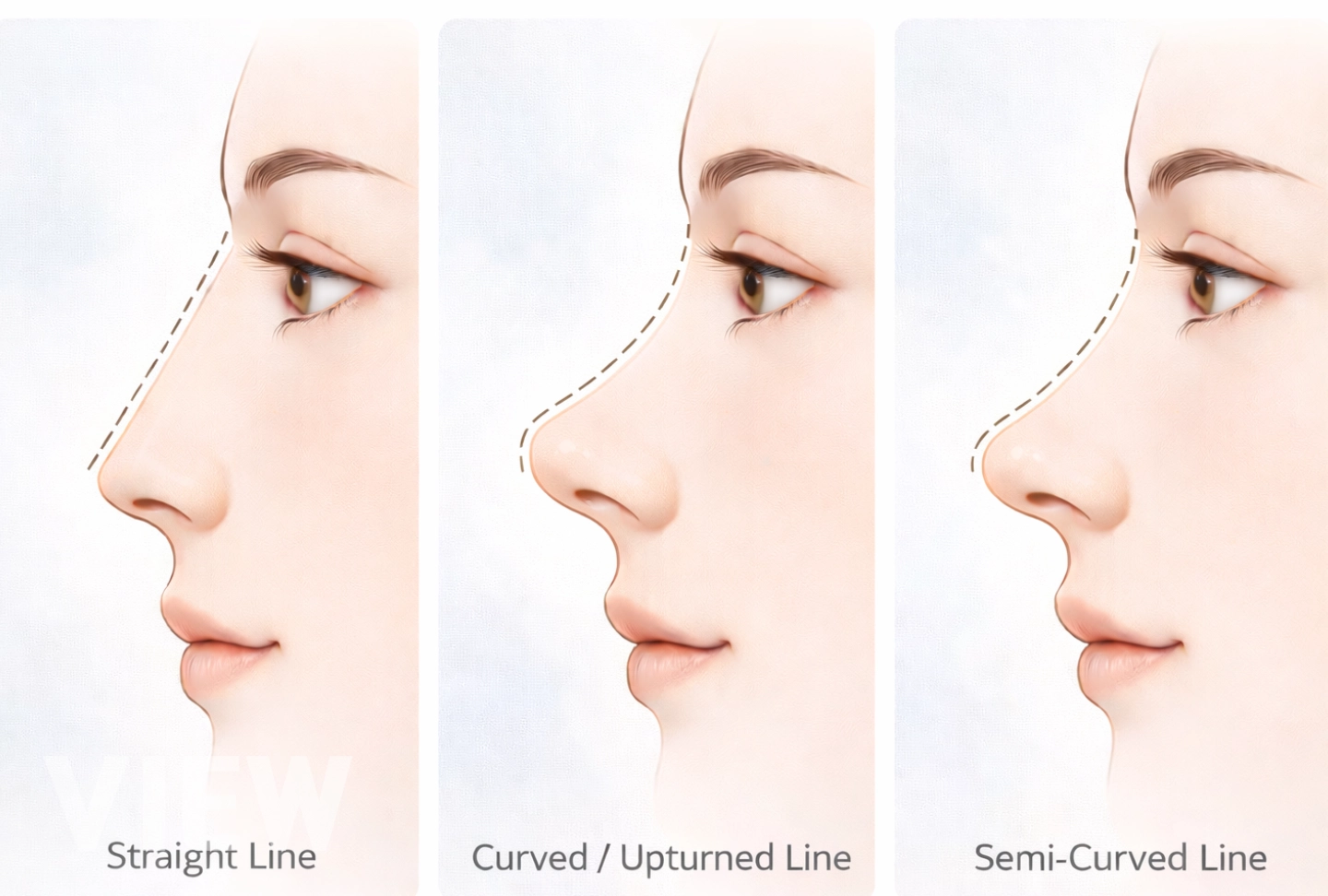
What Nose Line Is Best for Me?
When planning rhinoplasty in Korea, it is not enough to say, “I just want a higher nose.” Korean rhinoplasty often places as much importance on the shape of the line as the height itself, because the line from the bridge to the tip strongly influences your overall facial impression. In reality, a nose line should not be decided by preference alone. It must be designed by considering facial proportions, nasal anatomy, and long-term structural stability together. That is why the same nose line can look refined on one face but appear excessive or unnatural on another.
What Is a Nose Line?
A nose line does not simply refer to how high the nasal bridge is. It describes the overall silhouette connecting the forehead, nasal bridge, and nasal tip, and this silhouette is created by multiple elements working together.
- How the forehead transitions into the nasal bridge
- Whether the bridge follows a straight or curved contour
- The angle and projection of the nasal tip
Even with the same bridge height, differences in these factors can completely change a person’s facial impression.
The Three Core Nose Lines in Korean Rhinoplasty
Straight Line
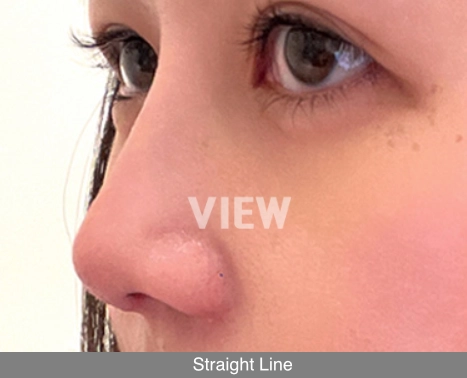
A straight line runs from the glabella through the bridge to the tip with minimal curvature, making the nose structure appear clear and defined. Because the flow is simple and precise, it often helps “organize” the overall facial impression.
- Overall impression: Refined, modern, neutral, intellectual
- Line focus: A straight bridge-centered flow
- Structural traits: Tip projection is restrained; overall proportion stability is key
This line prioritizes cleanliness over drama. More than extreme height, the result depends on whether the bridge connects naturally with the forehead and the facial contour. In many designs, the nasolabial angle is maintained around 90–95 degrees to create a sharp but not overly aggressive profile.
Curved / Upturned Line

A curved (upturned) line forms a gentle concave curve as the tip sits slightly higher than the bridge, placing stronger visual emphasis on the tip. The overall look tends to feel softer and more decorative.
- Overall impression: Cute, lively, bright
- Line focus: Tip-centered curved design
- Structural traits: Tip angle and curvature matter more than bridge height
Because the tip becomes the visual center, the face can appear younger or brighter. When the tip is emphasized appropriately, it can also make the midface look shorter. However, if structural support is insufficient, long-term changes may occur, so stability must be secured during planning.
Semi-Curved Line (Most Popular)
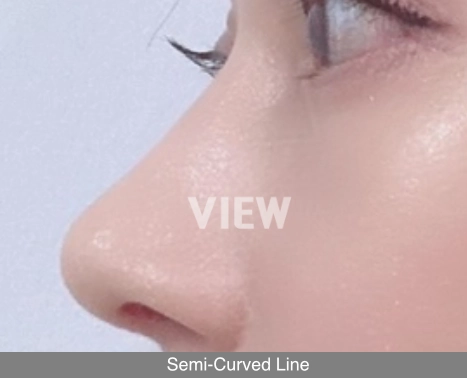
A semi-curved line keeps the bridge close to straight, then adds only a subtle curve at the tip. It combines the strengths of both straight and upturned designs and is currently the most preferred style in Korea.
- Overall impression: Elegant, luxurious, naturally balanced
- Line focus: Straight bridge + minimal tip curve
- Structural traits: Delicate tip design built on a stable bridge structure
This line is known for creating clear definition while keeping an “obvious surgery” look to a minimum. Because the tip appears defined without looking overly upturned, it is often considered the most harmony-focused option. The key is restraint—allowing only enough curvature to be felt, not exaggerated.
Quick Guide: Who Each Nose Line Tends to Suit
The table below is a reference guide summarizing situations where each nose line tends to work well, based on facial characteristics and nasal structural conditions. In actual surgery, detailed planning may vary depending on individual anatomy.
| Nose Line | Facial Characteristics | Structural Conditions | Preferred Image |
|---|---|---|---|
|
Straight Line
|
Longer face or clearly defined facial contours |
Relatively firm skin quality and stable tip support
|
Clean, restrained impression |
|
Curved / Upturned Line
|
Rounder face or shorter midface
|
Sufficient tip support structure |
Youthful, lively, bright image
|
|
Semi-Curved Line
|
Most face shapes
|
Moderate skin thickness with stable overall structure
|
Natural yet more three-dimensional impression |
Why Facial Shape and Nasal Structure Must Be Considered Together
When choosing a nose line, facial shape and nasal anatomy must be evaluated together. If you choose based only on face shape—or only on nasal structure—the real outcome can easily feel different from what you expected.
General direction based on facial shape
- Round faces: Softer curves or natural S-lines can balance proportions better than strong straight lines
- Slim faces: Both straight and curved lines can work, but overly high bridges may feel excessive
- Prominent jaw/cheekbones: Straight lines can help create a cleaner, more organized impression
- Low or short foreheads: Abrupt high-bridge designs can look mismatched
Structural factors that must be checked
- Thick nasal skin: Sharp delicate lines may blur and appear wider over time
- Weak tip support: Strong projection may droop as time passes
- Short columella: Excessive tip emphasis can look disproportionate
- Large tip movement when smiling: Structural stability should take priority over line shape
Even if a line “looks right” visually, it should not be chosen unless the structure can support it. The most stable outcomes occur when aesthetic suitability (face) and structural feasibility (nose) align.
Why a “Maintained Line” Matters More Than a “Pretty Line”
Right after surgery, most lines look satisfactory. Over time, however, changes can occur such as:
- Tip drooping
- Softening or widening of the line
- A silhouette that differs from the original design
These issues often appear when the chosen line exceeds what the structure can support. A nose line is not only an aesthetic choice—it is a structural decision.
When Professional Consultation Is Especially Helpful
- Your nose looks different in every photo
- You want subtle change but have no clear 기준
- You are unsure which nose line suits you
Through online consultation, it is possible to evaluate facial proportions and nasal structure in advance and define a realistic range of achievable nose lines.
FAQ
Is there a trendy nose line right now?
Does a straight nose always look more refined?
Not necessarily. Depending on facial shape, it may appear too strong.
Can I copy a celebrity’s nose line exactly?
Because facial and nasal structures differ, direct replication often leads to imbalance.
Can the nose line be changed after surgery?
It is possible, but revision surgery is more complex. Choosing the right line initially matters.