



Rhinoplasty is widely regarded as one of the most complex procedures in plastic surgery due to the intricate anatomy of the nose and its central role in facial aesthetics. However, the complexity increases significantly when addressing the distinct anatomical features of diverse ethnicities. Ethnic Rhinoplasty in Korea has evolved from a niche field into a global standard of excellence, driven by the demand for results that respect cultural identity while enhancing facial harmony.
At View Plastic Surgery, we understand that the goal of modern rhinoplasty is not to Westernize features but to refine them in a way that balances with the patient’s unique facial structure. This comprehensive guide explores our specialized approaches for international patients seeking world-class rhinoplasty surgery in Seoul.
What is Ethnic Rhinoplasty?
Historically, rhinoplasty techniques were largely based on Caucasian anatomical standards. This “one-size-fits-all” approach often resulted in unnatural outcomes for patients of Asian, African, or Middle Eastern descent—erasing their ethnic identity and creating a nose that looked surgically altered.
Ethnic Rhinoplasty is defined by a preservation-first philosophy. It involves surgical techniques specifically tailored to the skin thickness, cartilage strength, and bone structure unique to specific ethnic groups. The primary objective is to correct functional issues (such as a deviated septum) and aesthetic concerns (such as a bulbous tip or dorsal hump) without compromising the patient’s heritage.
The Shift from "Westernization" to "Harmonization"
In the past, many patients sought to mimic the “Western” nose—high bridge, narrow tip. Today, the trend has shifted towards Customized Rhinoplasty Seoul specialists champion: harmonization. For an African American patient, this might mean narrowing the alar base while maintaining a strong profile. For a Middle Eastern patient, it might involve smoothing a dorsal hump while retaining a masculine or distinctively strong nasal character.
Why International Patients Choose Korea for Ethnic Rhinoplasty
South Korea, particularly Seoul, is often referred to as the plastic surgery capital of the world. But why do patients travel from the US, Europe, and the Middle East for Ethnic Rhinoplasty in Korea?
Unmatched Anatomical Data and Experience
Korean surgeons perform a staggering volume of rhinoplasty surgeries annually. While the majority are Asian rhinoplasties, the influx of medical tourists has provided top-tier clinics like View Plastic Surgery with extensive experience in diverse anatomical types. Our surgeons are adept at handling:
- Thick Skin: Common in Asian and African American noses, requiring specific suturing and grafting techniques to show definition.
- Weak Cartilage: Often found in Asian anatomies, necessitating robust structural grafting.
- Over-projected Bridges: Common in Caucasian and Middle Eastern noses, requiring precise osteotomy (bone cutting).
Furthermore, our safety systems and pre-operative analysis utilize 3D CT technology to map the internal structure of the nose before the first incision is made, ensuring that the surgical plan is scientifically accurate.
Customized Approaches by Ethnicity
To achieve the best results, we categorize our surgical strategies based on the dominant anatomical traits observed in different ethnic groups.
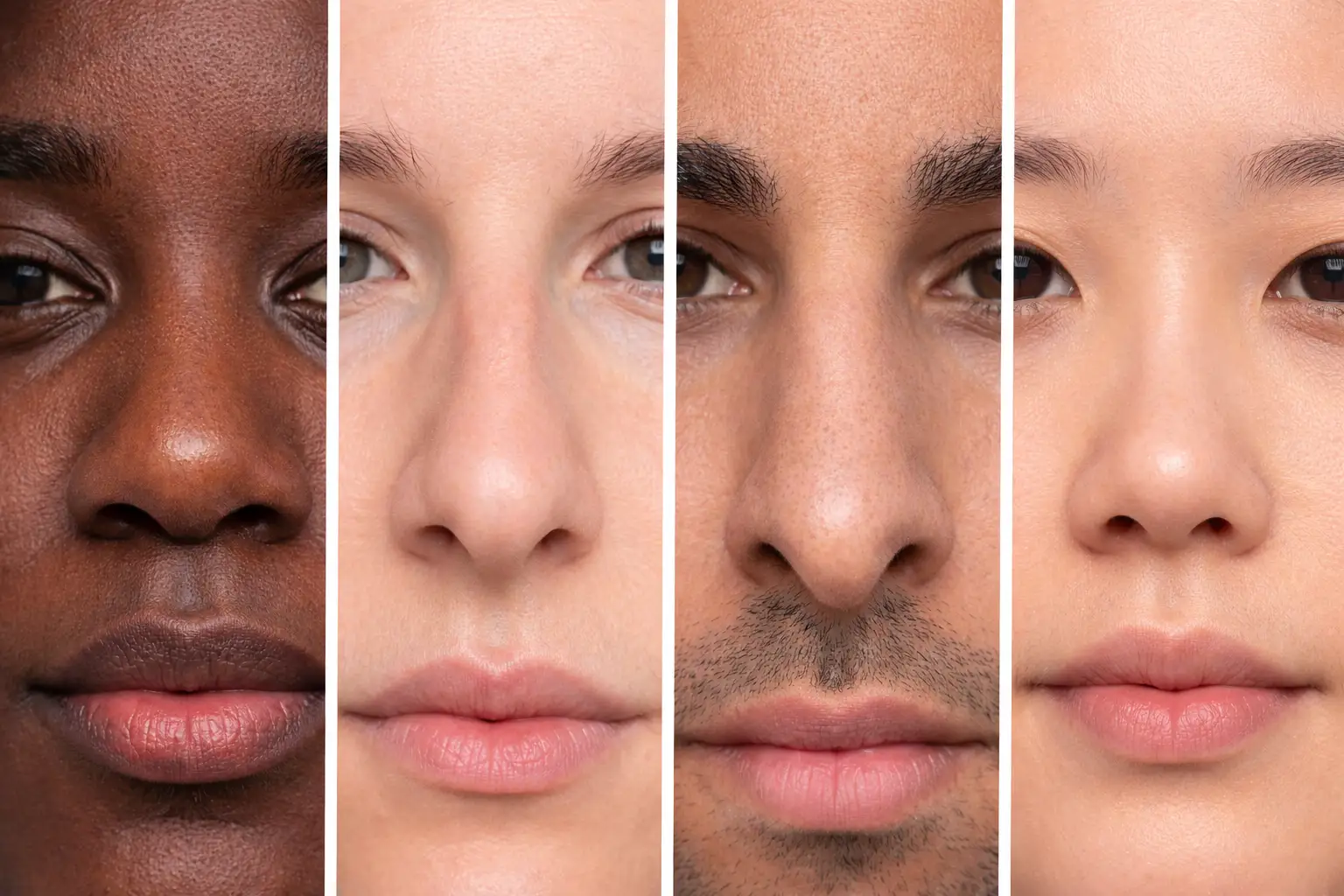
African American Rhinoplasty
Key Traits: Thicker sebaceous skin, weaker lower lateral cartilages, a lower nasal bridge, and wider alar (nostril) bases.
Surgical Strategy:
- Tip Projection: Because the cartilage is often too weak to support the heavy skin, we use strong structural grafts (often autologous rib cartilage) to project the tip and create definition.
- Alar Base Reduction: To address wide nostrils, a precise weir excision is performed. The incision is hidden in the natural crease of the nostril to minimize scarring.
- Dorsal Augmentation: Instead of high-profile silicone which can look fake, we often use diced cartilage fascia (DCF) or custom-carved implants to subtly raise the bridge.
Caucasian Nose Job
Key Traits: Thinner skin, strong cartilage, often a prominent dorsal hump, and a longer nasal tip (sometimes drooping).
Surgical Strategy:
- Hump Reduction (Osteotomy): The primary focus is often “reduction rhinoplasty.” We carefully file or cut the protruding bone to create a straight or slightly curved profile.
- Tip Rotation: If the tip droops (ptotic tip), we rotate it upwards to create a more youthful angle (usually 95-105 degrees for women, 90-95 for men).
- Functional Correction: Caucasian patients frequently have deviated septums. We perform septoplasty concurrently to improve breathing.
Middle Eastern Rhinoplasty
Key Traits: Thick-to-medium skin, significant dorsal humps, undefined or drooping tips, and strong nasal bones.
Surgical Strategy:
- Profile Balancing: The goal is often to reduce the size of the nose while maintaining facial balance. Over-reduction is a critical error to avoid, as it creates a “scooped” look incompatible with strong Middle Eastern features.
- Refining the Tip: We use sutures to narrow the tip cartilage and grafts to prevent it from drooping when smiling.
Asian Rhinoplasty
Key Traits: Low nasal bridge, bulbous tip, short columella, and thicker skin.
Surgical Strategy:
- Augmentation: The focus is on building up the bridge using silicone or rib cartilage.
- Tip Extension: Septal extension grafts are used to lengthen the nose and refine the rounded tip.
| Feature / Ethnicity | African American | Caucasian | Asian |
|---|---|---|---|
| Primary Goal | Definition & Alar Reduction | Reduction & Hump Removal | Augmentation & Projection |
| Skin Thickness | Thick / Sebaceous | Thin to Medium | Medium to Thick |
| Cartilage Strength | Weak Lower Laterals | Strong / Rigid | Soft / Pliable |
Structural Support: Choosing the Right Grafts
The success of Ethnic Rhinoplasty relies heavily on the materials used to build the new nasal structure. In Korea, we prioritize autologous materials (from the patient’s own body) to minimize the risk of infection and rejection.
Septal Cartilage
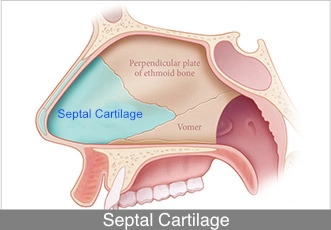
The standard choice for minor tip work. However, in many Asian and African American patients, the septum may be too small or weak to provide adequate support for significant projection.
Ear (Auricular) Cartilage
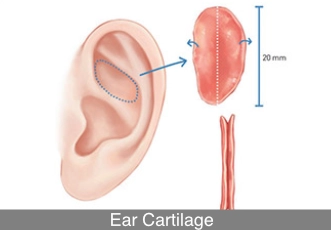
Soft and curved, this is excellent for adding volume to the tip or camouflage grafting, but it lacks the rigidity to lengthen a short nose significantly.
Autologous Rib (Costal) Cartilage
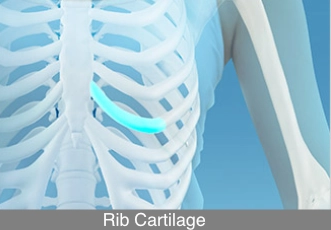
This is often the “gold standard” for Ethnic Rhinoplasty in Korea, especially for revision surgeries or cases requiring significant structural rebuilding (common in African American and Asian rhinoplasty). It provides abundant, strong material that can be carved with extreme precision. At View Plastic Surgery, our specialists are experts in harvesting rib cartilage with minimal scarring.
Donated (Cadaveric) Rib Cartilage
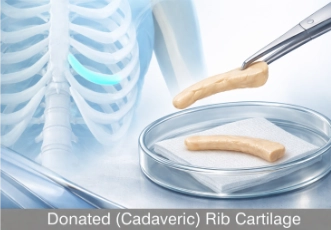
For patients who wish to avoid a secondary surgical site on their chest, processed donated cartilage is a safe alternative that offers similar structural benefits.
For a deeper discussion on which material is right for you, we recommend you book a personalized consultation with our specialists.
Realistic Expectations: Achieving Facial Harmony
One of the most critical aspects of the consultation process at View Plastic Surgery is establishing realistic expectations. “Facial Harmony” is not a buzzword; it is a mathematical and artistic balance.
For international patients, it is vital to understand that a nose that looks perfect on a Caucasian celebrity may look discordant on a face with different cheekbone structures or jawlines. We utilize:
- Nasolabial Angle: The angle between the nose and the upper lip.
- Nasofrontal Angle: The transition from the forehead to the nose bridge.
Our goal is to optimize these angles relative to your specific facial features, ensuring the result looks like the best version of you, not a copy of someone else.
Recovery and Long-term Care for International Patients
Recovery varies by ethnicity due to skin type differences.
Scar Management and Keloids
Patients with darker skin tones (Fitzpatrick skin types IV-VI) have a higher risk of hyperpigmentation or keloid formation at the incision site (columella). Our post-operative care includes:
- Silicone Gel Sheets: To prevent hypertrophic scarring.
- Steroid Injections: If early signs of raised scarring appear.
- Laser Treatments: To address pigmentation issues.
Swelling Timelines
Thicker skin retains fluid longer. While a Caucasian patient might see significant refinement in 6 months, African American or Asian patients with thick skin may need 12 to 18 months for the final tip definition to fully emerge. Patience and adherence to our after-care protocols are essential.
If you have questions about traveling to Korea for surgery, you can reach us directly via WhatsApp for immediate assistance.