



Rhinoplasty is not a monolithic procedure; it is a highly nuanced surgical discipline that demands a profound understanding of anthropological anatomy. The structural variance between Caucasian, Asian, and African nasal frameworks dictates that a standardized surgical approach often leads to suboptimal aesthetic outcomes and functional compromise. At View Plastic Surgery, we emphasize Ethnic Rhinoplasty—a specialized approach that respects the patient’s cultural identity while achieving harmonic facial balance.
This clinical review explores the distinct anatomical characteristics of different ethnicities and delineates the specific surgical modifications required for each. By understanding these biological imperatives, patients can better navigate their surgical journey, particularly when considering comprehensive rhinoplasty solutions in South Korea, a global hub for advanced facial reconstruction.
Structural Differences in Ethnic Rhinoplasty: The Anatomical Triad
The success of any rhinoplasty procedure relies on the surgeon’s ability to manipulate three critical anatomical components: the thickness of the soft tissue envelope (skin), the strength and orientation of the alar cartilages, and the configuration of the bony pyramid. These components vary drastically across ethnicities.
In Caucasian Rhinoplasty, surgeons frequently encounter thin skin and strong, often over-projected cartilage. The surgical goal is typically reductive—removing dorsal humps and refining the tip. Conversely, Asian Rhinoplasty often addresses a low nasal bridge and weaker lower lateral cartilages, necessitating additive or augmentation techniques using autologous materials. African Rhinoplasty presents a unique set of challenges, often characterized by a broad alar base, thickened fibro-fatty tissue in the nasal tip, and short columellar length.
Recognizing these distinct phenotypes is the first step in preoperative planning. A surgeon applying Caucasian reduction techniques to an African or Asian nose can cause structural collapse or severe scarring. Therefore, the 3D-CT analysis used at View Plastic Surgery is indispensable for mapping these subcutaneous differences before the first incision is made.
Why an Ethnic-Specific Approach is Clinically Mandatory

The term “Ethnic Rhinoplasty” does not imply a segregation of techniques, but rather a customization of the surgical algorithm. The historical “Westernization” of the nose—forcing all noses to look like a specific Caucasian ideal—is clinically obsolete and culturally insensitive. Modern plastic surgery prioritizes “preservation rhinoplasty” and “identity preservation.”
For example, aggressive narrowing of the nostrils in African patients without considering the ratio of the nasal lobule can result in distinct breathing obstructions (valve collapse). Similarly, using artificial silicone implants in Caucasian patients with thin skin often leads to implant visibility or extrusion. An ethnicity-based approach ensures that the structural integrity of the nose is maintained. It balances the aesthetic desires of the patient with the physiological limitations of their specific anatomy.
Caucasian Rhinoplasty: Reduction and Refinement
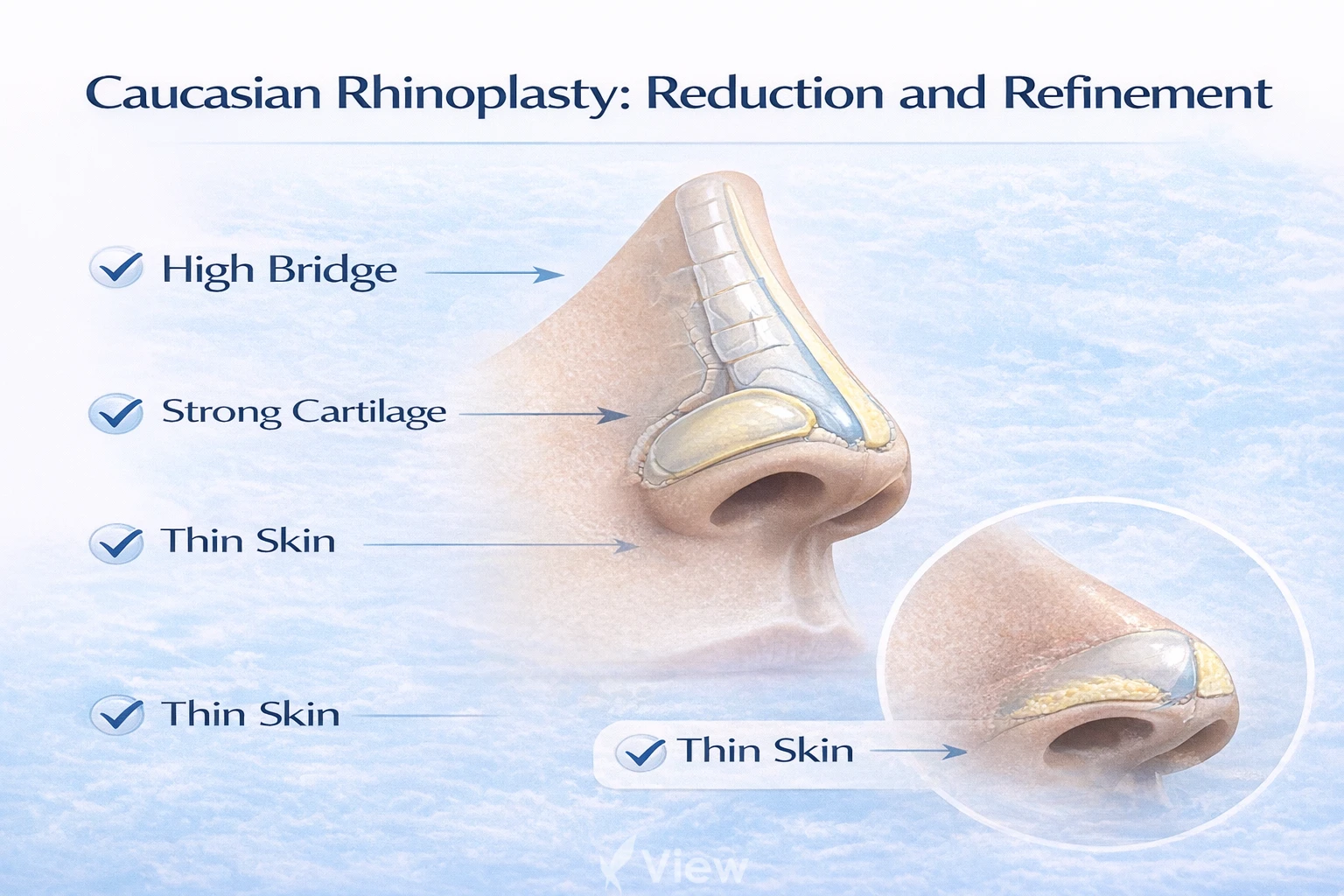
General Characteristics
The typical Caucasian nose (Leptorrhine) is characterized by a narrow, high bridge and strong tip projection. Anatomically, the lower lateral cartilages are vertical and firm, providing significant tip support. However, the skin is often thin to medium thickness, which is a double-edged sword; while it allows for refined definition, it also camouflages no irregularities—meaning even minor asymmetry in the underlying graft is visible.
Surgical Design Points
The primary focus in Caucasian Rhinoplasty is often the management of the dorsal hump (kyphosis). This requires precise osteotomy (bone cutting) to lower the bridge while maintaining the “dorsal aesthetic lines.” Because the cartilage is strong, surgeons often employ cephalic trim techniques to refine the bulbous nature of the tip without needing extensive grafting for support. However, preventing the “inverted-V deformity” (collapse of the middle vault) after hump removal is crucial, often requiring spreader grafts.
Asian Rhinoplasty: Augmentation and Projection
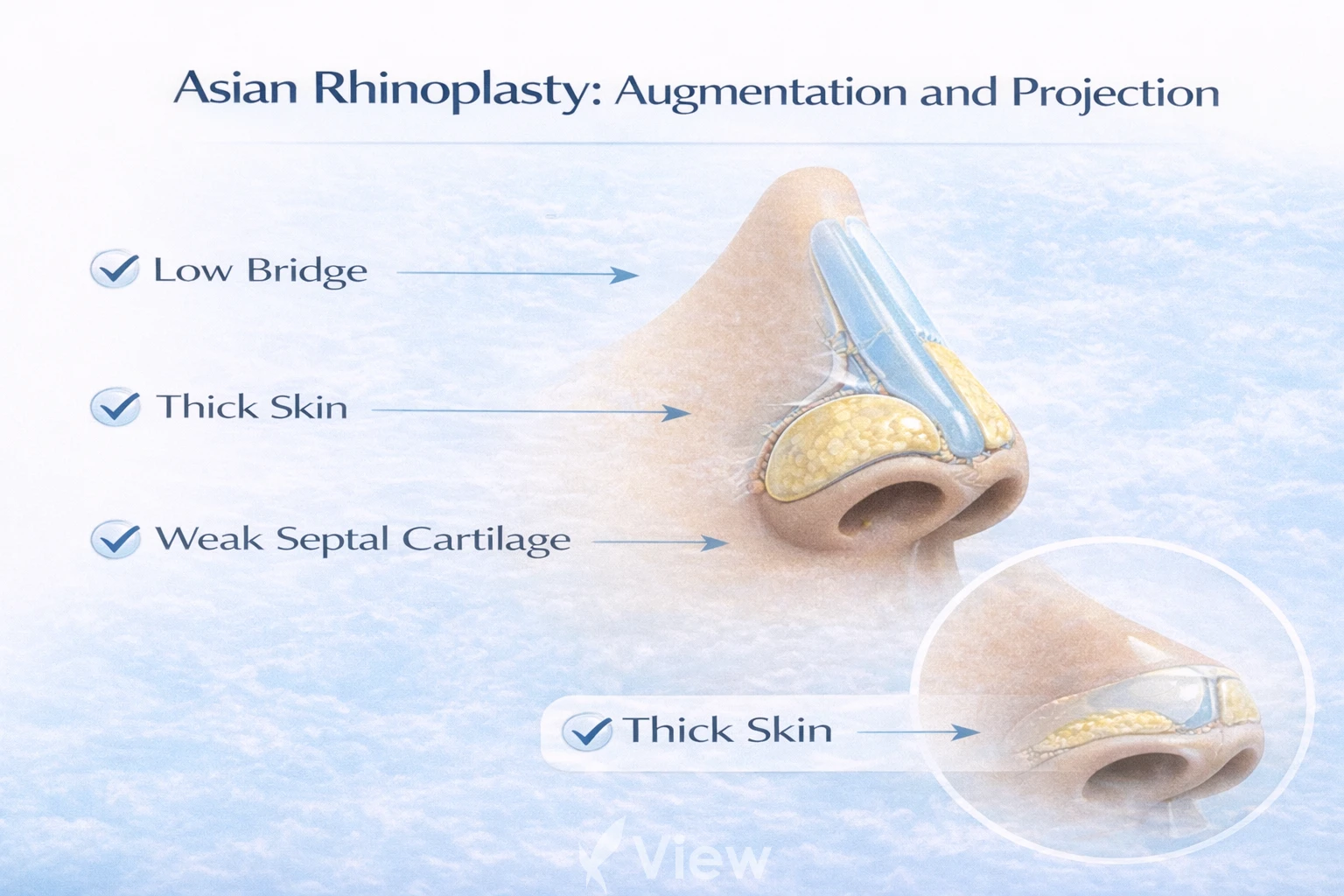
General Characteristics
The Asian nose (Mesorrhine) typically presents with a lower radix (start of the nose), a depressed dorsum, and a wider, more rounded tip. The septal cartilage is frequently smaller and thinner compared to Caucasian anatomy, providing less donor material for grafting. The skin is thicker and richer in sebaceous glands, particularly at the tip, which masks underlying structural definition.
Surgical Design Points
Asian Rhinoplasty is fundamentally an augmentation procedure. To raise the bridge, surgeons utilize either silicone implants or, increasingly, full autologous tissue (dermis or rib cartilage) to avoid infection or contracture. Tip surgery is critical; simple suturing techniques effective in Caucasians do not work on the thick Asian skin. Instead, substantial structural grafting (septal extension grafts) is required to forcefully push the thick skin forward and create definition. This is why Korea has become a master of autologous rib cartilage rhinoplasty—it provides the necessary volume and strength.
African Rhinoplasty: Definition and Base Reduction
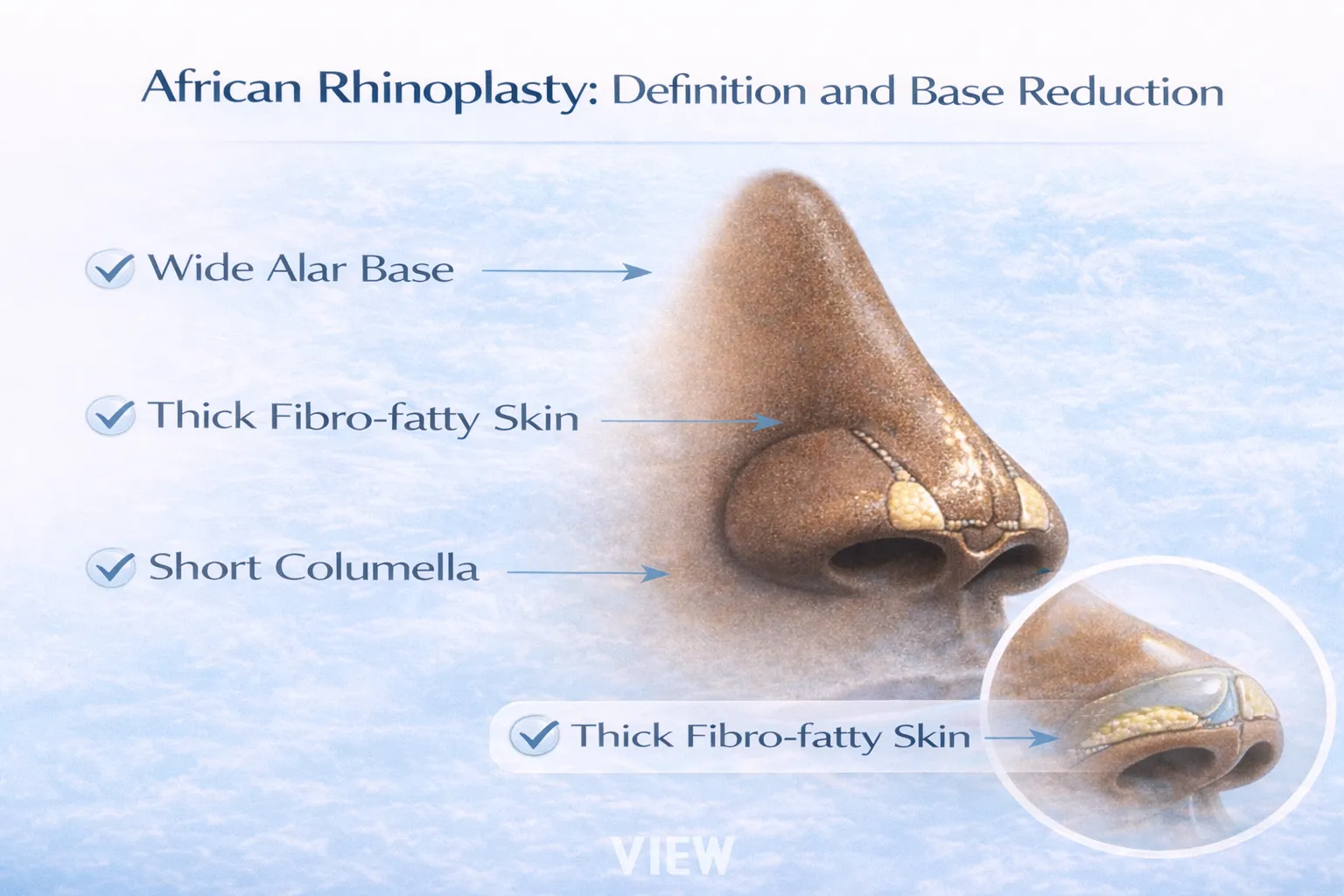
General Characteristics
The African nose (Platyrrhine) is distinguished by a broad, low dorsum and a wide alar base. The tip is often under-projected due to short medial crura (columella cartilage) and weak lower lateral cartilages. The skin-soft tissue envelope can be extremely thick, which resists draping over the new cartilage structure. The nostrils may be horizontally oriented.
Surgical Design Points
In African Rhinoplasty, the goal is often to narrow the base and define the tip without creating an artificial “pinched” look. Alar base reduction (Weir excision) must be performed conservatively to preserve the natural curvature of the nostril sill. To achieve tip definition against thick skin, the surgeon must build a rigid tripod structure using strong cartilage grafts (often rib or reinforced septal cartilage). Simply removing tissue will not define the tip; the structure must be built into the skin.
Comparative Analysis of Surgical Strategies
| Feature | Caucasian (Leptorrhine) | Asian (Mesorrhine) | African (Platyrrhine) |
|---|---|---|---|
| Primary Goal | Reduction (Hump removal, tip refinement) | Augmentation (Bridge elevation, tip projection) | Refinement (Tip definition, alar base reduction) |
| Skin Thickness | Thin to Medium | Thick (Sebaceous) | Very Thick (Fibro-fatty) |
| Cartilage Strength | Strong, Rigid | Weak, Flexible | Weak, Short Crura |
| Grafting Strategy | Spreader grafts (functional) | Septal extension / Rib cartilage | Columellar strut / Rib cartilage |
Why Choose Korea for Ethnic Rhinoplasty?

Korean Rhinoplasty has evolved beyond regional boundaries to become a global standard for precision and reconstruction. The question arises: why should a non-Asian patient travel to Korea for surgery?
1. Mastery of Difficult Anatomy: Korean surgeons perform thousands of rhinoplasties annually on patients with “weak cartilage and thick skin”—the most difficult anatomical combination to surgically refine. This expertise translates perfectly to African and ethnic rhinoplasty cases where similar anatomical challenges exist.
2. Autologous Cartilage Expertise: Due to the limitations of silicone in certain tissue types, Korean clinics like View Plastic Surgery are world leaders in harvesting and carving autologous rib cartilage. This allows for safe, significant structural changes that are permanent and resistant to infection.
3. Advanced Pre-operative Simulation: We utilize state-of-the-art 3D CT scanning to visualize the nasal septum and turbinates. This ensures that the aesthetic changes do not compromise the airway—a common risk in aggressive reduction rhinoplasty.
Whether you require the reduction techniques common in the West or the augmentation strategies perfected in the East, the key is versatility. View Plastic Surgery offers a fully customized surgical plan based on your biology, not a generic template.
If you are considering rhinoplasty and wish to understand how your specific ethnic background influences surgical planning, schedule a comprehensive consultation with our specialists today. For immediate inquiries, you can also connect with us via WhatsApp.