



Why Rhinoplasty in Korea Should Be Approached Structurally
Understanding the Basic Structure of Rhinoplasty
Rhinoplasty is fundamentally composed of three main structural components:
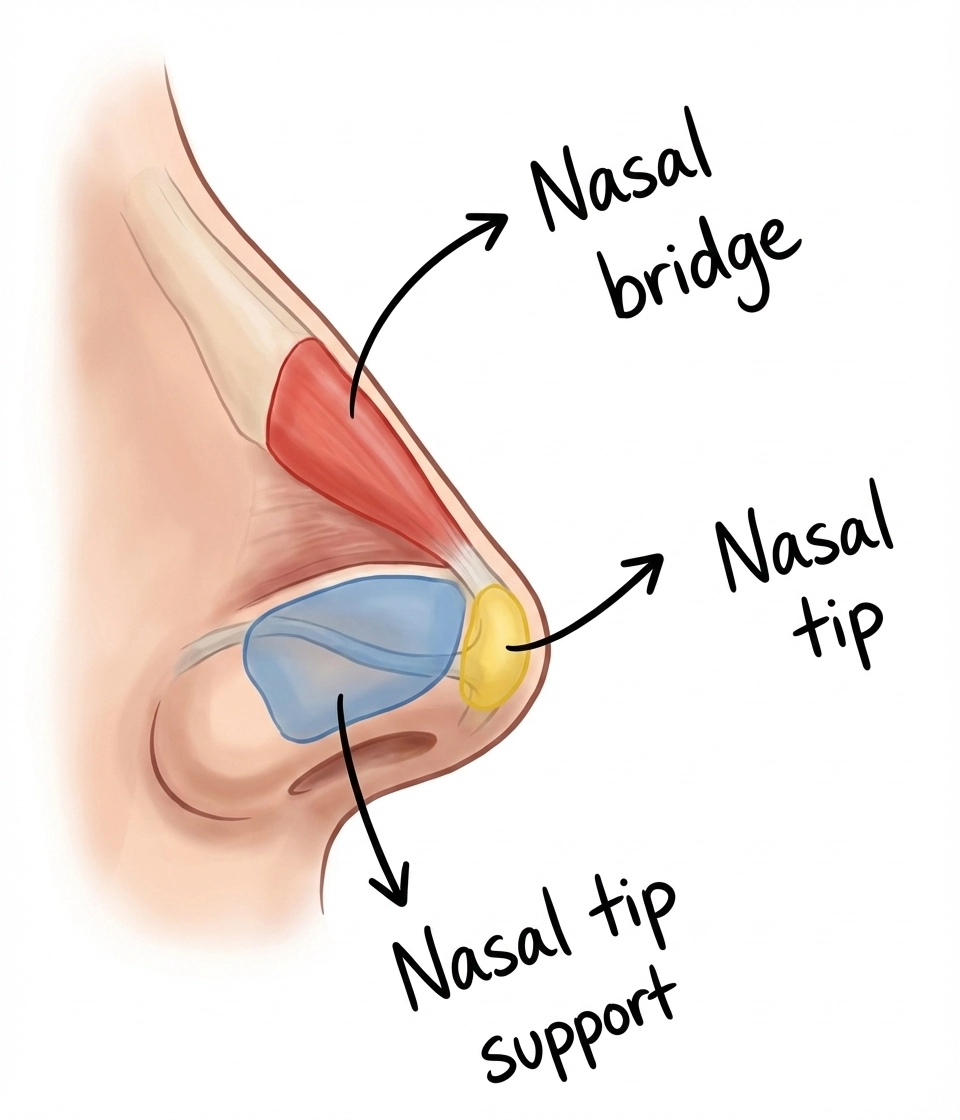
- Nasal Bridge: Determines the central facial line
- Nasal Tip: Strongly influences overall facial impression and depth
- Columella (Support Pillar): The structural foundation that supports the nasal tip
If even one of these elements lacks stability, changes in shape, drooping, or asymmetry may occur over time.
Therefore, the core of rhinoplasty is not how high the nose is raised, but how securely and stably the structure is built.
What Is Open Rhinoplasty?
Key characteristics
- Enables precise structural evaluation and design
- Allows detailed manipulation of the nasal tip, columella, and cartilage
- Particularly advantageous for complex cases or revision rhinoplasty
This method is typically chosen when meticulous structural design is required, rather than for simple bridge augmentation.
Key Points of Rhinoplasty
Nasal Bridge Design
The nasal bridge significantly affects overall facial proportion and is typically constructed using either
implants or cartilage.
Implants
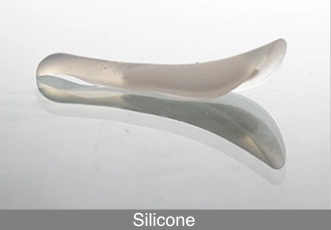
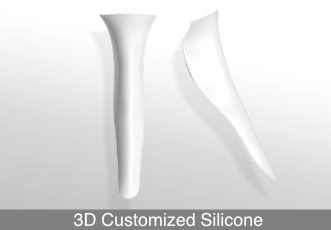
- Maintain shape consistently once positioned
- Low incidence of shape change over time
- Allow predictable and uniform bridge contours
Autologous Rib Cartilage
- Risk of warping over time
- Possible shape changes during absorption and adaptation
- Generally not preferred for primary bridge augmentation
Because stability is paramount for the nasal bridge, implants are often selected when predictable, long-term results are desired.
Nasal Tip Design
The nasal tip has the greatest impact on facial impression. Depending on the case,
ear cartilage or rib cartilage may be used.
- Ear cartilage: Used as a supplementary material when minor support is needed
- Rib cartilage: Used when strong projection or firm support is required
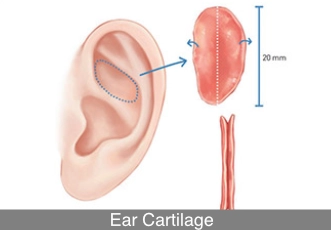
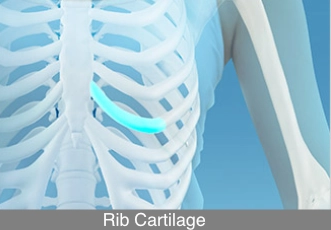
More important than the material itself is the structural connection to the columella.
Columella (Support) Design
The columella serves as the foundational structure that supports the nasal tip and maintains its position and shape.
If columellar support is weak, the nasal tip may gradually descend over time, leading to changes in shape and reduced
durability. As such, the columella is a key structural standard that directly affects both the completeness of nasal tip
design and long-term outcome stability.
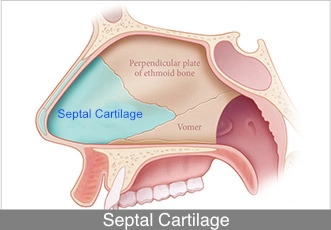
A commonly used material for columellar support is autologous septal cartilage, which is harvested from inside the nose
without the need for an additional donor site. However, because the available amount is limited, the degree of height
and length that can be achieved may also be limited.
Common material
Autologous Septal Cartilage
- Harvested from inside the nose
- No additional donor site
- Limited in length and height potential
Comparison of Rhinoplasty Materials
Materials used in rhinoplasty affect not only aesthetic outcomes but also long-term stability and the possibility of revision. The key question is not which material is universally “better,” but which material is appropriate for each anatomical purpose within an overall structural plan.
Implants (Nasal Bridge)
Characteristics
- Minimal shape change once fixed
- Predictable and consistent bridge contours
- Designed specifically for nasal structural stability
Recommended for
- Patients seeking clear bridge height or definition
- Those prioritizing long-term stability
- Cases where excessive cartilage use is unnecessary
Since the nasal bridge requires fixation rather than flexibility, implants are often the most rational choice.
Donor Rib Cartilage (For Nasal Tip Reinforcement)
Donor rib cartilage is processed cartilage obtained from human donors and is commonly used for nasal tip reinforcement.
Advantages
- No need for cartilage harvesting surgery
- No chest incision or postoperative chest care
- Relatively simple recovery process
Limitations
- Limited quantity available
- Less suitable for cases requiring strong projection or structural force
Recommended for
- Mild nasal tip enhancement
- Patients wishing to avoid cartilage harvesting
Autologous Rib Cartilage (Nasal Tip & Columella Support)
Autologous rib cartilage is harvested from the patient’s own rib and provides the largest available volume.
Advantages
- Sufficient quantity for extensive structural support
- Low risk of rejection
- Strong support for the nasal tip and columella
Limitations
- Requires additional harvesting surgery
- Chest incision and recovery required
- Risk of cartilage warping
Recommended for
- Significant nasal tip projection
- Revision rhinoplasty
- Cases with severely weakened nasal structure
Autologous rib cartilage is generally considered more suitable for nasal tip and columella support rather than nasal bridge augmentation.
How to Find the Right Rhinoplasty for You
Rhinoplasty should not be decided based on trends or specific materials. The priority is to identify which of the three areas—nasal bridge, tip, or columella—requires correction, and which adjustments will result in the most stable outcome. Because self-assessment through photos is often inaccurate, professional structural analysis through consultation is essential.
The Most Efficient First Step: Online Consultation
One of the most efficient ways to begin is through an online consultation with View Plastic Surgery. By reviewing frontal and side-view photos, surgeons can perform an initial structural assessment, clarify feasibility, and suggest an appropriate surgical direction. This approach helps prevent excessive material use and allows for personalized recommendations before you travel to Korea.
Using Online Information the Right Way
Many patients start by looking for rhinoplasty information online to understand nose types, surgical techniques, and design options. While this research is helpful for building general knowledge, it should be used as a reference rather than a final decision tool. If you need faster clarification or have time-sensitive questions while researching, quicker responses are available through direct communication.
Learn More About Nose Surgery Options
For those who want a clearer understanding of commonly performed procedures, View Plastic Surgery’s nose surgery resources provide structured explanations of rhinoplasty techniques used in Korea. Reviewing these materials can help you approach consultation with more informed and realistic expectations.
Consultation can be completed before visiting Korea, allowing your surgical plan to be refined in advance and making the overall process more efficient once you arrive.
Is It Possible to Have Surgery in Korea Alone?
Yes, it is possible. Most View Plastic Surgery international patient services include:
- Airport pick-up and drop-off
- Assistance with hotel reservations
- Local area guidance around the hospital
- On-site professional medical interpreters
As a result, patients can undergo surgery and recovery smoothly even without a companion.
FAQ
Isn’t rib cartilage more natural for nasal bridge augmentation?
Natural appearance depends more on design than material. For the nasal bridge, stability is critical, and implants are often more suitable.
Is autologous rib cartilage always necessary to raise the nasal tip?
Does open rhinoplasty leave visible scars?
In most cases, columellar scars fade significantly over time and become barely noticeable.