


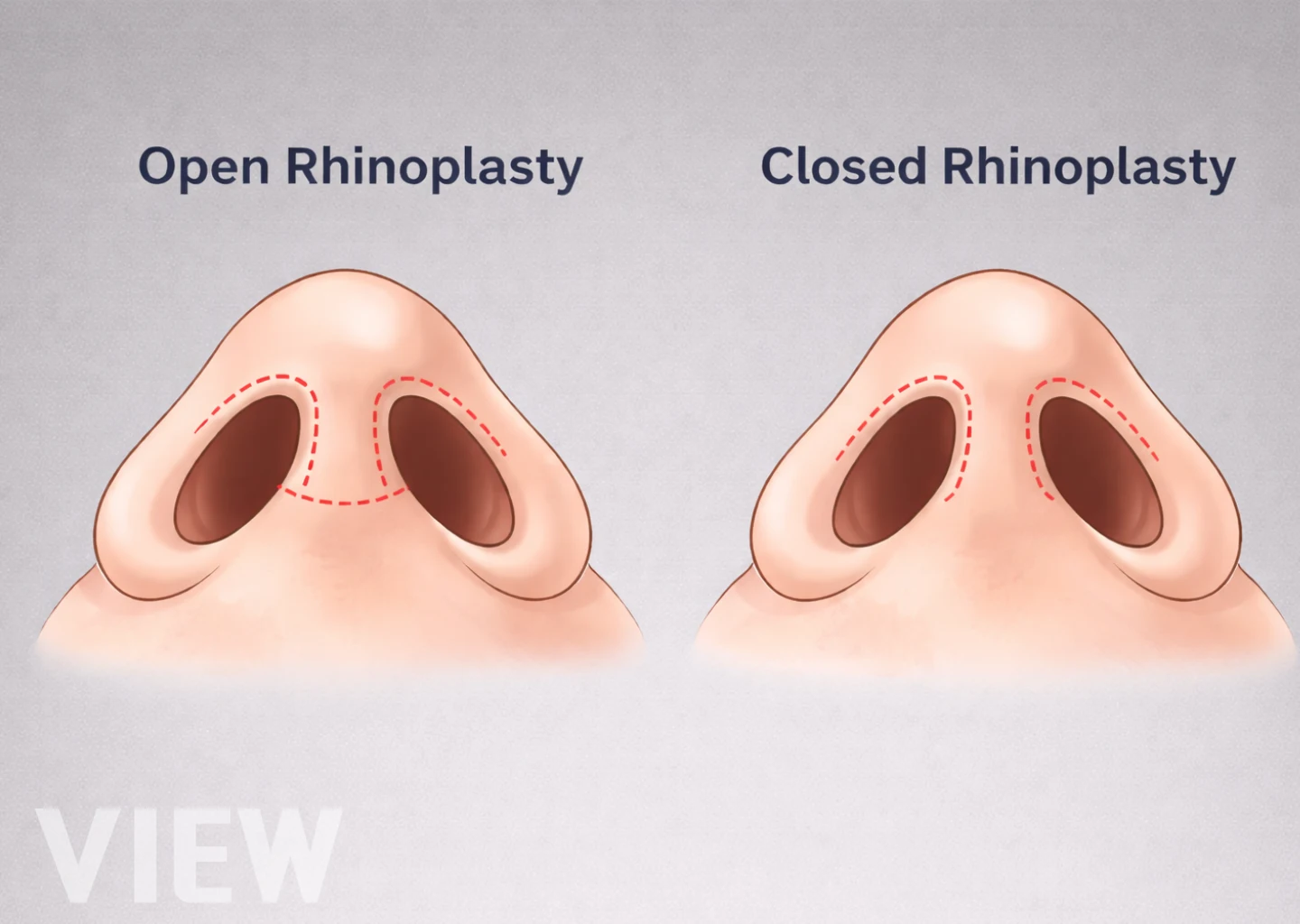
When considering nose surgery in the global capital of aesthetic enhancement, patients are often faced with a critical decision: Closed vs Open Rhinoplasty in Seoul. This choice is not merely about whether you will have a small scar; it is about the structural integrity of your nose, the precision required for your specific aesthetic goals, and the recovery journey you are willing to undertake.
At View Plastic Surgery, we believe an informed patient is a happy patient. Seoul has become the hub for advanced rhinoplasty techniques because surgeons here do not rely on a “one-size-fits-all” approach. Instead, we utilize advanced 3D diagnostics to recommend the surgical method that aligns perfectly with your anatomy.
This comprehensive guide delves deep into the medical nuances of both techniques, supported by clinical insights and our extensive experience in performing thousands of successful rhinoplasty procedures.
Closed vs Open Rhinoplasty Seoul : Understanding the Core Differences
To understand which method is superior for your needs, one must first understand the anatomical access points. The primary distinction lies in the incision placement and the resulting visibility for the surgeon.
The Anatomy of the Incision
- Closed Rhinoplasty (Endonasal): All incisions are made inside the nostrils (endonasal mucosa). There is no disconnection of the columella skin. This technique is often referred to as “blind” surgery by some, though skilled surgeons visualize the cartilage by retracting the skin.
- Open Rhinoplasty (External): This involves the same internal incisions as the closed approach but connects them with a small, stair-step incision across the columella (the fleshy strip of tissue separating the nostrils). This allows the surgeon to peel back the nasal skin envelope, revealing the entire cartilage framework.
| Feature | Open Rhinoplasty | Closed Rhinoplasty |
|---|---|---|
| Incision Location | Inside nostrils + across columella | Entirely inside the nostrils |
| Surgeon Visibility | 100% Direct Visualization | Limited (Keyhole View) |
| Best For | Complex tip work, revisions, asymmetry, extension | Dorsal hump removal, minor bridge augmentation |
| Operative Time | Longer (requires precise suturing) | Shorter |
The Benefits of Open Rhinoplasty: Precision and Structural Support
In the context of open vs closed rhinoplasty Korea, the open approach is predominantly favored for comprehensive transformations. Why do top surgeons in Seoul often recommend this method despite the external incision?
Unparalleled Diagnostic Accuracy
When the skin envelope is lifted, the surgeon can see the exact anatomy of the lower lateral cartilages. Asymmetries that were invisible externally become obvious. This allows for microscopic adjustments—shaving a millimeter off the left side or grafting a tiny strut to the right—that ensure a perfectly straight result. For patients concerned about asymmetry, seeing our Before & After gallery demonstrates the level of symmetry achievable through open techniques.
Complex Tip Plasty and Projection
Asian rhinoplasty often focuses on tip projection and refinement (bulbous nose correction). To achieve a defined, elevated tip without it looking “pinched,” surgeons often use septal extension grafts or columellar struts. Securing these grafts requires substantial structural work that is extremely difficult, if not impossible, to execute perfectly through a closed approach.
Ideal for Revision Rhinoplasty
If a patient has scar tissue or capsule contracture from a previous surgery, the anatomical landmarks are distorted. The open approach allows the surgeon to safely dissect through scar tissue, remove old silicone, and reconstruct the nose. Safety is paramount in revisions, which is why we emphasize accurate diagnosis via pre-op consultation and CT scanning.
The Benefits of Closed Rhinoplasty: No External Scars and Faster Healing
While the open approach offers control, the closed approach offers finesse and speed. It is favored by patients seeking subtle changes or those prone to keloid scarring.
The "Scarless" Advantage
Because all incisions are mucosal (internal), there is absolutely no visible sign of surgery once the patient has healed. For models, actors, or individuals who cannot risk even a faint columellar line, this is a significant advantage.
Reduced Tip Edema (Swelling)
The columellar artery is a major source of lymphatic drainage and blood supply to the nasal tip. In open rhinoplasty, this pathway is temporarily disrupted, leading to prolonged tip swelling (sometimes taking 6-12 months to fully resolve). In closed rhinoplasty, the columellar skin remains intact, preserving the vascular bridge. Consequently, post-operative swelling subsides much faster, revealing the final shape sooner.
Shorter Surgery Time
Without the need to meticulously open and close the columellar incision, the surgery time is reduced. Less time under anesthesia can translate to a smoother immediate wake-up phase.
Which Method is Right for You?
The decision between open vs closed rhinoplasty in Korea is rarely a matter of patient preference alone; it is a clinical decision based on your anatomy and goals.
Choose Open Rhinoplasty If:
- You need significant tip projection or de-rotation (lengthening a short nose).
- You have a severe deviated septum requiring complex septoplasty.
- You are undergoing revision surgery.
- You want to correct a “cleft lip” nose deformity.
Choose Closed Rhinoplasty If:
- Your primary concern is a dorsal hump (hump reduction).
- You are happy with your tip projection but want the bridge narrowed.
- You have a tendency for hypertrophic scarring.
- You require a “lunchtime” procedure with minimal downtime.
Recovery Comparison: Healing Timelines for Closed vs. Open Rhinoplasty
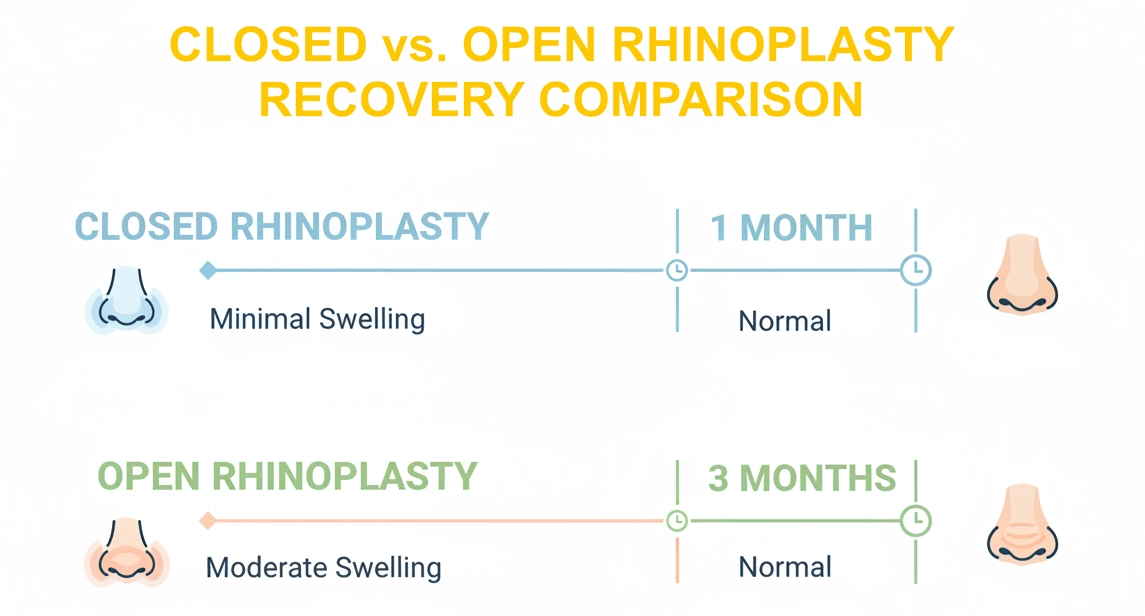
One of the most frequent questions from patients is how the choice of technique impacts their rhinoplasty recovery in Korea. While the internal healing process is similar, the external experience of swelling and scarring differs between the two approaches.
Scarring and Incision Care
- Closed Rhinoplasty: Since all incisions are made inside the nostrils (endonasal), there is zero visible external scarring. This makes it the preferred choice for patients who are concerned about permanent marks.
- Open Rhinoplasty: This involves a small incision across the columella (the tissue between the nostrils). While this leaves a tiny scar, it typically fades into a nearly invisible line within a few months when handled by a skilled surgeon.
Swelling and Downtime
- Closed Rhinoplasty: This method is generally associated with a faster initial recovery. Because the skin is not fully lifted from the nasal framework, the disruption to the soft tissue and lymphatics is minimized, resulting in less postoperative swelling.
- Open Rhinoplasty: Due to the more extensive nature of the procedure, patients may experience more significant swelling, particularly at the nasal tip. The “refinement phase” where the final tip definition appears may take slightly longer compared to the closed approach.
Safety and Expertise: Why Seoul is the Hub for Advanced Rhinoplasty
Whether the procedure is open or closed, the skill of the surgeon is the variable that dictates success. Seoul’s medical infrastructure is built on high-volume experience and rigorous safety standards.
3D CT Diagnostics
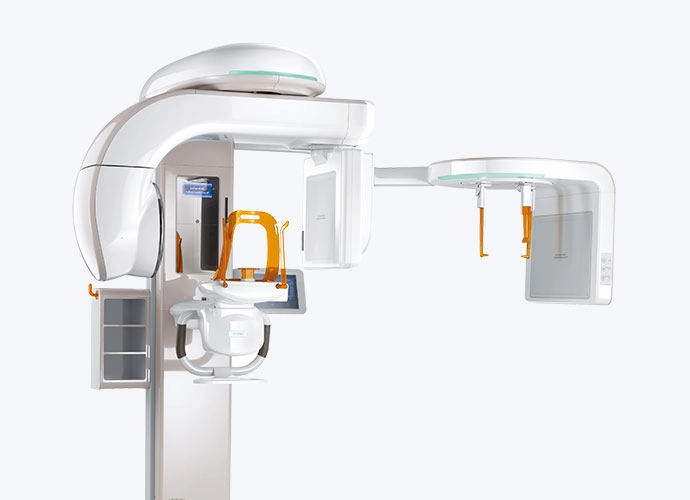
At View Plastic Surgery, we do not guess. Every rhinoplasty patient undergoes a 3D CT scan. This reveals the septal curvature, the thickness of the skin, and the availability of donor cartilage (septum or ear). This data dictates whether an open or closed approach is safer.
Anesthesiology and Monitoring
Safety extends beyond the incision. Our dedicated anesthesiology department monitors patients in real-time. Whether it is a 1-hour closed procedure or a 4-hour open revision, the patient’s vitals are the top priority. You can verify our safety systems and see real patient experiences in our selfie reviews.
If you are unsure which technique suits your face, direct communication with a specialist is the next step. You can contact us on WhatsApp for a preliminary assessment of your nasal structure.