


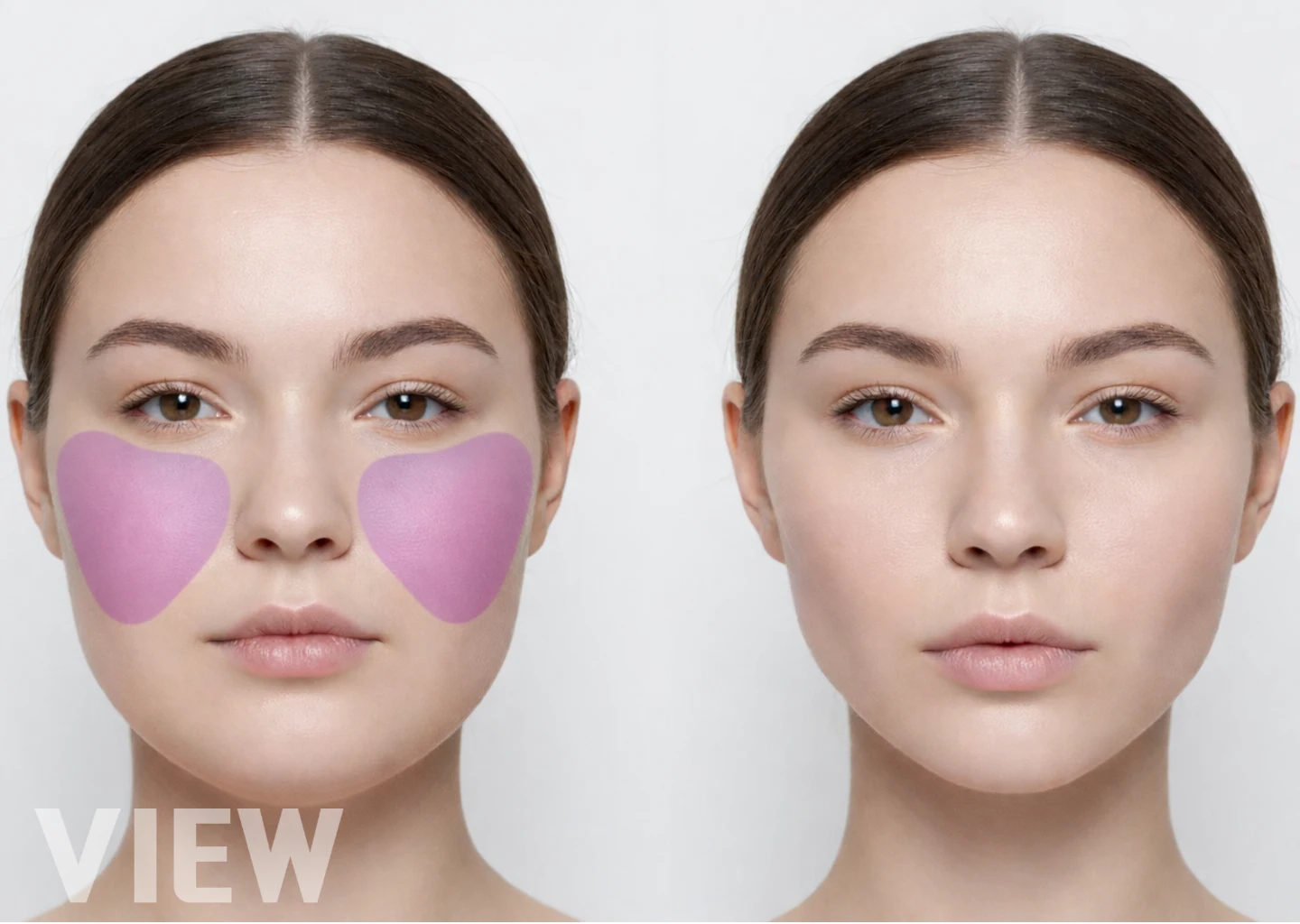
In the era of high-definition cameras and social media, the definition of facial beauty has shifted toward the “snatched” look—characterized by hollowed submalar areas and razor-sharp jawlines. While celebrities like Bella Hadid, Zoë Kravitz, and Anya Taylor-Joy are frequently cited as the aesthetic ideal (though they may not have confirmed surgeries), the procedure behind this look, Buccal Fat Removal, has sparked a heated medical debate.
Is this procedure a permanent contouring solution, or is it a one-way ticket to premature facial aging? As a leading authority in facial contouring at View Plastic Surgery, we believe in transparency. This guide moves beyond the trend to explain the complex anatomy of Bichat’s Fat Pad and the critical long-term implications patients must consider.
Achieving the Sculpted Look vs. The "Gaunt" Risk
The sudden surge in interest for buccal fat removal is driven by the desire to eliminate “chipmunk cheeks” without bone surgery. Unlike weight-loss induced slimming, which reduces subcutaneous fat globally, this surgery targets a specific, deep fat pocket that is often resistant to diet and exercise.
However, the line between “sculpted” and “sunken” is thin. The “Hollywood Hollow” look works well on camera but can appear harsh in person, especially as natural volume loss accelerates in the late 30s.
Anatomy Guide: What is Bichat’s Fat Pad?
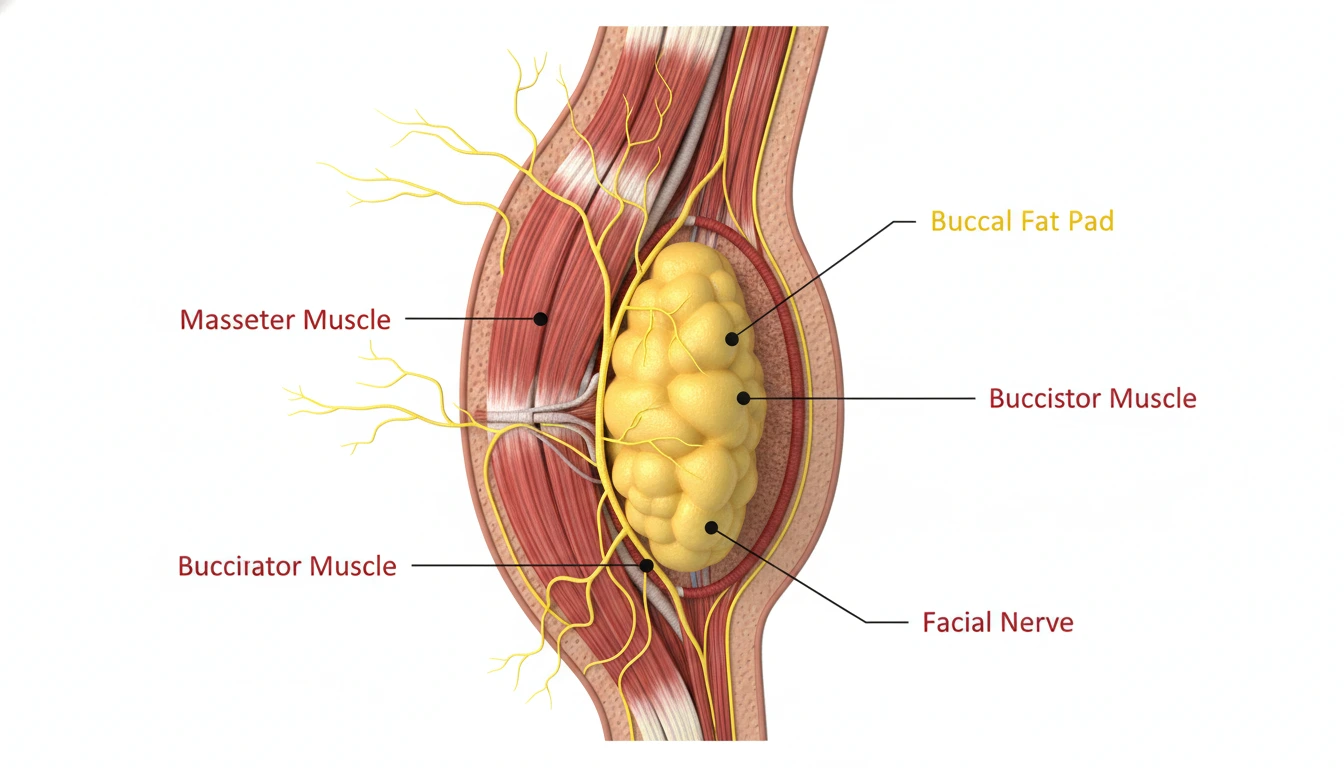
To understand the risks, one must understand the anatomy. The Buccal Fat Pad (Corpus Adiposum Buccae) is not simple subcutaneous fat. It is a specialized, encapsulated deep fat pad that acts as a gliding surface for the muscles of mastication.
The Complex Structure
The fat pad is not a single mass but a complex structure consisting of a main body and four distinct extensions:
- Buccal Extension: This is the primary target of the surgery. It sits in the lower anterior cheek and creates the “fullness” many patients wish to reduce.
- Deep Extensions (Pterygoid, Pterygopalatine, & Temporal): These sections connect to the temples and jaw muscles. A skilled surgeon must leave these untouched to preserve essential structural support for the face.
Navigating the Danger Zones
Precision is non-negotiable. The buccal fat pad sits in a “high-traffic” anatomical area:
- Stensen’s Duct (Parotid Duct): Transports saliva; damage can cause cysts or fistulas.
- Facial Nerve (Buccal Branch): Controls smile muscles. Injury here can lead to permanent facial paralysis or asymmetry.
Surgical Note: At View Plastic Surgery, we utilize a precise intraoral approach that isolates the buccal extension while protecting the neurovascular bundles, ensuring safety and preventing excessive hollowing.
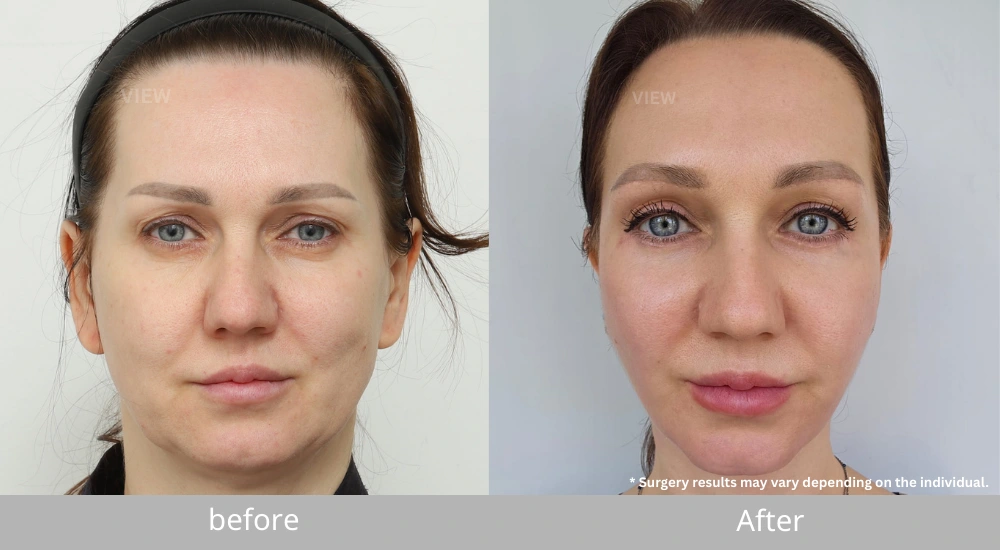
The Ultimate Impression Shift: Buccal Fat Removal Before & After Results
From Cute to Chiseled : Achieving Sophistication
While full cheeks can sometimes look youthful, they often project a “cute” or “childish” image that may not align with a professional or mature aesthetic.
The Shift: By reducing the “candy-in-mouth” protrusion, the width of the lower face is visually narrowed.
The Result: This transformation shifts the impression from soft and round to sharp, intelligent, and sophisticated.
Revealing the Bone Structure: 3D Contouring Without Bone Surgery
From Grumpy to Vibrant : Brightening the Facial Expression
Proactive Aging: Preventing the Bulldog Jowls"
Procedure vs. Bone Surgery: What Can It Achieve?
Many patients confuse soft tissue volume with bone structure. Buccal fat removal reduces the width of the lower cheek, but it does not alter the jawbone itself.
| Feature | Buccal Fat Removal | Square Jaw Reduction (Bone) |
|---|---|---|
| Primary Target | Deep fat pocket in the anterior cheek. | Mandibular angle (bone) and masseter muscle. |
| Best For | “Baby face”, chubby cheeks, lower cheek protrusion. | Wide lower face, square jawline structure. |
| Incision | 1-2cm inside the mouth (mucosa). | Inside the mouth (behind the teeth). |
To determine candidacy, a formal evaluation is required to differentiate between muscle hypertrophy, bone width, and actual buccal fat excess.
The Aging Debate: Will Buccal Fat Removal Make Me Look Older?
This is the most critical section of this guide. One of the most common concerns among patients is whether removing facial fat will accelerate the aging process. It is a fact that buccal fat does not regenerate; once removed, that volume is gone forever. While this is highly desirable in your 20s to achieve a chiseled look, you must consider that facial aging naturally involves the atrophy (shrinking) of fat pads.
The "Skeletalization" Risk & The Hollow Look
The primary risk associated with aggressive buccal fat reduction is skeletalization. If too much fat is removed, or if the procedure is performed on a patient who naturally has a thin face, the result in their 40s and 50s can be a “cadaveric” or skeletal appearance.
Loss of Structural Support: The buccal fat pad acts as a structural cushion for the mid-face.
The “Pseudo-Jowl” Effect: Without this underlying support, the skin may drape loosely over the hollowed area, ironically creating “pseudo-jowls” that make you look older than you actually are.
The Importance of the “Golden Ratio”: At View Plastic Surgery, we emphasize conservative removal—striking a balance between achieving a sharp contour now and maintaining enough volume for a youthful glow in the future.
Who Should AVOID This Surgery? (Risk Assessment)
To ensure patient safety and long-term satisfaction, we identified specific groups who should be cautious or avoid the procedure altogether:
Patients with Low BMI or Naturally Thin Faces: If you already have highly defined cheekbones or a narrow facial structure, removal will likely lead to a “gaunt” or sickly appearance rather than a sculpted one.
Patients Over 45 with Significant Laxity: As skin elasticity significantly declines with age, removing deep fat can worsen the appearance of sagging skin. For this demographic, we often recommend a Lifting Protocol instead of, or in conjunction with, very conservative fat reduction.
Patients with Sunken Temples: Removing buccal fat can sometimes accentuate hollowness in other areas of the face, making the overall facial harmony appear unbalanced.
The View Advantage: Preventing the "Sunken" Look
Our surgical philosophy is rooted in preventative aesthetics. By using high-resolution endoscopes to precisely isolate only the buccal extension of the fat pad, we preserve the deep extensions that provide essential facial support. This ensures that your V-line results remain sophisticated and vibrant as you age, rather than becoming hollowed out.
Age-Specific Strategy: 20s vs. 30s-40s
Patients in their 20s: Pure Removal
To achieve a truly sharp, celebrity-inspired profile, we often recommend combining fat reduction with a V-line Surgery. While the V-line surgery reshapes the bone structure by narrowing the square jaw and chin, removing the buccal fat eliminates the “softness” over that bone, revealing a defined and chiseled jawline. This dual approach ensures that the structural change is visible and not hidden under a layer of deep fat. However, conservative removal remains mandatory to preserve essential volume for the decades to come.
Patients in their 30s & 40s: Removal + Lifting
Entering the 30s, the superficial musculoaponeurotic system (SMAS) begins to weaken, and skin elasticity declines. In this age group, the perceived “heaviness” in the lower cheek is often not just excess fat, but sagging tissues (jowls).
Clinical Warning: If a patient with early skin laxity undergoes simple buccal fat removal, the skin may fail to contract. This results in a deflated appearance where the skin hangs more loosely—paradoxically aging the face further.
The Solution: Combined Lifting Protocols
For patients over 30 exhibiting lower face heaviness, we rarely recommend isolated fat removal. Instead, we integrate removal with suspension techniques. Lifting protocol is essential here. By combining conservative fat reduction with laser lifting (like Ulthera or Thermage) or thread lifting, we reposition the tissues superiorly while reducing volume. This ensures the “empty” space created by fat removal is tightened, preventing the hollowed-out look.
Recovery Timeline & Travel Guide
For our international patients, buccal fat removal is an excellent “medical tourism” procedure due to the rapid recovery and lack of external scars.
- Day 1-3 (Peak Swelling): You will resemble a chipmunk. This is normal. Ice packs are essential.
- Day 5-7 (Travel Ready): Most patients are cleared to fly. External swelling is usually manageable enough to go out with a mask or light makeup.
- Diet: Soft foods (porridge, smoothies) are required for 3-5 days to protect the intraoral incision.
- Final Results: While initial slimming is visible at 3 weeks, the final contour settles at 3-6 months.