



Comprehensive Clinical Analysis: Incisional vs Non-incisional Ptosis Correction
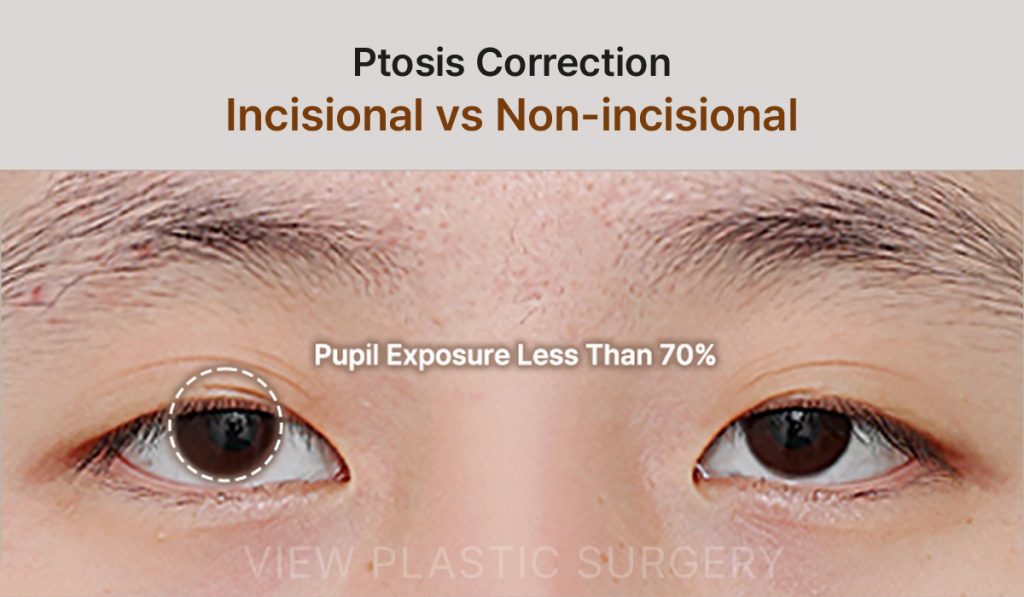
Ptosis, or blepharoptosis, is a physiological condition where upper eyelid margins droop lower than their ideal anatomical position, often obstructing visual axis and imparting a perpetually fatigued appearance. In the specialized landscape of South Korean plastic surgery, correcting this condition involves sophisticated manipulation of the levator aponeurosis or Mueller’s muscle. Choosing between Incisional vs Non-incisional Ptosis Correction is a decision rooted in anatomical necessity rather than mere preference.
At VIEW Plastic Surgery, we combine advanced surgical precision with the latest aesthetic trends in Korea plastic surgery, focusing on ‘natural longevity.’ This guide provides an exhaustive clinical breakdown of both methodologies to help patients navigate their journey toward ocular rejuvenation.
1. Anatomical Fundamentals: Defining the Surgical Need
Before selecting a procedure, one must understand the etiology of ptosis. It typically stems from a dehiscence or stretching of levator muscle—the primary structure responsible for elevating the eyelid. When this muscle weakens, forehead muscles (frontalis) often overcompensate, leading to deep forehead wrinkles and chronic tension headaches.
The Role of Eyelid Morphology
Patient suitability for either method depends on four critical factors: skin thickness, retro-orbicularis oculi fat (ROOF) volume, degree of muscle ptosis (mild, moderate, or severe), and presence of excess skin (dermatochalasis). While ptosis correction can address these issues, approach differs significantly based on these variables.
| Feature | Non-Incisional Method | Incisional Method |
|---|---|---|
| Primary Indication | Thin skin, mild ptosis | Thick skin, severe ptosis, excess fat |
| Surgical Technique | Suture-looping of the muscle | Muscle advancement & tissue excision |
| Recovery Time | 3–5 days (Socially acceptable) | 10–14 days (Initial swelling) |
| Fat Removal | Extremely limited | Extensive Eyelid Fat Removal Seoul |
2. Non-Incisional Method: The Era of Natural Aesthetics
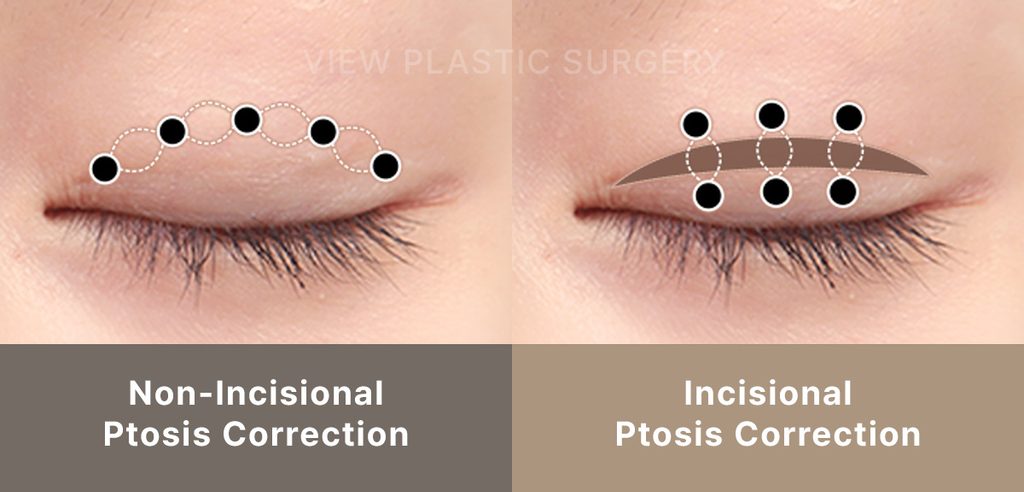
GThe global aesthetic trend has shifted toward ‘quiet luxury’ in plastic surgery—results that are indistinguishable from nature. The Nnon-incisional method, often referred to as the ‘double-knot’ or ‘buried’ technique, aligns perfectly with this trend. It involves making slitmicroscopic perforations in upperthe eyelid through which a high-tension suture is passed to bridge the levator muscle and the tarsal plate.
Technical Mechanism
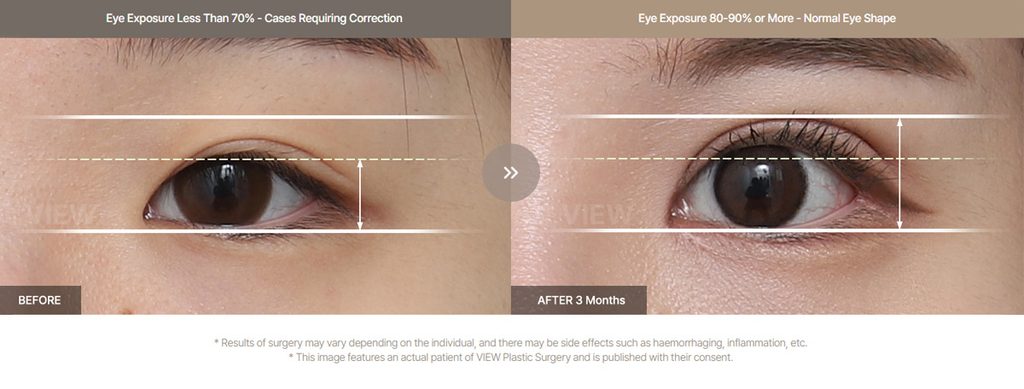
Unlike traditional double eyelid surgery, this technique specifically targets eyelid muscle tension. By shortening functional length of levator muscle without a long incision, eye opens wider and more effortlessly. This method is highly sought after because of minimal Ptosis Correction Recovery Time, often allowing patients to return to work within a week.
Ideal Candidates for Non-Incisional Surgery
- Patients with thin eyelid skin and high elasticity.
- Individuals with mild ptosis where pupil is obscured by less than 2mm.
- Those seeking a scarless finish and rapid healing.
- Patients who do not require significant Eyelid Fat Removal Seoul.
3. Incisional Method: Permanent Corrective Power
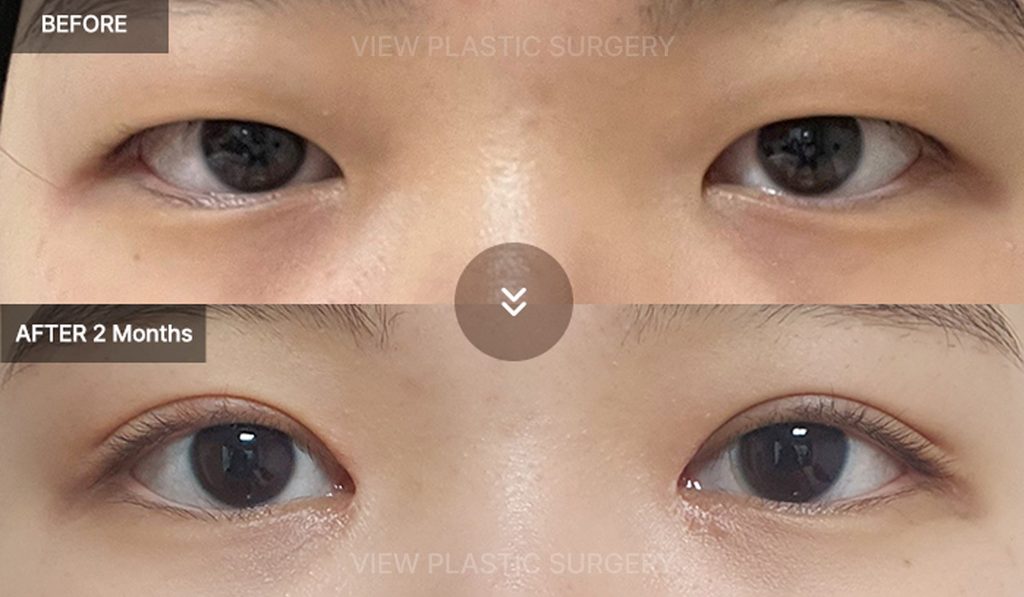
For patients with moderate to severe ptosis, or those with significant orbital fat, ncisional method remains the gold standard. This technique involves a full-length incision along the desired crease line, providing direct visibility and access to eyelid internal structures.
Levator Aponeurosis Advancement
The core of the incisional method is ‘Levator Aponeurosis Advancement.’ Surgeons detaches levator muscle from its weakened position and re-anchors it higher onto the tarsal plate. This provides a permanent, powerful lift that can correct even the most stubborn cases of ‘sleepy eyes.’ Furthermore, incisional method allows for precise Eyelid Fat Removal Seoul, addressing puffiness that non-incisional methods cannot resolve extensively.
Addressing Thick Skin and Asymmetry
Heavy, hooded eyes often have a combination of excess skin and a thick orbicularis oculi muscle. Incisional approach allows surgeons to excise this redundant tissue, creating a crisp, defined crease. It is also the superior choice for correcting significant ocular asymmetry, as tension on each eye can be adjusted with millimeter precision during the procedure.
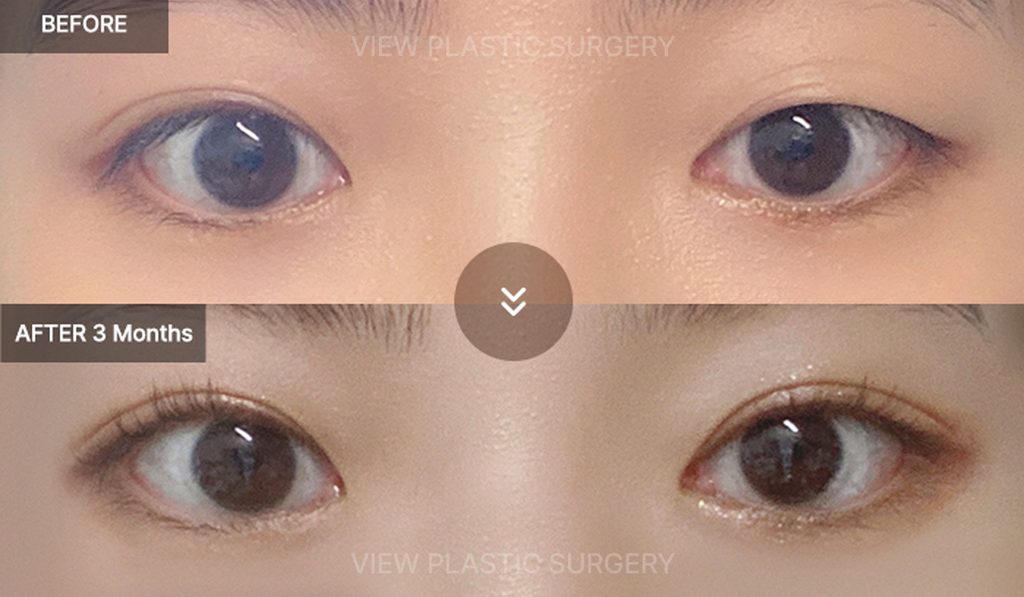
4. Clinical Risk: Non-Incisional Eyelid Surgery Loosening
One of the most frequent concerns discussed during consultations is Non-incisional Eyelid Surgery Loosening. Because non-incisional method relies on suture tension rather than biological tissue adhesion, there is a statistical risk (approximately 5-10% depending on the case) of crease or muscle lift loosening over time.
Why Does Loosening Occur?
Loosening is typically not a failure of the surgeon but a mismatch between technique and patient’s anatomy. If a patient with thick skin or heavy fat insists on a non-incisional procedure, eyelid tissue weight puts excessive stress on sutures. Over time, sutured knots may cut through soft tissue or suture knot may slip, resulting in eyes returning to their original ptotic state. This is why a thorough consultation is vital to ensure the Best Ptosis Surgery in Korea for your specific eye type.

5. Recovery Timeline: What to Expect Post-Surgery
Understanding Ptosis Correction Recovery Time is essential for international patients planning their trip to Seoul. While both procedures are outpatient surgeries, healing trajectories differ.
Non-Incisional Recovery
- Days 1-3: Peak swelling; cold compresses are mandatory.
- Day 5: Majority of bruising subsides. Makeup can often be applied.
- Month 1: The ‘natural’ look is fully achieved.
Incisional Recovery
- Days 1-7: Significant swelling and potential bruising. Sutures are removed on Day 5 or 7.
- Weeks 2-4: Swelling migrates downward; crease may look higher than intended initially.
- Months 3-6: Scar tissue softens and fades into the natural fold. Final results are visible.
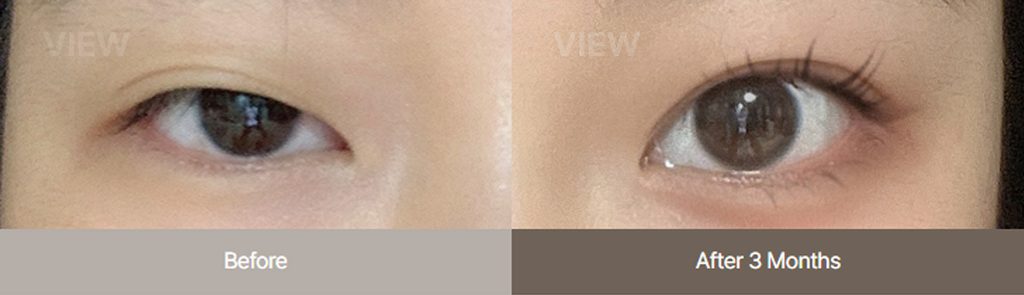
6. Advanced Surgical Trends : The Hybrid Approach
At VIEW Plastic Surgery, we often employ ‘Hybrid’ techniques that combine benefits of both methods. For example, a ‘Partial Incision’ can allow for limited fat removal while maintaining much of rapid recovery benefits of a non-incisional approach. This nuanced tailoring is what defines the Best Ptosis Surgery in Korea.
Safety and E-E-A-T at View Plastic Surgery
Our surgical team adheres to strict medical protocols, utilizing high-magnification surgical loupes to ensure no damage to lacrimal glands or delicate cornea. Our post-operative care includes specialized deswelling laser treatments (Healite II) to accelerate the Ptosis Correction Recovery Time for our global patients.
7. Conclusion: Finding Your Perfect Match
Choice between Incisional vs Non-incisional Ptosis Correction is a medical determination based on your unique anatomy. While non-incisional method offers convenience and naturalness, incisional method offers reliability and comprehensive transformation. If you are struggling with heavy eyelids or a tired appearance, first step is a professional evaluation.
Ready to transform your gaze? Contact us today for a personalized analysis via WhatsApp or visit our consultation page to begin your journey with the leaders in Korea plastic surgery.