


1. Receding Chin Surgery vs. Chin Filler: Finding the Root Cause of Your Double Chin
In the realm of advanced aesthetics in 2026, we frequently encounter patients who maintain a lean physique yet struggle with a persistent ‘double chin.’ For many, this is not a matter of submental adiposity (fat) but rather a skeletal deficiency known as microgenia or a receding chin. When the mandibular symphysis (the chin bone) is retruded by 5mm or more, the soft tissues lack the skeletal framework required for proper suspension, leading to a collapsed appearance under the jawline.
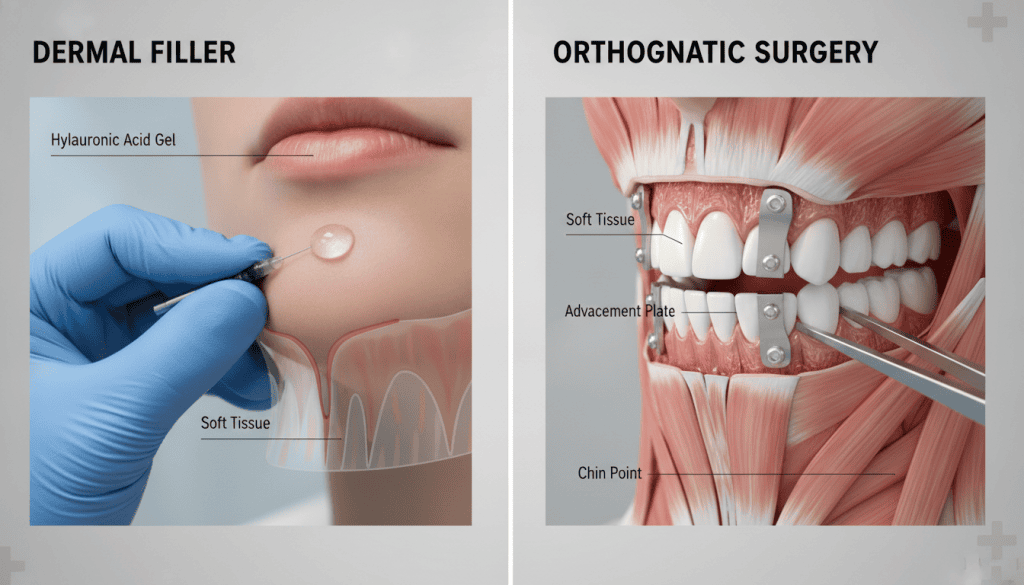
Clinically, addressing this with Chin Filler often provides only a superficial increase in volume. However, for those with significant retrusion, adding more liquid volume to an already weak foundation can result in a ‘heavy’ lower face without resolving the underlying tissue laxity. This guide explores why Receding Chin Surgery, specifically Genioplasty Korea protocols, serves as the definitive anatomical correction.
The Anatomical Paradox of the ‘Skinny’ Double Chin
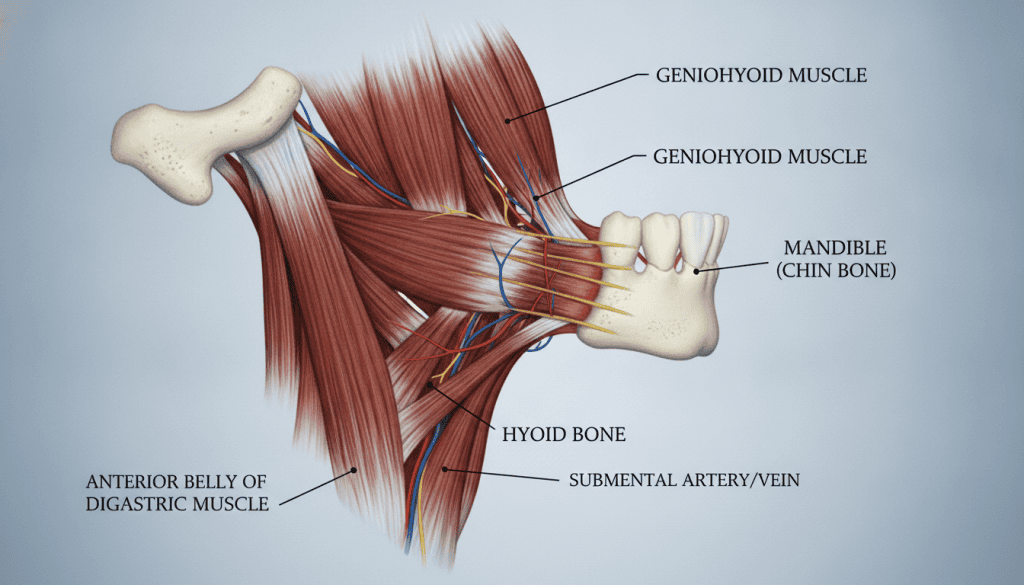
Why does a receding chin cause a double chin? The submental area is governed by the distance between the hyoid bone and the chin tip. When the chin bone is short, the muscles—primarily the digastric, mylohyoid, and geniohyoid—are crowded into a smaller space. This lack of tension causes the skin and muscle to sag, mimicking the appearance of excess fat. In these cases, liposuction alone fails because the ‘root’ of the problem is the bone’s position.
| Feature | Chin Filler (Non-Surgical) | Sliding Genioplasty (Surgical) |
|---|---|---|
| Primary Mechanism | Volume addition via Hyaluronic Acid | Structural bone advancement (Osteotomy) |
| Longevity | Temporary (6–18 months) | Permanent |
| Double Chin Effect | May increase ‘bulk’ if overfilled | Tightens submental muscles (Internal Lift) |
2. Profile Balancing Trends in 2026: Why the Chin Ratio Matters
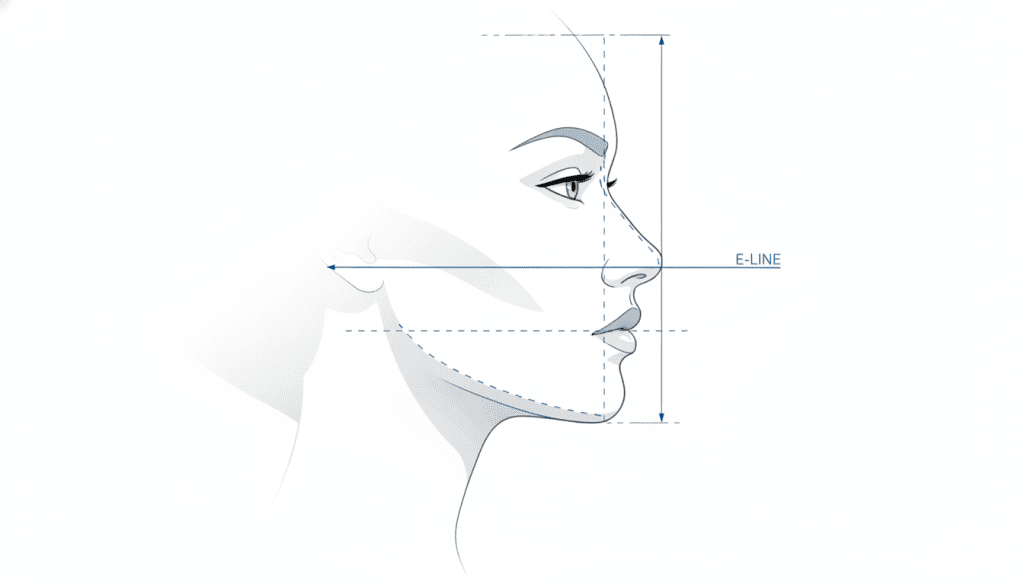
Modern facial aesthetics has shifted from focusing on isolated features to ‘Profile Balancing.’ In 2026, the trend in Seoul and globally emphasizes the relationship between the forehead, nose, lips, and chin. Using the Ricketts’ E-line (Esthetic Line) as a benchmark, the chin should sit just slightly behind a line drawn from the tip of the nose to the tip of the lips.
For many patients of East Asian descent, a naturally short chin (microgenia) disrupts this balance. When the chin is recessed, the nose appears larger, and the lips appear more protruded than they actually are. By undergoing Receding Chin Surgery, we restore the golden ratio, creating a sharp, defined transition from the jawline to the neck. This skeletal correction is often the missing piece in achieving a high-definition facial profile.
The Role of 3D CT in Profile Planning
At View Plastic Surgery, we utilize advanced 3D CT imaging to measure the exact degree of retrusion and the position of the mental nerve. This data-driven approach ensures that the advancement is not just aesthetic but functionally safe. Understanding the Chin Filler vs Surgery debate requires looking beneath the skin at these bone-level metrics.
3. Chin Filler vs Surgery: Bone Movement vs. Liquid Volume
The fundamental choice between filler and surgery comes down to the physics of facial support. Chin Filler utilizes high-cohesivity gels to create a projection. While effective for minor adjustments (1-3mm), fillers are subject to ‘filler migration’ or flattening over time due to the strong mentalis muscle pressure. Furthermore, large volumes of filler can cause bone resorption over many years due to the constant pressure on the mandibular cortex.
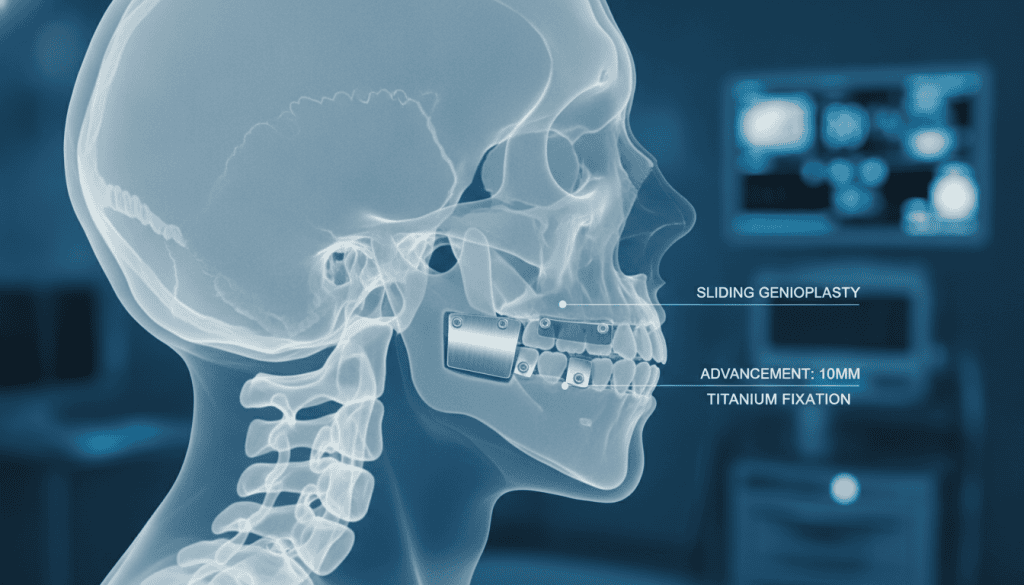
In contrast, Sliding Genioplasty involves a horizontal osteotomy where the patient’s own bone is moved forward and secured. This method provides:
- Zero Risk of Migration: The bone heals in its new position.
- Natural Contour: No ‘bolus’ or unnatural liquid appearance.
- Structural Integrity: It uses the patient’s biological tissue to support the face.
4. Genioplasty Korea: The ‘Internal Lift’ Effect of Sliding Genioplasty
One of the most significant medical breakthroughs highlighted in Sliding Genioplasty Seoul 2026 protocols is the ‘Internal Lift’ effect. When a surgeon performs a Genioplasty in Korea, they aren’t just moving bone; they are repositioning the attached suprahyoid muscles.
How the Internal Lift Works
As the chin bone is advanced forward, the muscles attached to the posterior side of the chin—specifically the geniohyoid and the genioglossus—are stretched forward. This action creates mechanical tension in the floor of the mouth. Think of it like tightening a sagging hammock. This tension pulls the submental soft tissues upward and inward, resulting in a dramatic Double Chin Improvement that no non-invasive treatment can replicate.
This is why patients often see a sharper jawline even without undergoing liposuction. For comprehensive results, many opt for a V-line surgery which combines genioplasty with jaw reduction for total lower face harmonization.
5. Strategic Implementation: 3 Decision Criteria for Your Jawline
Choosing between a temporary fix and a permanent solution requires evaluating three clinical indicators:
- Degree of Retrusion: If your chin is recessed by more than 5mm from the ideal E-line, fillers will likely look ‘pasty’ or unnatural. Surgery is recommended for significant corrections.
- Tissue Quality: Do you have significant submental sagging? If so, the ‘Internal Lift’ of Receding Chin Surgery is necessary to tighten the muscle wall.
- Longevity and Bio-compatibility: Are you tired of repeat injections? Or do you have concerns about foreign materials? Genioplasty uses your own bone, making it the most ‘natural’ long-term choice.
For those seeking a total transformation, viewing the facial contouring options available in Seoul can provide a roadmap for structural change.
[[VISUAL_4]]
6. Achieve Your Golden Ratio: Book a 1:1 Virtual Bone Structure Consultation
Don’t settle for temporary camouflage when you can achieve structural perfection. At View Plastic Surgery, our specialists analyze your facial proportions using the latest 2026 digital twinning technology. Whether you need a subtle shift or a significant advancement, our team in Seoul provides world-class surgical precision.
Take the first step toward a defined profile. You can reach out for a preliminary consultation or send your profile photos directly to our medical coordinators via WhatsApp for a complimentary 1:1 bone structure analysis report.