



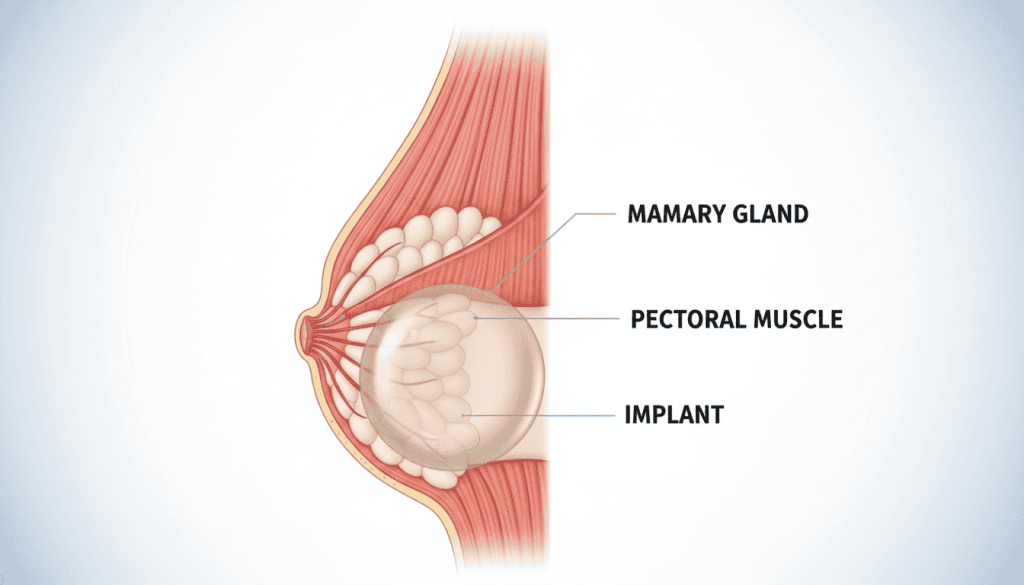
1. Breast Lift vs Augmentation: Understanding the Fundamental Differences
In the realm of aesthetic mastopexy and mammoplasty, patients often find themselves at a crossroads between two distinct yet complementary procedures: the breast lift (mastopexy) and breast augmentation. While both aim to enhance the aesthetic profile of the chest, their surgical objectives are fundamentally different. Understanding the distinction between breast lift vs augmentation is the first step toward achieving your desired silhouette. At View Plastic Surgery, we emphasize a diagnostic approach that evaluates tissue laxity, glandular volume, and the position of the nipple-areola complex (NAC) relative to the inframammary fold (IMF).
The Mechanical vs. Volumetric Distinction
Breast augmentation is primarily a volumetric procedure. It addresses hypoplasia (underdeveloped breasts) or involutional atrophy (loss of volume) by introducing an external prosthesis, typically a cohesive silicone gel implant. Conversely, a breast lift is a mechanical repositioning procedure. It addresses ptosis (sagging) by removing excess skin and tightening the surrounding tissue to reshape and support the new breast contour. Choosing between them depends on whether your primary concern is ‘size’ or ‘position’. For a comprehensive overview of all options, you can visit our breast surgery main page.
| Feature | Breast Augmentation | Breast Lift (Mastopexy) |
|---|---|---|
| Primary Goal | Increase volume and cup size | Elevate sagging tissue and reposition NAC |
| Ideal Candidate | Minimal sagging, lacks volume | Significant sagging, nipple points downward |
| Surgical Technique | Implant placement (Submuscular/Subfascial) | Skin excision and glandular reshaping |
2. When to Choose Breast Augmentation: Adding Volume and Curves
Breast augmentation remains one of the most sought-after procedures in South Korea for patients seeking to enhance their feminine curves. This procedure is ideal for those who have sufficient skin elasticity but lack the desired glandular volume. Breast Augmentation Seoul Cost is often a consideration, but at View, we focus on providing value through premium implants like Motiva, Mentor, and Sebbin, combined with unparalleled surgical precision.
Indications for Augmentation Alone
- Micromastia: Congenitally small breasts that lack projection.
- Post-Pregnancy Atrophy: Loss of volume after breastfeeding where the skin remains relatively tight.
- Asymmetry Correction: Using different sized implants to balance the chest wall.
The success of an augmentation depends on the ‘Pocket’ creation. Our surgeons utilize high-definition endoscopes to ensure minimal tissue trauma, which significantly reduces the risk of capsular contracture and post-operative pain. Prior to surgery, we recommend a thorough breast screening and examination to ensure there are no underlying pathologies.
3. The Role of Breast Lift: Restoring Perkiness and Position
For many women, the issue isn’t a lack of volume, but rather the ‘displacement’ of that volume. Sagging Breast Correction Korea, or mastopexy, focuses on the structural integrity of the breast. Over time, factors such as pregnancy, massive weight loss, and the simple force of gravity can stretch the Cooper’s ligaments, leading to ptosis.
The Regnault Classification of Ptosis
To determine the necessity of a lift, surgeons use the Regnault scale:
- Grade I (Mild): Nipple is at the level of the inframammary fold.
- Grade II (Moderate): Nipple is below the fold but above the lower contour of the breast.
- Grade III (Advanced): Nipple is at the lowest point of the breast and points downward.
- Pseudoptosis: The breast tissue hangs low, but the nipple remains above the fold.
A specialized mastopexy procedure at View Plastic Surgery involves removing the redundant skin and shifting the NAC to a more youthful, superior position. This creates a firmer, more conical shape without necessarily adding size.
4. The Perfect Synergy: Breast Lift with Implants in Seoul
In many clinical scenarios, a patient presents with both skin laxity (ptosis) and volume loss. In these cases, neither a lift nor an augmentation alone will suffice. This is where Breast Lift with Implants (Augmentation-Mastopexy) becomes the gold standard. This combination procedure is technically demanding because it requires the surgeon to manage two opposing forces: the expansion caused by the implant and the tightening required by the lift.
Benefits of the Combination Approach
- Restored Upper Pole Fullness: A lift alone cannot fill the upper quadrant of the breast; an implant provides that youthful ‘cleavage’ look.
- Optimal Positioning: The lift ensures the implant sits in a perkier, more centered position on the chest wall.
- Long-term Stability: By removing excess skin, the ‘envelope’ better supports the weight of the implant.
Patients should consult with a board-certified surgeon to discuss the staged vs. simultaneous approach. At View, we utilize 3D simulation to help patients visualize these complex results during their initial consultation.
[[VISUAL_3]]
5. Recovery and Long-term Results: What to Expect in Korea
Recovery is a critical phase of the surgical journey. While Breast Augmentation Seoul Cost covers the surgical act, at View, it also encompasses a rigorous post-operative care system. Mastopexy scars typically follow a ‘lollipop’ or ‘anchor’ pattern, while augmentation incisions are usually hidden in the inframammary fold or periareolar region.
The View Recovery Protocol
- Day 1-3: Use of a specialized compression bra to minimize swelling and stabilize implant position.
- Week 1-2: Lymphatic drainage massages and light LED therapy to accelerate healing.
- Month 1-6: Systematic scar management using laser treatments and silicone gel sheets.
Our goal is to ensure that the recovery is as comfortable as the results are beautiful. We integrate our 19-year safe surgery system into every step of the post-op phase to prevent complications like seroma or hematoma.
6. Expert Diagnosis: Ensuring Safety and Precision at View
The most important factor in breast surgery isn’t the choice of implant—it’s the surgeon’s diagnosis. A common mistake is attempting to ‘lift’ a sagging breast with a large implant alone. This often results in the ‘bottoming out’ effect or the ‘Snoopy deformity,’ where the tissue continues to sag over the implant. Precision requires a deep understanding of anatomy and a commitment to safety. View Plastic Surgery boasts a 19-year accident-free record, supported by an on-site team of anesthesiologists and emergency response protocols.
For those ready to transform their silhouette, we invite you to reach out via WhatsApp for a preliminary assessment. Your journey to a more confident self starts with an expert diagnosis.