
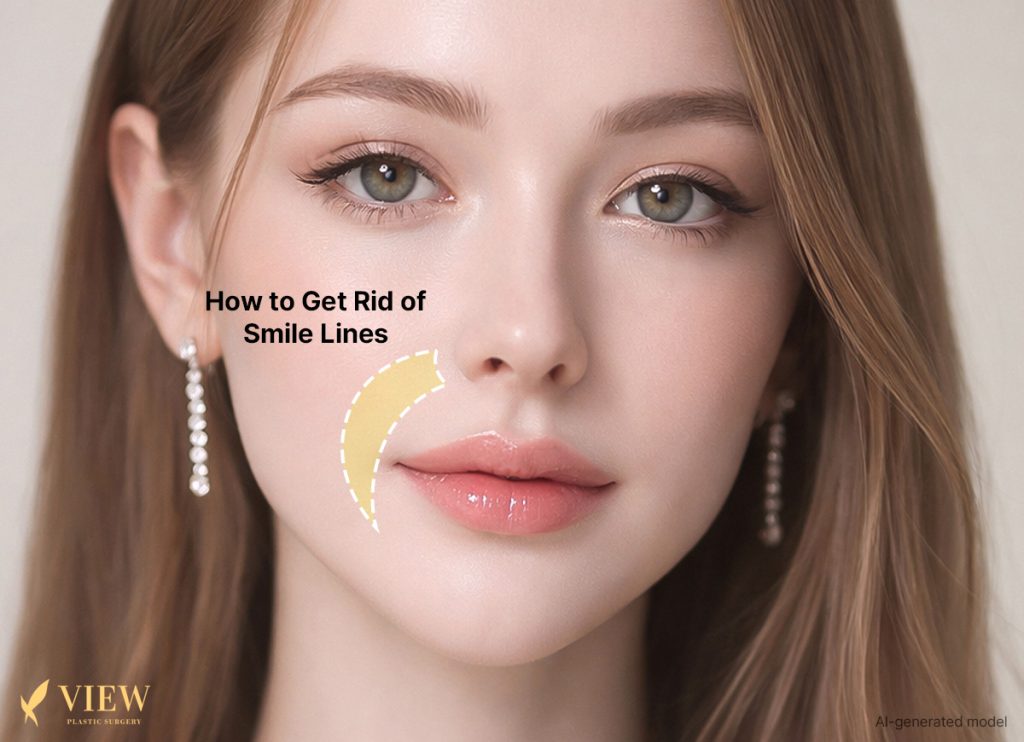
Nasolabial fold, commonly referred to as ‘smile lines,’ is a complex anatomical feature that deepens with age, influenced by skeletal structure, soft tissue ptosis, and repeated muscular activity. For patients seeking how to get rid of smile lines, challenge lies in identifying whether primary cause is superficial skin laxity or a structural deficiency in midface. At VIEW Plastic Surgery in Seoul, we approach this aesthetic concern through a comprehensive clinical lens, comparing Paranasal Implants vs Fillers and Nasolabial Fold Fat Grafting to achieve the most harmonious facial contour.
1. The Pathophysiology of Smile Lines: Choosing the Right Solution
Effective treatment requires a deep understanding of pyriform aperture and maxillary bone. Research indicates that midfacial aging is often characterized by resorption of the maxillary bone, leading to a loss of support for overlying soft tissues. When paranasal area (the base of the nose) is recessed, it creates a shadowed ‘hollow’ that exacerbates appearance of smile lines.
Patients with significant skeletal retrusion may find that dermal fillers only provide a temporary ‘mask’ rather than a definitive fix. Conversely, those with minor volume loss and high skin elasticity may be ideal candidates for non-surgical interventions. Our clinical protocol prioritizes a structural assessment before recommending a specific modality.
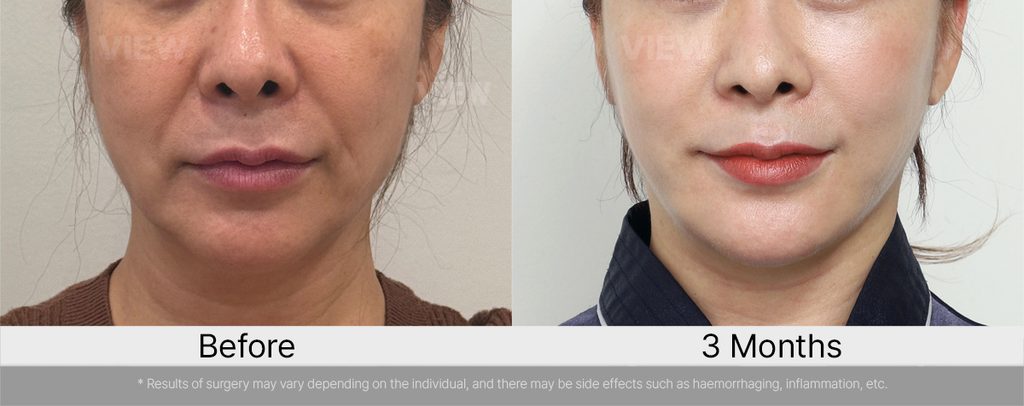
2. Paranasal Implants vs Fillers: Immediate Fix vs. Permanent Structural Correction
When analyzing Paranasal Implants vs Fillers, primary variables are longevity, depth of correction, and patient’s anatomical needs.
Dermal Fillers: The Soft Tissue Approach
Fillers, typically composed of cross-linked hyaluronic acid (HA), are injected into subcutaneous or supraperiosteal layers to provide immediate volume. This is often preferred entry-level treatment for younger patients (20s–30s) who exhibit ‘dynamic’ smile lines. However, fillers are subject to enzymatic degradation and mechanical displacement, requiring maintenance every 6 to 12 months. Furthermore, over-filling nasolabial fold can lead to a ‘heavy’ midface appearance, sometimes referred to as ‘monkey face’ effect if not performed with precision.
Paranasal Implants (Noble Surgery): The Skeletal Approach
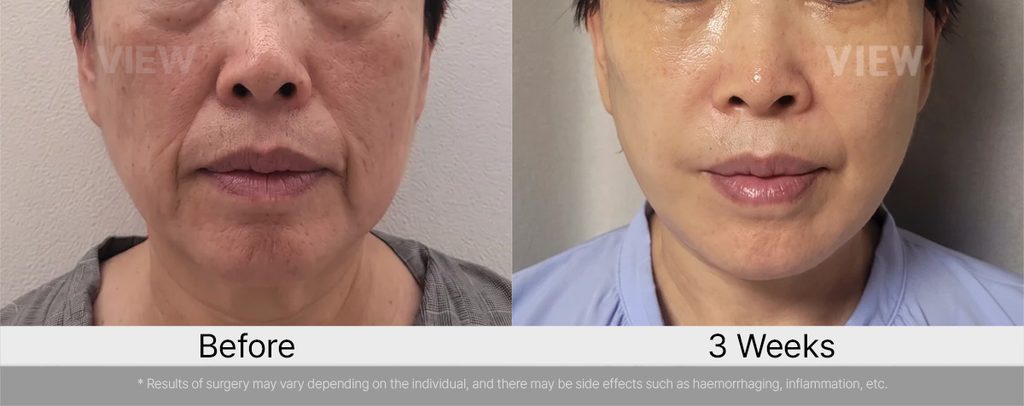
For patients with deep structural folds or those in 40+ demographic, Paranasal Implants (also known as Noble Surgery) offer a permanent solution. By placing a medical-grade implant on the maxillary bone near the alar base, we physically elevate depressed area. This not only smooths the smile lines but also provides a structural ‘scaffold’ that prevents further soft tissue collapse. Clinical studies, such as those indexed in PubMed (26992520), highlight efficacy of paranasal augmentation in improving the midfacial profile and nasolabial angle.
| Feature | Dermal Fillers | Paranasal Implants |
|---|---|---|
| Duration | Temporary (6-12 Months) | Permanent |
| Primary Goal | Soft Tissue Volumization | Structural Skeletal Support |
| Recovery Time | Minimal to None | 5-7 Days |
| Material | Hyaluronic Acid / Collagen Stimulators | Silicone, Gore-Tex, 3D Fit Medipor |
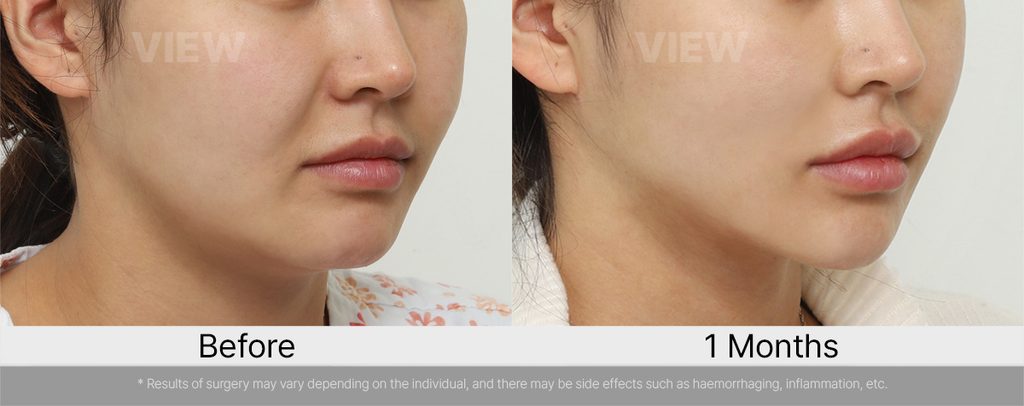
3. Nasolabial Fold Fat Grafting: Natural Volume Using Your Own Tissue
For individuals hesitant about synthetic materials, Nasolabial Fold Fat Grafting serves as a biological alternative. This procedure involves harvesting autologous fat via liposuction (typically from the abdomen or thighs), processing it through centrifugation, and micro-injecting it into nasolabial region.
Primary advantage of fat grafting is biocompatibility. Since tissue is patient’s own, there is zero risk of allergic reaction or implant rejection. However, ‘survival rate’ or ‘take rate’ of fat cells is a critical factor. Generally, about 50-70% of injected fat survives permanently. For international patients, we often recommend a secondary ‘touch-up’ session 3 to 6 months after initial procedure to optimize final contour. This method is exceptionally effective for smoothing transitions between cheek and fold, providing a youthful, ‘unoperated’ appearance.

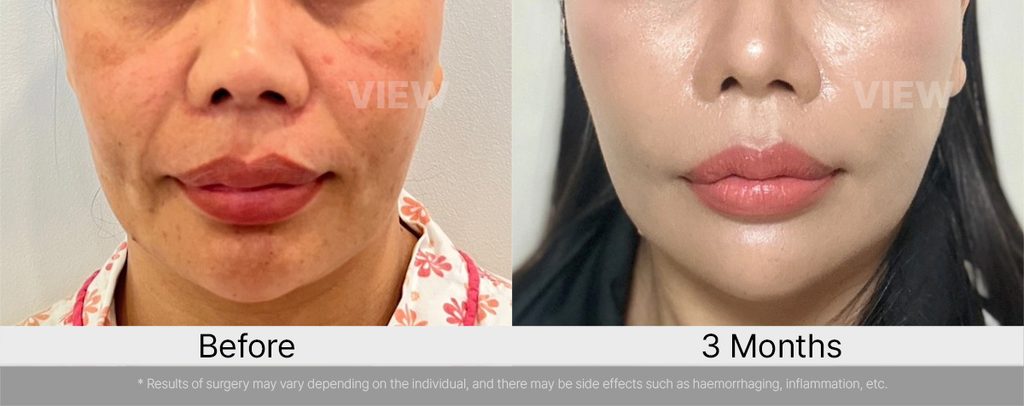
4. Paranasal Augmentation for Protruding Mouth: The Anti-Aging Contour Effect
One of the most significant clinical indications for Paranasal Augmentation for Protruding Mouth is correction of pseudo-protrusion. When midface—specifically paranasal area—is sunken, mouth appears to protrude forward relative to the rest of the face. This is common in many Asian facial structures.
By augmenting paranasal area, we achieve three distinct clinical goals:
- Protrusion Camouflage: Forward projection of midface creates a balanced profile, making mouth look less prominent without need for invasive jaw surgery.
- Nasal Base Elevation: It can slightly lift nose tip and refine nasolabial angle, contributing to a more sophisticated aesthetic.
- Soft Tissue Redirection: Implant provides a lift to drooping soft tissues, reducing ‘heavy’ look of lower face.
5. Exploring Types of Paranasal Implants: From Silicone to 3D Custom Fits
Success of paranasal surgery depends heavily on selection of correct material and fit. There are several Types of Paranasal Implants used in modern practice:
Standard Silicone Implants
Silicone is the most traditional material, valued for its stability and ease of placement. It is ideal for patients requiring significant volume. However, precision is key to prevent migration or palpable edges.
Gore-Tex and Medipor
These materials are porous, allowing for tissue ingrowth which theoretically reduces risk of implant displacement. They provide a softer, more integrated feel compared to silicone.
The Standard: 3D CT Custom-Fit Implants
At VIEW Plastic Surgery, we utilize 3D CT imaging to create bespoke implants. By scanning patient’s unique maxillary curvature, we can manufacture an implant that fits bone perfectly like a puzzle piece. This 3D custom approach virtually eliminates risk of implant movement and ensures that facial expressions remain natural and fluid. This is particularly crucial for the paranasal area, which is highly mobile during speaking and smiling.
6. Clinical Protocol: Find Your Perfect Fit in Seoul
Determining how to get rid of smile lines effectively requires more than just a surface-level inspection. Our surgeons analyze dermis thickness, degree of fat pad descent (malar fat pad), and depth of pyriform fossa.
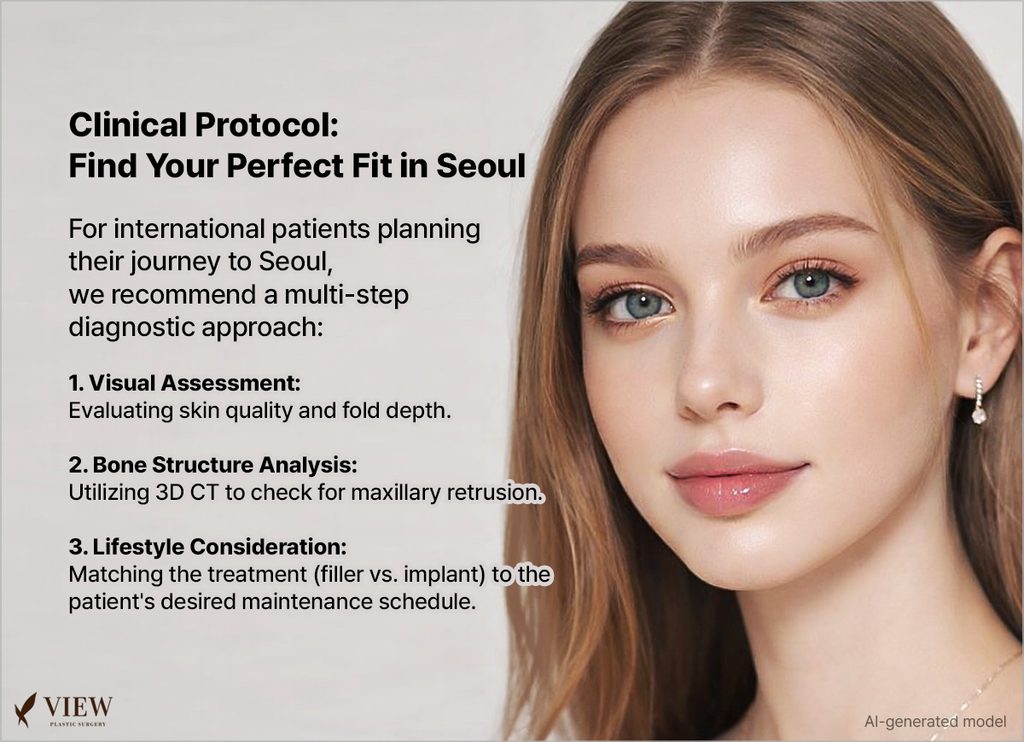
For international patients planning their journey to Seoul, we recommend a multi-step diagnostic approach:
- Visual Assessment: Evaluating skin quality and fold depth.
- Bone Structure Analysis: Utilizing 3D CT to check for maxillary retrusion.
- Lifestyle Consideration: Matching the treatment (filler vs. implant) to the patient’s desired maintenance schedule.
Are you ready to restore your midfacial volume? You can start with a digital assessment. Contact us via WhatsApp or visit our Online Consultation portal to receive a personalized treatment plan from Korea’s leading aesthetic experts.