




1. The Longevity Truth: How Long Does a Mini Lift Last?
In the contemporary aesthetic landscape, patients in their 30s and 40s are increasingly seeking proactive measures to combat the initial signs of facial ptosis. However, a common misconception prevails: that all lifting procedures offer similar results. When addressing the question, how long does a Mini Lift last?, the answer lies fundamentally in the depth of the surgical plane. Procedures that focus solely on skin tension (cutaneous lifting) often yield disappointing results, with visible sagging returning within 6 to 12 months due to the inherent elasticity of the dermis. This is often referred to as the ‘relapse trap’ of superficial procedures.
The Biological Limit of Skin-Only Procedures
Skin is a dynamic, elastic structure. When it is pulled without addressing the underlying structural framework, it eventually stretches back to its original state or, worse, creates a ‘wind-swept’ appearance that distorts the natural features. For a result that spans 5 to 10 years, the surgical intervention must target the Superficial Musculo-Aponeurotic System (SMAS). This fibromuscular layer acts as the foundation of the face. By repositioning this deep layer, the skin is naturally redraped without excessive tension, ensuring that the Mini Facelift longevity is maximized through structural integrity rather than temporary stretching.
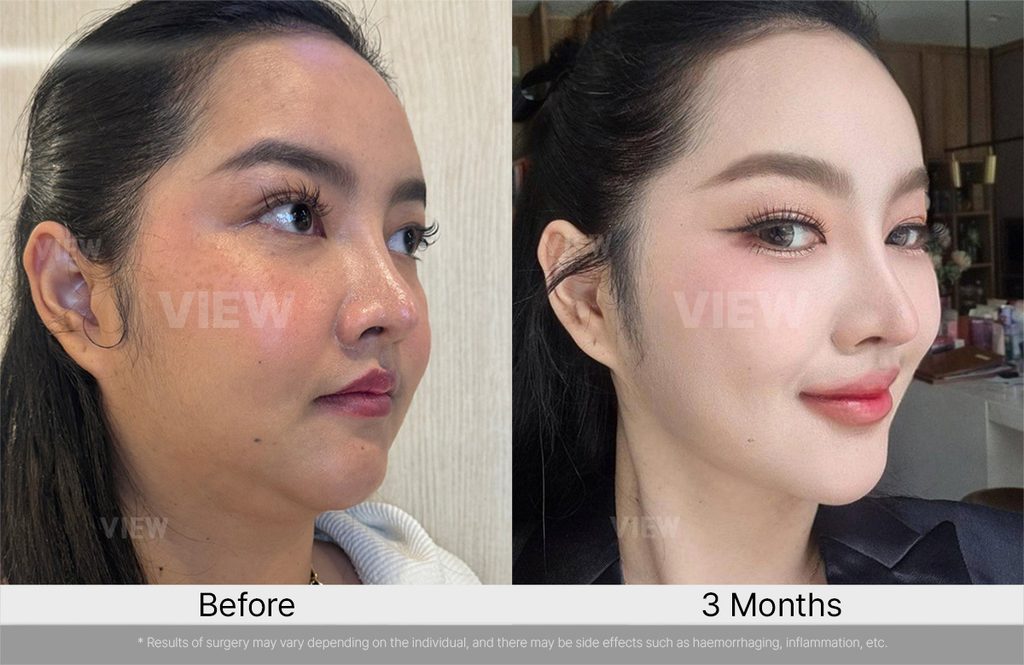
2. Why SMAS Matters: The Difference Between Skin-Only and Deep Layer Lifting
To understand why the SMAS layer is the ‘gold standard’ in facial rejuvenation, one must examine the multi-layered anatomy of the face. The facial structure is composed of five distinct layers: skin, subcutaneous fat, SMAS, deep space/retaining ligaments, and the periosteum. Aging is not merely a skin-deep phenomenon; it involves the weakening of the retaining ligaments and the downward migration of the SMAS layer.
Biomechanical Superiority of SMAS Lifting
When performing a SMAS Mini Lift in Seoul at View Plastic Surgery, surgeons utilize the SMAS layer because of its tensile strength. Unlike skin, the SMAS layer does not stretch significantly over time. Research in plastic surgery indicates that SMAS-level intervention allows for the redistribution of facial volume and the elevation of the malar fat pads, which are crucial for restoring a youthful mid-face contour. By anchoring the SMAS layer to the immobile temporal fascia, the lift becomes a permanent structural change rather than a temporary surface adjustment.
| Feature | Skin-Only Lift | SMAS Mini Facelift | Traditional Full Facelift |
|---|---|---|---|
| Target Plane | Epidermis/Dermis | SMAS & Fascia | Deep Plane/Sub-SMAS |
| Expected Longevity | 6 – 12 Months | 5 – 10 Years | 10 – 15 Years |
| Incision Size | Small (1-2 cm) | Minimal (3-5 cm) | Extensive (Ear to Hairline) |
| Recovery Time | 3-5 Days | 7-10 Days | 3-4 Weeks |
3. Early Anti-Aging for the 3040 Generation: Restoring Your Natural Jawline
The 3040 generation represents a unique patient profile. Unlike older demographics who require massive skin excision, patients in their 30s and 40s typically suffer from early-stage jowls, nasolabial folds, and a loss of the sharp mandibular border. A Mini Facelift for 30s and 40s is not about changing one’s appearance, but rather ‘resetting’ the facial clock by addressing these specific areas of concern.
Addressing Post-Contouring Sagging
In South Korea, many individuals in their 30s seek lifting procedures following previous facial bone contouring surgeries (such as V-line or zygoma reduction). When the underlying bone support is reduced, the soft tissue often descends prematurely. For these patients, non-invasive treatments like HIFU (Ultherapy) or thread lifts often fall short. A SMAS-focused mini lift provides the necessary vertical vector to re-anchor the soft tissue to the new bone structure, restoring the refined jawline that was the original goal of their contouring surgery.
Korea plastic surgery clinics offer various lifting approaches that consider changes in facial bone structure and soft-tissue support.

4. Mini Lift vs. Full Facelift: Finding the Right Incision for Your Age
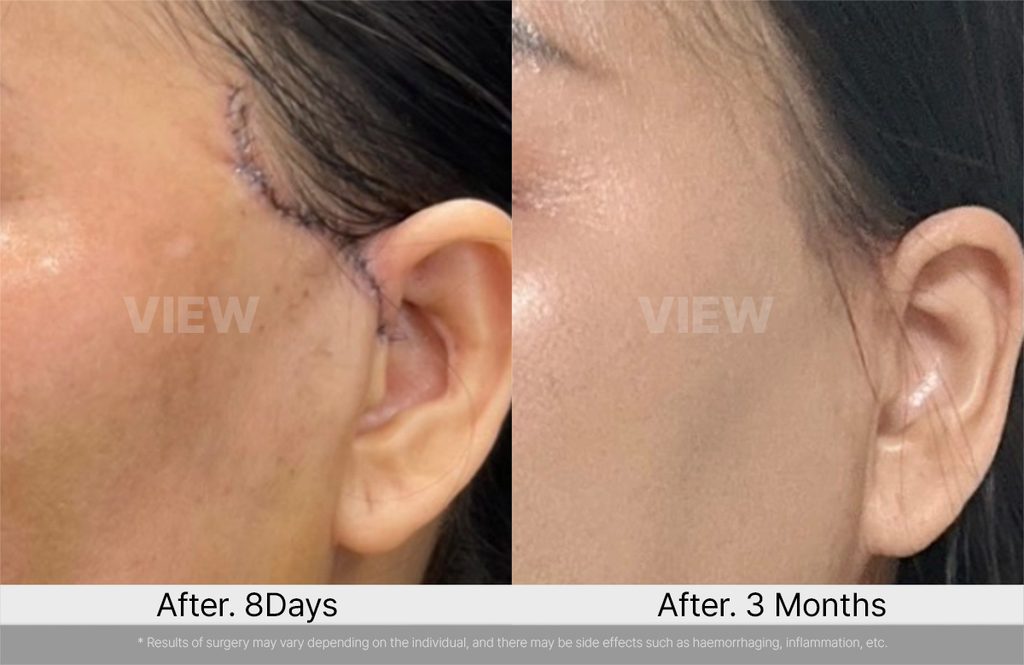
Deciding between a Mini Lift vs Full Facelift is a clinical decision based on the degree of skin laxity and the presence of neck sagging. For most patients under 50, a full facelift is often excessive, involving longer incisions that wrap around the ear and into the posterior hairline. The mini lift focuses on a ‘stealth incision’—typically located within the temporal hairline and extending slightly in front of the ear tragus.
The Efficiency of the Mini Approach
The primary advantage of the mini approach for the 3040 demographic is the targeted dissection. By limiting the dissection to the mid-face and jawline, surgeons can achieve significant elevation with minimal trauma. This results in less postoperative edema and a faster return to social activities. For a professional in their 40s, the ability to achieve a 10-year rejuvenation with only a 7-day downtime is a significant economic and lifestyle advantage.
5. Strategic Choice: Beyond Discounted Prices to Expert Surgeon Skills
While price is a consideration, the technical complexity of working within the SMAS layer requires high-level surgical expertise. A ‘cheap’ facelift often means the surgeon is only performing a skin-only lift, which leads to the longevity issues discussed earlier. When choosing a clinic, it is imperative to evaluate the surgeon’s methodology regarding SMAS manipulation.
The Three Pillars of Success
- Vector Direction: A successful lift must have a vertical vector. Horizontal pulling leads to an unnatural, widened mouth appearance.
- SMAS Anchoring: Whether utilizing SMASectomy (removing a portion of the SMAS) or SMAS Plication (folding the SMAS), the anchoring points must be secure to prevent early descent.
- Tension-Free Skin Closure: The SMAS should bear the tension, while the skin should be closed with zero tension to prevent hypertrophic scarring and ‘pixie ear’ deformities.
At VIEW Plastic Surgery, our specialists emphasize a tailored approach, ensuring that the incision is hidden within the natural contours of the ear, making the surgery virtually undetectable even with hair tied back.
6. Secure Your V-Line: Get a Personalized SMAS Consultation Today
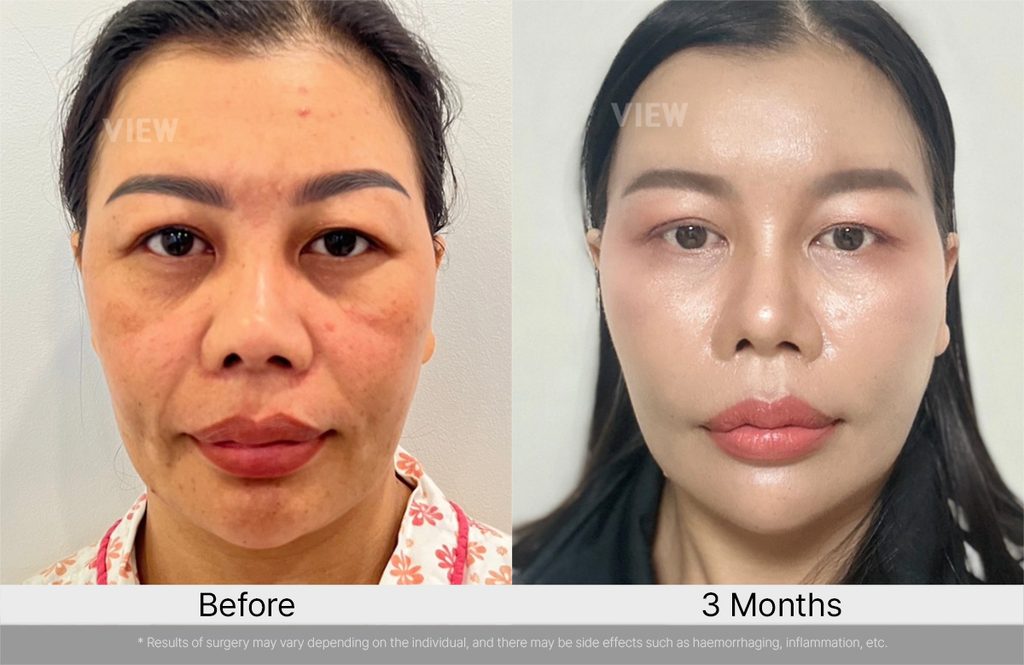
If you have found that thread lifts are no longer providing the ‘snatched’ look you desire, or if you are noticing the first signs of jawline blurring, it may be time for a more definitive solution. The SMAS Mini Lift is the bridge between temporary non-surgical treatments and the more invasive full facelift. We invite you to explore your options with a clinical evaluation.
To start your journey toward a restored V-line, you can book a consultation or speak directly with our international patient coordinators via WhatsApp for a preliminary photo analysis and personalized surgical plan.
For those considering plastic surgery in Korea, a personalized consultation can help determine which lifting approach best suits your facial structure and aesthetic goals.