
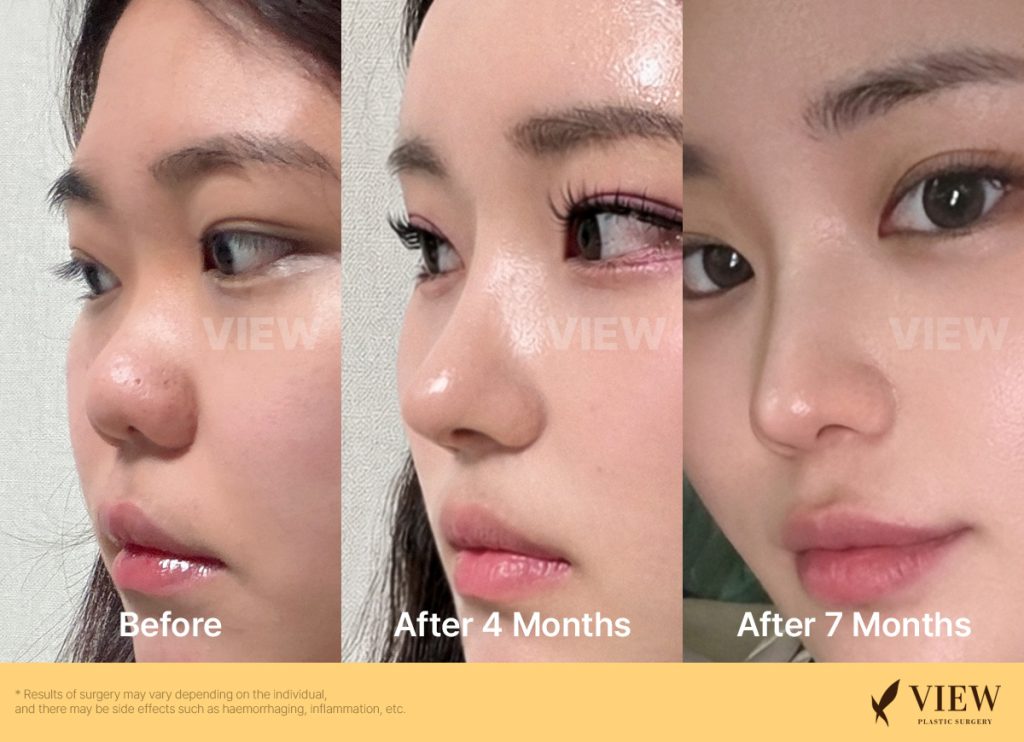
Navigate the rhinoplasty recovery timeline with expert precision. Explore nose job recovery stages, rhinoplasty swelling stages, and professional post-op tips.
Understanding rhinoplasty recovery timeline is the first step toward achieving the facial harmony you desire. At View Plastic Surgery, we view recovery not as a passive waiting period, but as an active phase of surgical success. While the procedure itself is a masterpiece of surgical artistry, the final result is sculpted by time, biology, and adherence to professional protocols.
In the era of ‘Zoom Dysmorphia,’ where our facial features are constantly scrutinized on high-definition screens, the demand for nasal refinement has surged. However, many patients ask: How long does it take for a nose job to heal? The clinical answer is complex, involving various nose job recovery stages that span from initial inflammatory response to long-term collagen remodeling.
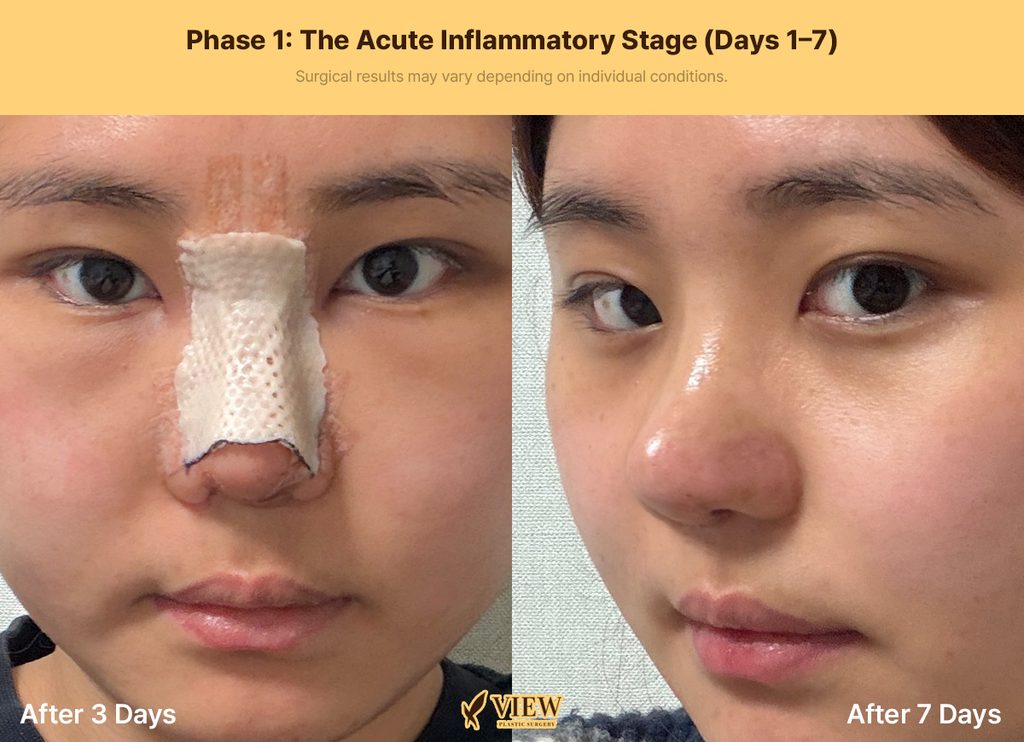
Phase 1: The Acute Inflammatory Stage (Days 1–7)
The first week is characterized by body’s immediate response to surgical trauma. Whether you have undergone a natural tip correction or a complex structural reconstruction, initial 72 hours are the most intensive. During this time, primary focus is on managing edema and protecting delicate internal structures.
Day 1: Immediate Post-Operative Experience
Immediately following surgery, you will wake up with an external splint and potentially internal nasal packing. Congestion is the most common complaint, as internal swelling and dressings restrict airflow. This is where post-op nose job tips such as sleeping at a 45-degree angle become critical to minimize the severity of rhinoplasty swelling stages.
Days 2–3: Peak Swelling and Bruising
It is a clinical paradox that patients often feel and look worse on day three than on day one. This is due to the peak of inflammatory cascade. Bruising may appear around the eyes (periorbital ecchymosis), particularly if osteotomies (bone resetting) were performed. Patients are encouraged to use cold compresses on the cheeks—never directly on the nose—to manage this stage of the rhinoplasty recovery timeline.
| Recovery Milestone | What to Expect | Clinical Action Required |
|---|---|---|
| Days 1-3 | Peak swelling, congestion, mild discomfort. | Head elevation, cold compresses, prescribed pain meds. |
| Days 4-7 | Swelling begins to subside; bruising turns yellow. | Nasal saline rinses, gentle wound care. |
| Day 7 | Splint and suture removal. | Post-op visit at VIEW Plastic Surgery. |
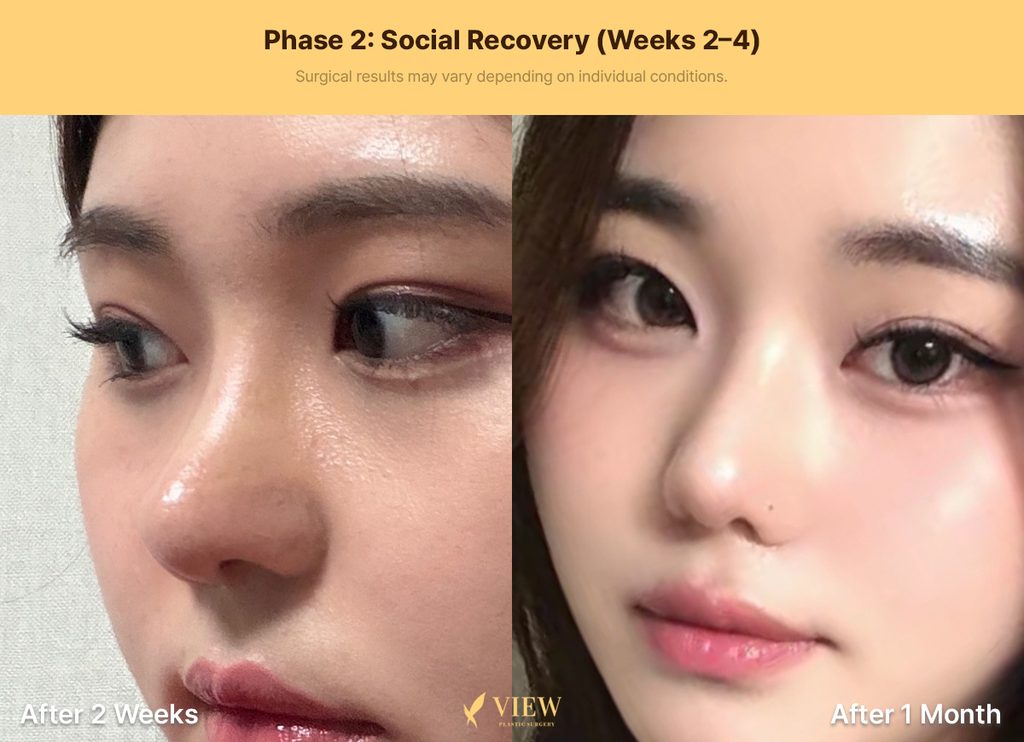
Phase 2: Social Recovery (Weeks 2–4)
By the end of second week, most patients feel comfortable returning to public life. This marks a major shift in rhinoplastyrecovery stages. While yournose is still medically healing, visible markers of surgery—such as casts and dark bruises—are typically gone. For those who had alar reduction, incisions at nostril baseswill begin to fade into fine lines.
Resolution of Periorbital Bruising
During week 2, residual bruising transitions from purple to yellow and eventually disappears. Many patients find that they can camouflage any remaining discoloration with a light concealer. However, your nose itself will still look “puffy” or slightly wider than the final result due to the rhinoplasty swelling stages affecting nasal bridge and tip.
Returning to Activity
At 3-week mark, light activities like walking are encouraged to improve circulation. However, we advise against any exercise that increases blood pressure significantly, as this can cause a rebound in swelling. If you are curious about specific procedural outcomes, reviewing a rhinoplasty case study can provide insight into how different nasal types heal during this window.
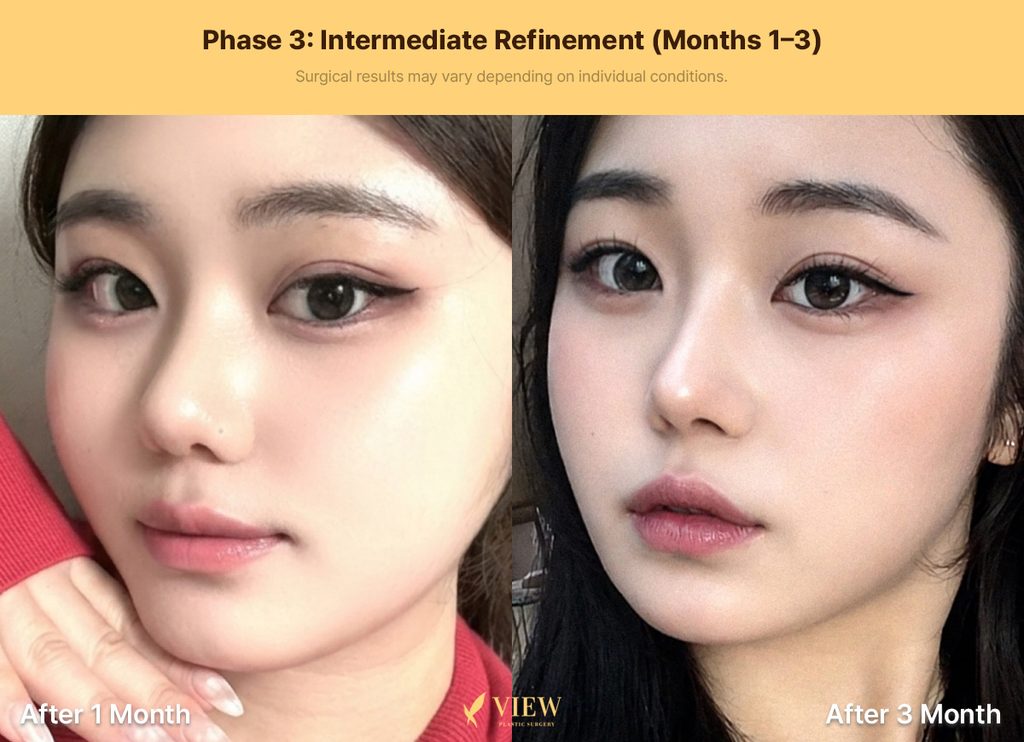
Phase 3: Intermediate Refinement (Months 1–3)
Transition from month one to month three is often the most psychologically challenging part of the rhinoplasty recovery timeline. This is because the nose enters a “fluctuating” stage. You may wake up with a very refined nose, only to find it swells by the evening due to salt intake or heat exposure.
The Dynamics of Lymphatic Drainage
The nose has a complex lymphatic system. Surgery temporarily disrupts these drainage pathways. During this stage of rhinoplasty recovery stages, upper two-thirds of your nose (bony and cartilaginous bridge) heal faster than lower third (tip). Nasal tip skin is thicker and contains more sebaceous glands, which trap fluid for longer periods. This is a primary reason why How long does it take for a nose job to heal is usually answered as a full year.
Functional Considerations
If you underwent surgery for a deviated nose, you will notice significant improvements in breathing by month 3. Internal mucosal swelling should have subsided enough to allow for clear airflow, though internal tissues remain sensitive to allergens and dry air.

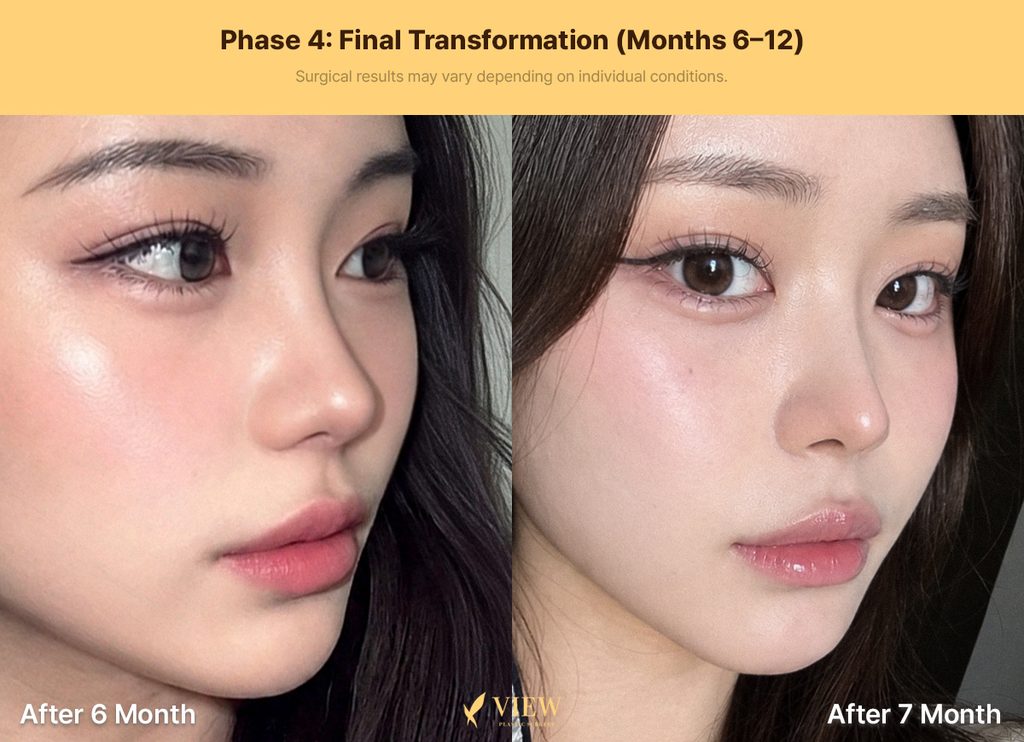
Phase 4: Final Transformation (Months 6–12)
As you approach one-year mark, rhinoplasty swelling stages reach their final resolution. Collagen within the surgical site matures, and the skin re-drapes over the newly sculpted framework. This is particularly noticeable in the nasal tip, which gains more definition and “sharpness” during the final months.
Why 12-Month Mark Matters
Patients often ask why waiting is so long. The answer lies in skinmicro-vascularization . It takes nearly a year for blood supply and nerves to fully normalize. During this time, upirnose may feel slightly numb to touch. Once sensation returns fully, it is a sign that rhinoplasty recovery timeline is nearing its end.

Expert Post-Op Nose Job Tips for a Faster Recovery
While biology dictates the pace, certain actions can optimize your healing environment. Here are essential post-op rhinoplasty tips recommended by our lead surgeons:
- Low-Sodium Diet: Excess salt causes body to retain water, which exacerbates rhinoplasty swelling stages. Maintain a clean, low-sodium diet for the first 3 months.
- Sun Protection: UV rays can cause permanent hyperpigmentation on healing incisions. Wear a wide-brimmed hat and use medical-grade SPF daily.
- Avoid Glasses: Direct pressure on nasal bridge can indent softening bone and cartilage. We recommend using contacts or taping your glasses to your forehead for at least 6 weeks.
- Hydration: Keep internal nasal lining moist with saline sprays to prevent crusting and support mucosal recovery stages.

Case Analysis: Variances in Healing
Not every nose heals at asame rate. Factors such as skin thickness and complexity of rhinoplasty procedure play a role. For instance, patients with thick skin may experience a longer rhinoplasty recovery timeline, sometimes extending up to 18 months for nasaltip to fully settle. Conversely, those with thin skin may see their final results as early as 6 to 9 months, though they must be more careful as thin skin shows minor irregularities more easily.
| Activity Type | Restriction Duration | Reasoning |
|---|---|---|
| Heavy Lifting / Gym | 4-6 Weeks | Prevents blood pressure spikes that cause nosebleeds/swelling. |
| Wearing Glasses | 6-8 Weeks | Avoids pressure on the healing nasal bridge cartilage. |
| Blowing Your Nose | 3-4 Weeks | Protects internal sutures and delicate nasal membranes. |
Conclusion
The journey to a new nose is a commitment to patience. By understanding rhinoplasty recovery timeline, you empower yourself to navigate the healing process with confidence. At VIEW Plastic Surgery, we provide continuous support throughout every stage of your transformation.
Ready to start your journey? Schedule a consultation today to discuss your goals with our world-class surgical team.