



Is Double Chin Liposuction Safe? A Comprehensive Clinical Guide to Preventing Side Effects
Submental fat, commonly referred to as a ‘double chin,’ is often resistant to diet and exercise due to genetic predispositions and anatomical structures. As facial contouring procedures gain popularity, Double Chin Liposuction Safety Korea has become a primary concern for patients seeking a defined jawline. While the procedure is highly effective, achieving a safe and aesthetic outcome requires a deep understanding of cervical anatomy, surgical precision, and meticulous post-operative care.
This clinical guide explores the complexities of submental liposuction, detailing the physiological risks, the science of recovery, and the diagnostic protocols necessary to minimize complications.
1. Safety First: Technical Analysis of Potential Risks in Submental Liposuction
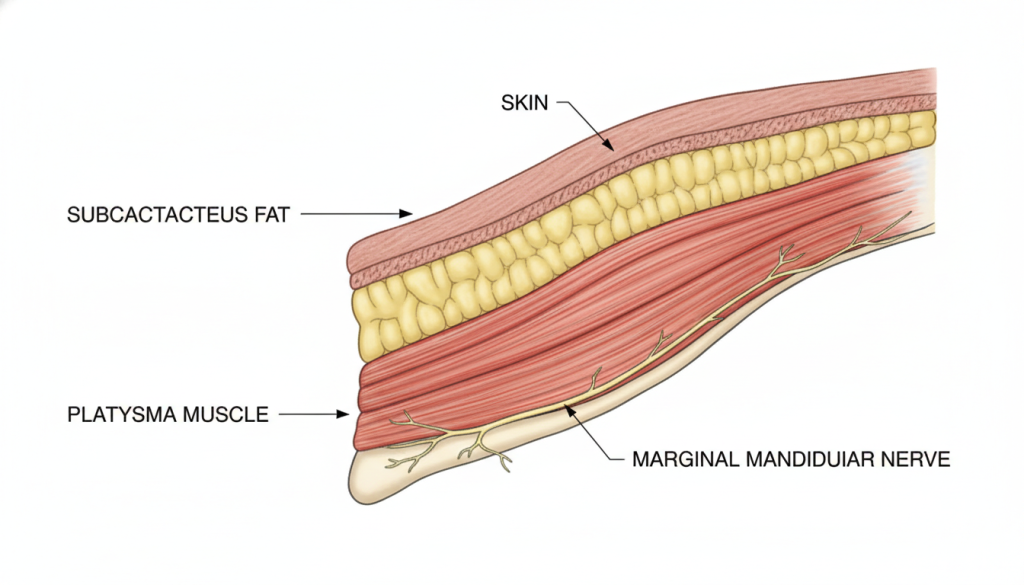
Submental liposuction involves the mechanical aspiration of adipose tissue from the subcutaneous layer of the neck. Although considered a minimally invasive surgical procedure, it requires extreme precision due to the proximity of vital structures such as the marginal mandibular nerve, the platysma muscle, and various vascular networks.
Vascular and Neurological Considerations
The primary risks associated with unskilled execution include:
- Hematoma and Seroma: Accumulation of blood or serous fluid can occur if hemostasis is not meticulously maintained. Large hematomas may exert pressure on the airway, requiring immediate clinical intervention.
- Marginal Mandibular Nerve Injury: This nerve controls the muscles of the lower lip. Temporary weakness or asymmetry in the smile can occur if the cannula traverses too deeply or if thermal energy (in laser-assisted lipo) is applied excessively.
- Dermal Ischemia: Over-aggressive suctioning directly beneath the dermis can compromise the subdermal vascular plexus, leading to skin necrosis or permanent discoloration.
To mitigate these risks, choosing the best facial contouring clinic in Seoul is essential, as experienced surgeons utilize specialized cannulas and tumescent techniques to protect surrounding tissues.
2. Preventing Hematoma: The Pathophysiology of Post-Op Hemorrhage
Hematoma is one of the most critical complications to monitor during the first 48 hours post-surgery. For both men and women, the vascularity of the neck region means that even minor trauma to small vessels can lead to significant internal bleeding if not managed.
Why Post-Op Stability is Non-Negotiable
In the immediate recovery phase, blood vessels are in a state of repair. Sudden spikes in blood pressure—caused by strenuous exercise, heavy lifting, or even intense coughing—can rupture these fragile vessels. Furthermore, Liposuction Side Effects Prevention heavily relies on avoiding aggressive manual massage during the first week. While massage is beneficial later, early manipulation can disrupt the clotting process and provoke delayed hemorrhage.
Clinical observation shows that patients who strictly adhere to head-elevation protocols (sleeping at a 30-degree angle) and utilize cold compresses effectively reduce the risk of interstitial fluid buildup and vascular stress.
3. The Science of Bio-bonds: Managing Subcutaneous Fibrosis
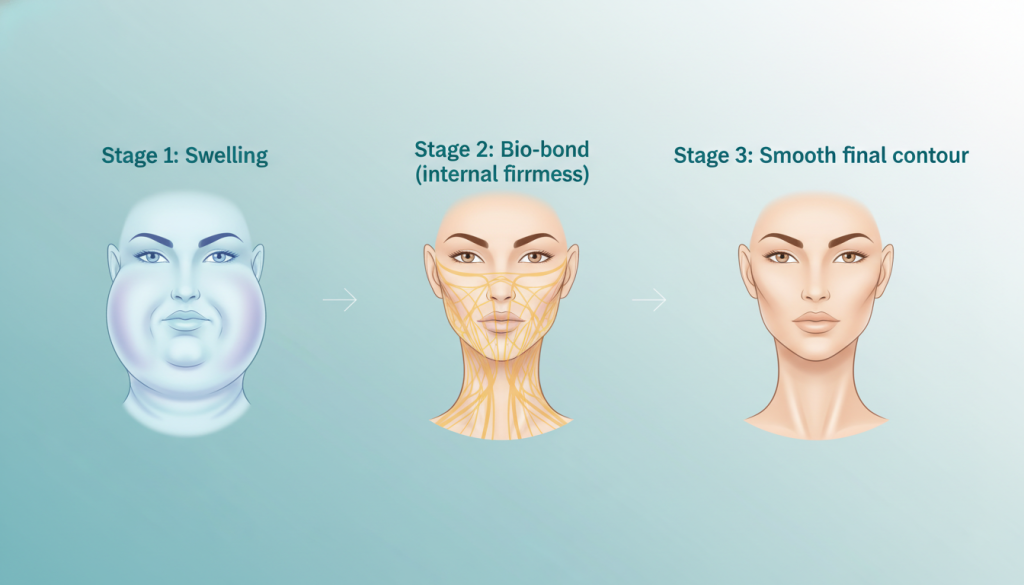
One of the most frequent concerns patients report during the 2-week to 3-month mark is the presence of ‘lumps’ or hardness under the skin. Clinically, this is known as a Bio-bond After Facial Liposuction.
Understanding the Healing Cascade
A bio-bond is a natural physiological response where the body produces collagen and inflammatory exudates to fill the empty space left by removed fat. It is a sign of internal scarring and tissue remodeling. If not managed correctly, these bonds can lead to visible irregularities or a ‘tethered’ appearance during neck movement.
| Recovery Phase | Tissue State | Recommended Management |
|---|---|---|
| Week 1-2 | Acute Inflammation / Edema | Compression garment (24/7), Cold compress, Rest |
| Week 3-8 | Fibrosis (Bio-bond) Formation | Gentle stretching, Radiofrequency (RF) therapy, Warm compress |
| Month 3+ | Remodeling and Softening | Light massage, Final evaluation of contouring results |
[[VISUAL_2]]
4. The Art of Moderation: Preventing the ‘Skeletonized’ or Aged Look
A common misconception among patients is that “more fat removal equals better results.” In reality, removing an excessive volume of fat can be detrimental to the patient’s long-term aesthetics. This is particularly relevant when discussing liposuction for specific body parts like the face and neck.
The Role of Residual Fat
A thin layer of subcutaneous fat is necessary to maintain skin elasticity and a youthful appearance. Over-resection leads to:
- Adhesion (Synechiae): The skin may adhere directly to the platysma muscle or even the bone, causing unnatural dimpling or a ‘stringy’ neck appearance.
- Accelerated Aging: Excessive fat loss reduces the structural support of the skin, leading to premature sagging and a ‘crepey’ texture.
At View Plastic Surgery, our surgeons emphasize the ‘selective removal’ approach, ensuring that the transition between the jawline and the neck remains smooth and anatomically natural.
5. Precision Diagnostics: The Utility of 3D CT and Ultrasound
One of the hallmarks of a premium clinic is the use of advanced imaging before the first incision is made. Precision diagnostics are the cornerstone of surgical safety.
- 3D CT Scans: These allow the surgeon to visualize the bone structure, the position of the hyoid bone, and the thickness of the soft tissue layers.
- Ultrasound Examinations: High-resolution ultrasound can differentiate between subcutaneous fat (which can be suctioned) and deep subplatysmal fat or enlarged salivary glands (which require different surgical approaches).
By identifying the exact location of nerve pathways and vascular bundles, surgeons can plan the cannula trajectory with mathematical precision, significantly reducing the margin for error.
6. Choosing a Reliable Clinic in Seoul: Checklist for International Patients
For those traveling to Korea, the decision-making process should extend beyond price points. Post-Op Care for International Patients must include a robust support system that accounts for the limited time patients spend in the country.
The Essential Safety Checklist:
- Board-Certified Anesthesiologists: Does the clinic have a full-time anesthesiologist monitoring vital signs during the procedure?
- Emergency Protocols: Is the facility equipped with UPS (Uninterruptible Power Supply) and advanced cardiac life support systems?
- Language Support: Are there professional medical translators available to explain complex post-op instructions?
- Virtual Follow-ups: Does the clinic offer digital consultations once the patient returns home to monitor the healing of bio-bonds?
If you are considering this procedure, we recommend a formal online consultation to discuss your anatomical goals and health history.
Conclusion
Double chin liposuction is a transformative procedure that can significantly enhance facial harmony. However, safety is not a byproduct of luck; it is the result of rigorous diagnostic protocols, surgical restraint, and dedicated post-operative management. By understanding the risks of hematoma, managing the lifecycle of bio-bonds, and choosing a clinic that prioritizes precision over volume, patients can achieve a sculpted, youthful jawline with minimal risk.
For more information or to speak with a specialist, contact us via WhatsApp today.