



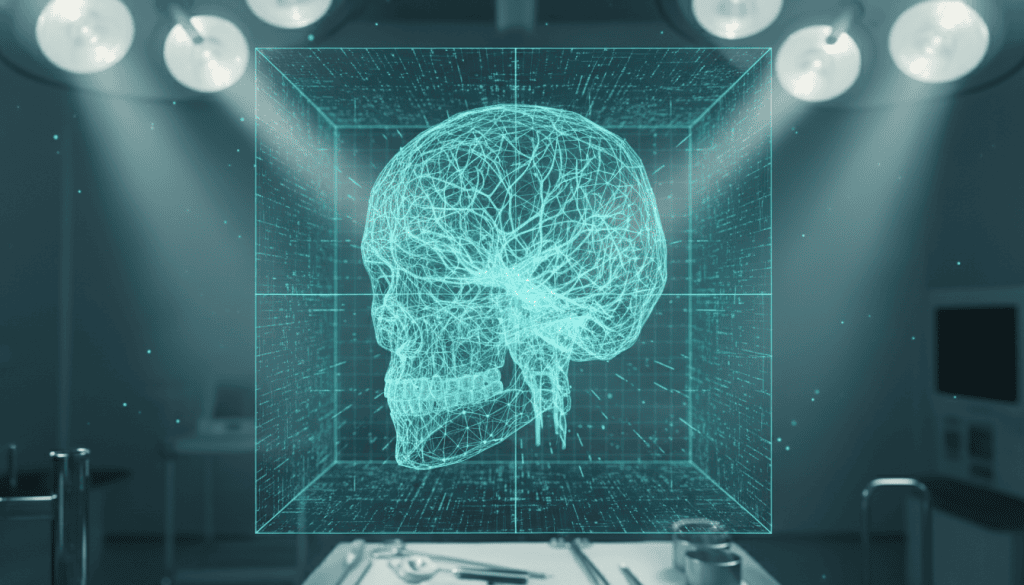
Digital dentistry is revolutionizing jaw surgery with 3D virtual planning and custom-printed plates. Surgeons now use AI in orthognathic surgery and CBCT scans to simulate results before the first incision, reducing operating time by 25% and significantly increasing aesthetic precision. In the modern era of maxillofacial reconstruction, 3D planned jaw surgery has transitioned from an experimental luxury to a clinical standard. This comprehensive guide explores how digital dentistry jaw correction techniques are reshaping patient outcomes and providing a level of predictability previously thought impossible.
Understanding the Paradigm Shift: What is 3D Jaw Surgery?
When patients ask what is 3d jaw surgery, they are referring to a sophisticated integration of radiological imaging, computer-aided design (CAD), and computer-aided manufacturing (CAM). Unlike traditional methods that relied on 2D cephalometric X-rays and manual dental model surgery on plaster casts, 3D planned jaw surgery utilizes a three-dimensional digital twin of the patient’s skull.
The Evolution from 2D to 3D
Historically, orthognathic surgery involved a degree of intraoperative ‘estimation.’ However, with digital dentistry jaw correction, the entire procedure is performed in a virtual environment first. This process defines what is 3d jaw surgery: a protocol where every osteotomy (bone cut) and movement is calculated to the sub-millimeter level before the patient even enters the operating room. This shift is a core component of the virtual surgical planning benefits that patients experience today.
The Role of AI in Orthognathic Surgery
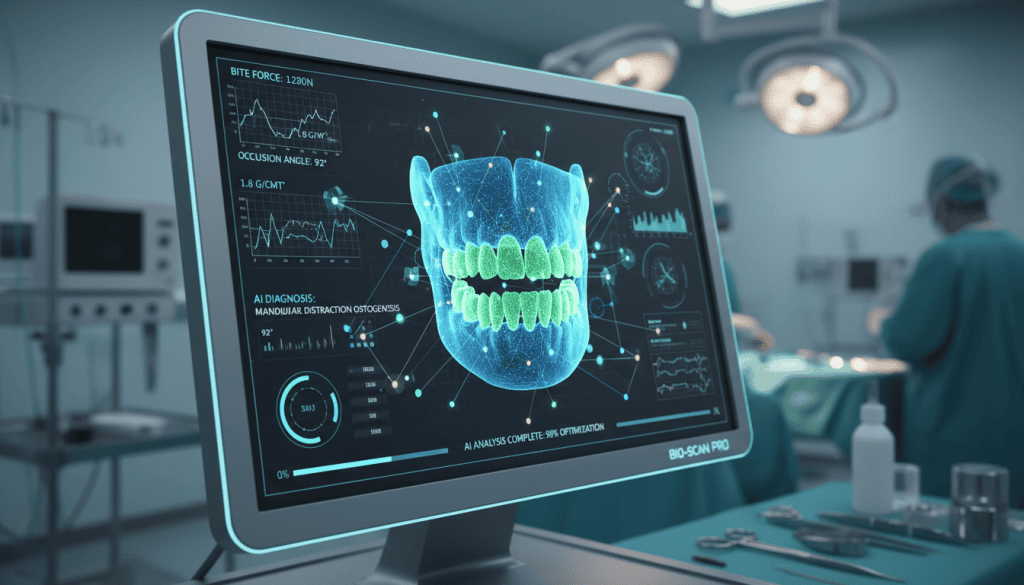
The integration of AI in orthognathic surgery has accelerated the diagnostic phase. Machine learning algorithms can now automatically segment CBCT scans, identifying nerves, tooth roots, and bone density variations with higher accuracy than human manual segmentation. This application of AI in orthognathic surgery ensures that the surgical plan avoids vital structures, minimizing risk during 3D planned jaw surgery.
Automated Cephalometric Analysis
One of the most significant virtual surgical planning benefits provided by AI in orthognathic surgery is automated cephalometric analysis. AI systems can identify hundreds of anatomical landmarks in seconds, allowing the surgeon to visualize how digital dentistry jaw correction will impact the soft tissue profile. Understanding what is 3d jaw surgery requires recognizing that AI is the brain behind the precision.
Virtual Surgical Planning Benefits: Why Precision Matters
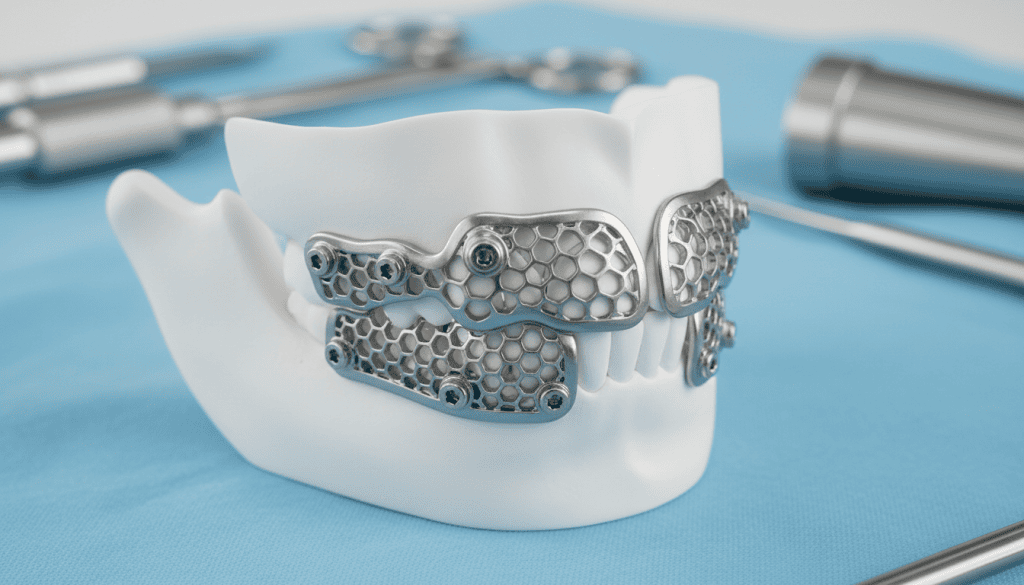
The virtual surgical planning benefits are extensive, ranging from surgical efficiency to enhanced patient safety. By utilizing 3D planned jaw surgery, surgeons can anticipate complications before they occur. The use of digital dentistry jaw correction software allows for the creation of 3D-printed surgical guides that snap onto the teeth or bone, ensuring the physical cuts match the virtual plan exactly.
| Feature | Traditional 2D Planning | 3D Planned Jaw Surgery (AI-Enhanced) |
|---|---|---|
| Imaging Source | Lateral Cephalograms (2D) | CBCT Scans (3D) & Intraoral Scans |
| Simulation Accuracy | Estimated via manual model surgery | Sub-millimeter precision via AI algorithms |
| Nerve Localization | Approximate position | Precise 3D mapping with AI safety zones |
| Hardware | Generic titanium plates bent by hand | Patient-Specific Implants (PSI) & 3D guides |
Deep Dive: Digital Dentistry Jaw Correction Techniques
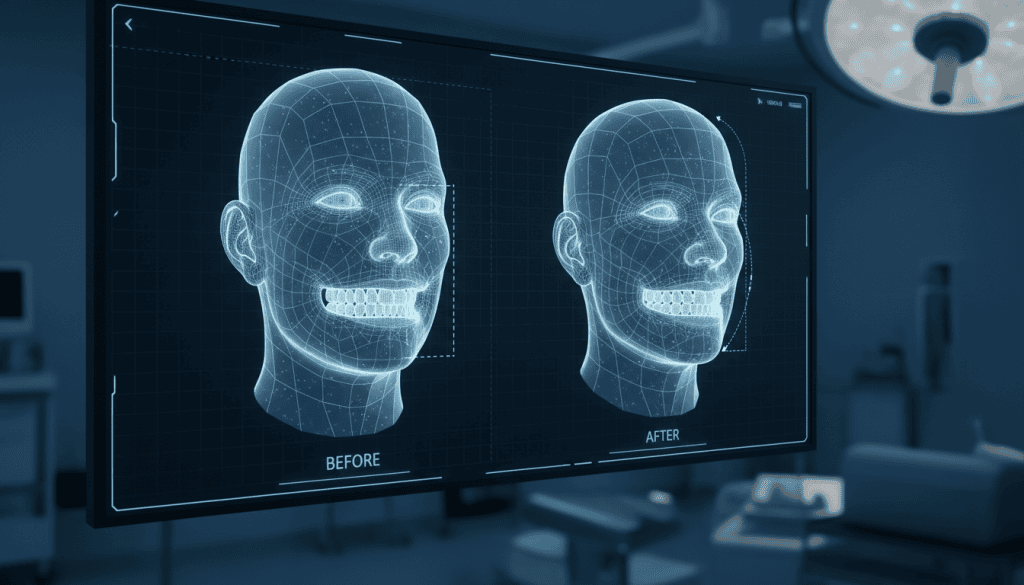
One of the most complex procedures facilitated by digital dentistry jaw correction is the counter-clockwise rotation of the maxillomandibular complex. This movement is often used at View Plastic Surgery’s jaw department to improve both airway volume and facial aesthetics. Without 3D planned jaw surgery, calculating the exact amount of bone removal required for such rotations was fraught with difficulty. Now, AI in orthognathic surgery allows for the simulation of soft tissue responses, showing how the lips and nose will change in relation to the bone movement.
Patient-Specific Implants (PSI) and 3D Guides
A primary component of what is 3d jaw surgery is the use of Patient-Specific Implants (PSI). Instead of the surgeon bending generic plates during the operation, 3D printing technology creates plates that fit the patient’s unique anatomy perfectly. This is one of the key virtual surgical planning benefits, as it eliminates the ‘trial and error’ phase of hardware fixation, further cementing the importance of 3D planned jaw surgery in modern clinics.
Strategic Implementation: Finding a Digital-First Practice
When seeking digital dentistry jaw correction, patients must ensure the clinic utilizes a full digital workflow. This includes intraoral scanning rather than messy physical impressions and the use of AI in orthognathic surgery for diagnostic verification. At View Plastic Surgery, we specialize in various types of jaw correction, ensuring that every 3D planned jaw surgery is tailored to the individual’s skeletal structure.
Questions to Ask Your Surgeon
- Do you use AI in orthognathic surgery to map the inferior alveolar nerve?
- Can I see a 3D simulation of my results during the initial consultation?
- Are the surgical guides 3D printed specifically for my case?
- How does digital dentistry jaw correction reduce my recovery time?
Understanding what is 3d jaw surgery involves knowing the technology used in the lab. A digital-first approach means less time in the OR and more time recovering with a predictable result. This is the essence of virtual surgical planning benefits.
The Clinical Workflow of 3D Planned Jaw Surgery
The journey of 3D planned jaw surgery begins with data collection. We utilize CBCT scans to capture bone structure and intraoral scanners to capture the dental occlusion. These datasets are merged to create a 3D model. AI in orthognathic surgery then assists the surgeon in identifying the optimal osteotomy lines. For patients with a protruding mouth, digital dentistry jaw correction helps determine the exact degree of retraction needed to achieve facial harmony.
[[VISUAL_4]]
Case Study Analysis: Precision in Complex Movements
Consider a case of severe mandibular retrognathia. Using 3D planned jaw surgery, we can perform a virtual BSSO (Bilateral Sagittal Split Osteotomy). AI in orthognathic surgery predicts the stress on the TMJ (temporomandibular joint) during this movement. This is one of the critical virtual surgical planning benefits: ensuring the functional health of the jaw while pursuing aesthetic goals. What is 3d jaw surgery if not the perfect marriage of function and form? Through digital dentistry jaw correction, we can ensure the teeth fit together perfectly (occlusion) while the facial profile is optimized.
Conclusion: Experience the Future of Surgery
Technology meets anatomy for superior results. 3D planned jaw surgery, supported by AI in orthognathic surgery, represents the pinnacle of modern maxillofacial care. By leveraging virtual surgical planning benefits and digital dentistry jaw correction, surgeons at View Plastic Surgery provide patients with safety, precision, and beauty. Now that you understand what is 3d jaw surgery, take the next step toward your transformation.
Ready to see your future? Contact us via WhatsApp or book your 3D digital consultation today.