




Discover why Revision Rhinoplasty Cost in Korea is higher. Learn about scar tissue, rib cartilage grafting, and choosing a secondary rhinoplasty specialist.
When patients consider a second procedure after an unsatisfactory first surgery, the primary concern often centers on cost of revision rhinoplasty. It is common to find that a secondary surgery can be 1.5 to 3 times more expensive than the initial one. While this price jump can be surprising, it is fundamentally tied to the fact that a revision is not just a ‘retake’—it is a complex, high-difficulty reconstructive procedure requiring exceptional anatomical expertise and precision.
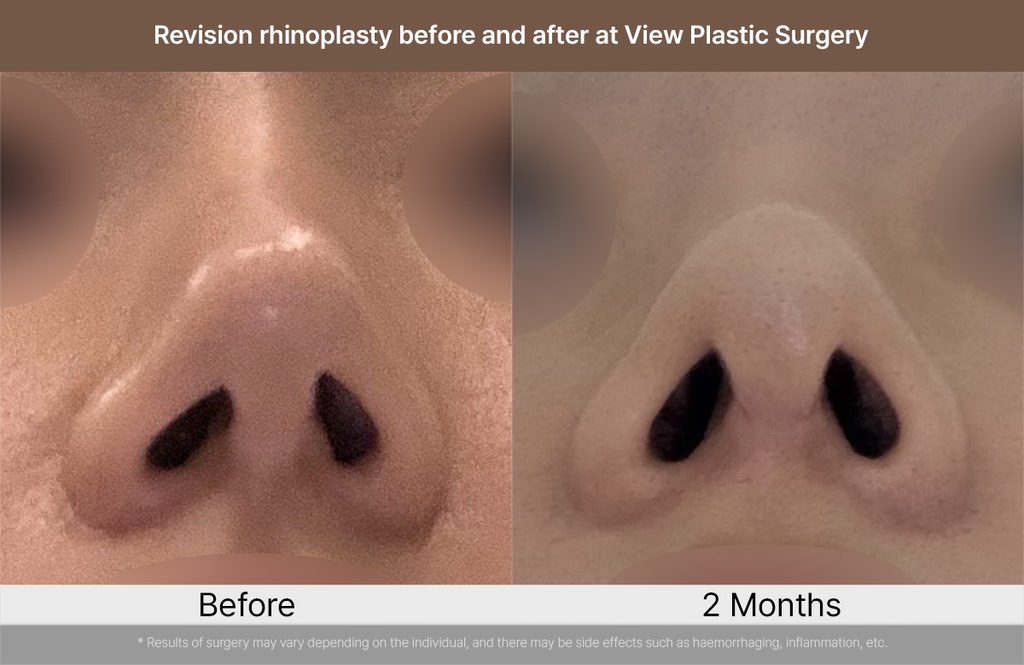
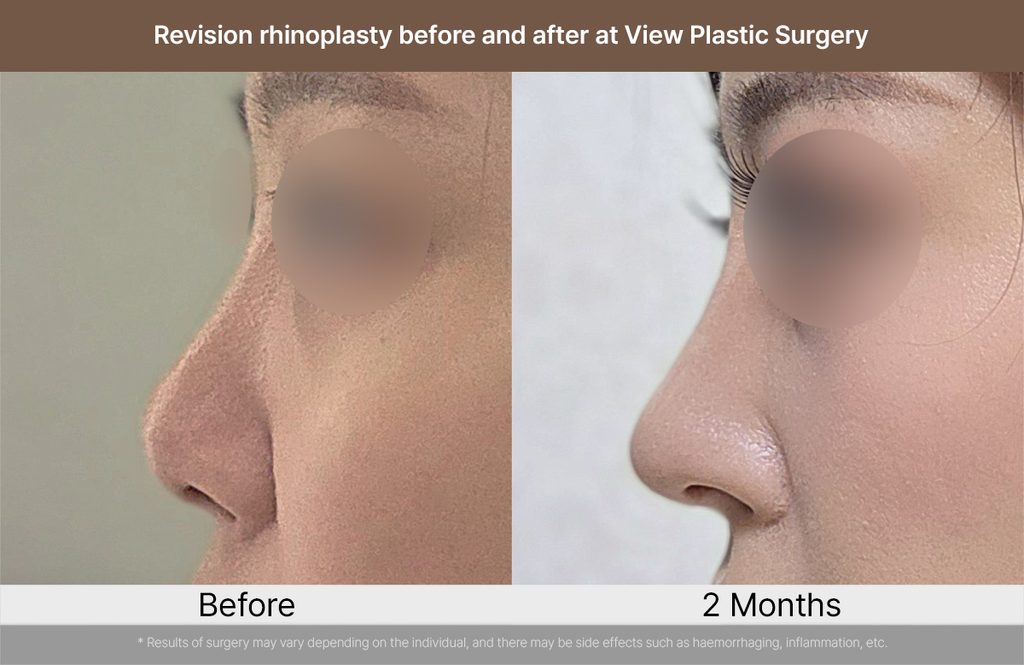
At VIEW Plastic Surgery, we believe in transparency. Understanding Why Revision Rhinoplasty Is Expensive involves looking beneath the surface at the unique medical challenges presented by a nose that has already undergone surgery. Korea plastic surgery also requires careful consideration of these factors when planning revision procedures. From managing scar tissue to performing Rib Cartilage Revision Rhinoplasty, the resources and skills required are on a completely different level than primary cases.
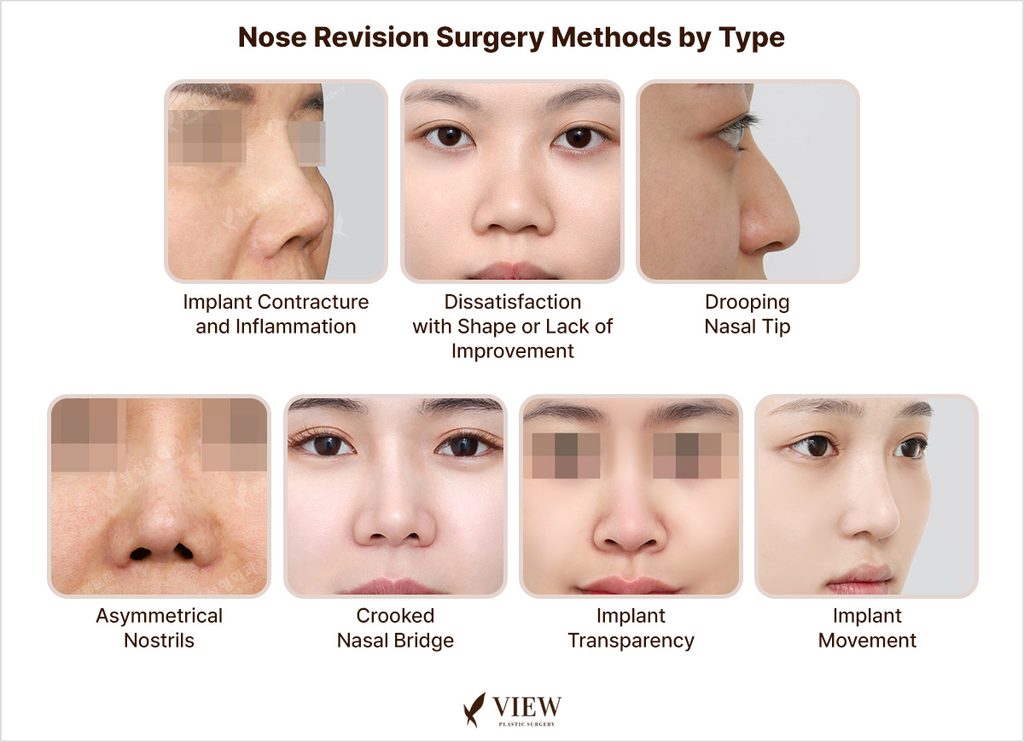
1. The Complexity of Dissecting Fibrotic Scar Tissue
The single greatest challenge in a secondary procedure is managing scar tissue During a primary rhinoplasty, a surgeon works with “virgin” anatomy—clean tissue planes where layers of skin, fat, and cartilage are easily identifiable and separable. However, once the nose has been operated on, body’s healing response creates dense, fibrotic adhesions.
This adhesions often fuses skin directly to underlying cartilage or old implants (like silicone). Safely dissecting these layers without causing skin necrosis or damaging the blood supply requires a Korea Secondary Rhinoplasty Specialist to work with extreme caution. Simply reaching the structural framework can take as long as a complete primary surgery, significantly increasing total operation time and, consequently, the increasing the cost of revision rhinoplasty.
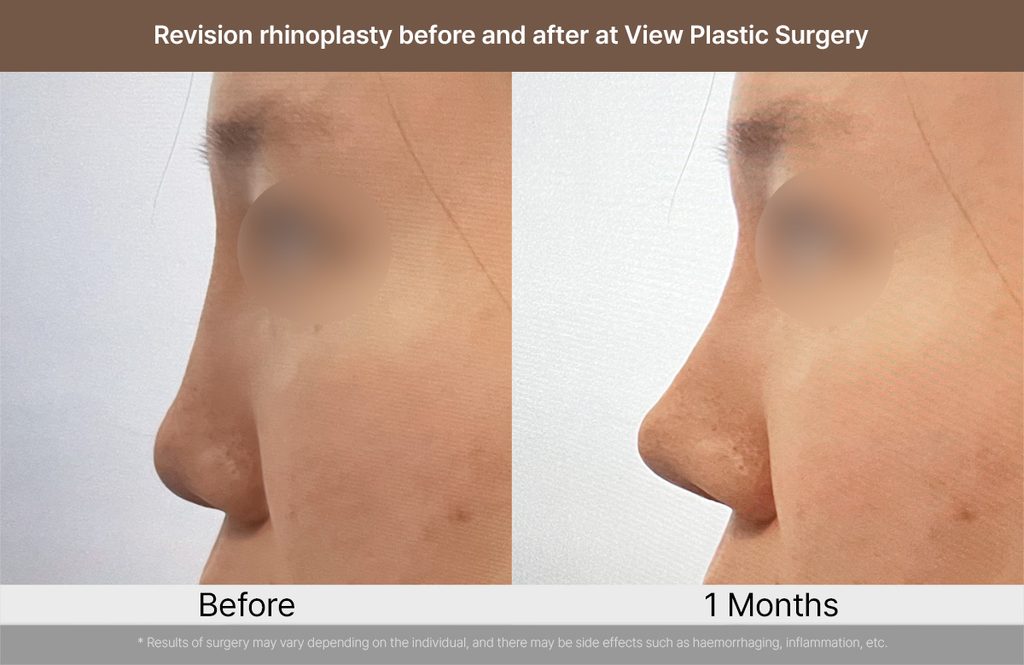
2. Structural Reconstruction and Rib Cartilage Harvesting
In many revision cases, the internal support system—the septal cartilage—has already been depleted or damaged. To restore a collapsed bridge or a drooping tip, a surgeon must find a new source of strong, durable material. This is where Rib Cartilage Revision Rhinoplasty becomes essential.
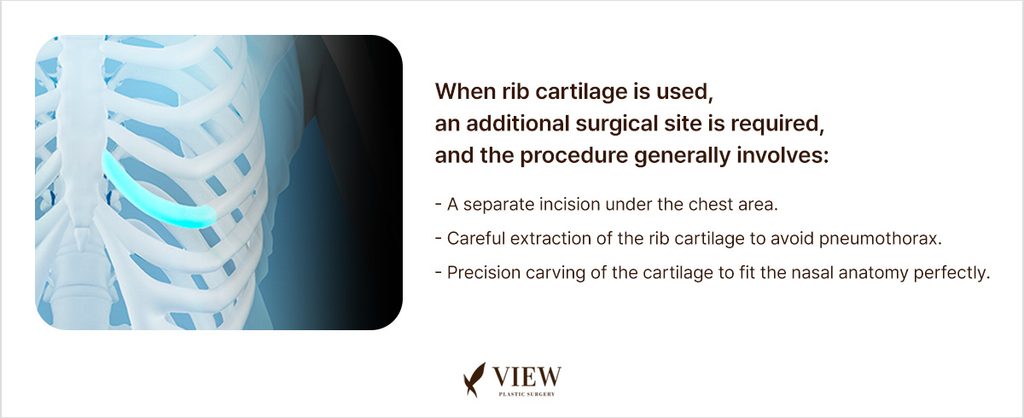
Using autologous rib cartilage (taken from the patient’s own body) provides the most stable framework for long-term results. However, this adds a second surgical site. The process involves:
- A separate incision under the chest area.
- Careful extraction of the rib cartilage to avoid pneumothorax.
- Precision carving of the cartilage to fit the nasal anatomy perfectly.
The inclusion of Rib Cartilage graftrequires more surgical staff, longer anesthesia time, and advanced technical skill, all of which are key factors in Why Revision Rhinoplasty Is Expensive. This material is the “gold standard” for ensuring this becomes your final surgery.

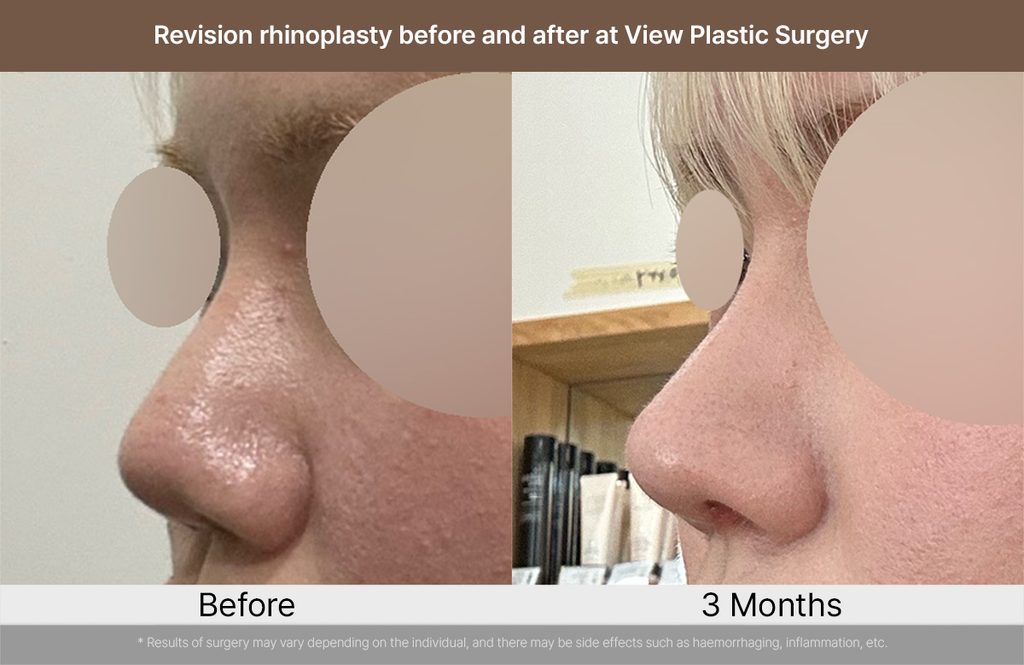
3. Balancing Aesthetic Goals with Functional Restoration
A Korea Secondary Rhinoplasty Specialist rarely focuses only on how the nose looks. Many revision patients suffer from breathing issues caused by previous over-resection, valve collapse, or a deviated septum. A successful revision must solve these functional problems while simultaneously delivering the desired aesthetic outcome.
This “functional-aesthetic” approach often requires 3D-CT imaging and a multidisciplinary understanding of ENT surgeon’s (Ear, Nose, and Throat) principles. Correcting internal obstructions while refining external bridge line adds layers of complexity that primary surgeries typically do not encounter. For more details on surgical techniques used, you can explore our nose surgery procedures page.
| Feature | Primary Rhinoplasty | Revision Rhinoplasty |
|---|---|---|
| Surgical Goal | Shape Enhancement & Line Creation | Reconstruction, Deformity Correction & Line Refinement |
| Primary Materials | Septal/Ear Cartilage | Rib Cartilage, Fascia, or Donor Tissue |
| Average Duration | 1.5 – 2 Hours | 3 – 5+ Hours |
| Anatomy Condition | Intact, predictable layers | Distorted by scar tissue |
4. Why You Need a Korea Secondary Rhinoplasty Specialist
Choosing a surgeon based on the lowest revision rhinoplasty cost offers is a high-risk strategy. A failed revision often leads to 3rd or 4th surgeries, which are exponentially more difficult. Korea plastic surgery for revision rhinoplasty requires careful consideration of the surgeon’s experience and expertise. A true Korea Secondary Rhinoplasty Specialist possesses the clinical experience to handle contracture, infection, and severe structural collapse.
At VIEW Plastic Surgery, our dedicated revision team utilizes state-of-the-art diagnostic tools to map out the internal damage before the first incision is made. This meticulous planning is the best way to ensure your second surgery is truly your last. To start your journey, you can request a personalized consultation with our experts.