



1. Zygoma Reduction Seoul: Achieving a Slimmer and Softer Facial Profile
The aesthetic ideal in many cultures has shifted toward a more balanced, heart-shaped, or oval facial contour. For many individuals of East Asian descent, as well as those with genetically prominent malar complexes, the zygomatic bone (cheekbone) can project laterally or anteriorly, creating a harsh or aged appearance. Cheekbone Reduction Surgery Korea is not merely about size reduction; it is an architectural reimagining of the mid-face.
The Aesthetic Evolution of the Mid-Face
Historically, facial contouring focused on aggressive bone shaving. However, modern Facial Contouring Surgery Seoul prioritizes structural harmony. By utilizing the 3D rotation technique, surgeons at View Plastic Surgery can reduce the bizygomatic width (the distance between the widest parts of the cheekbones) while maintaining a youthful volume in the anterior cheek (the ’45-degree’ angle). This ensures that the face does not appear flat but rather more three-dimensional and softened.
2. The Surgical Technique: Effective Cheekbone Rotation and Reduction
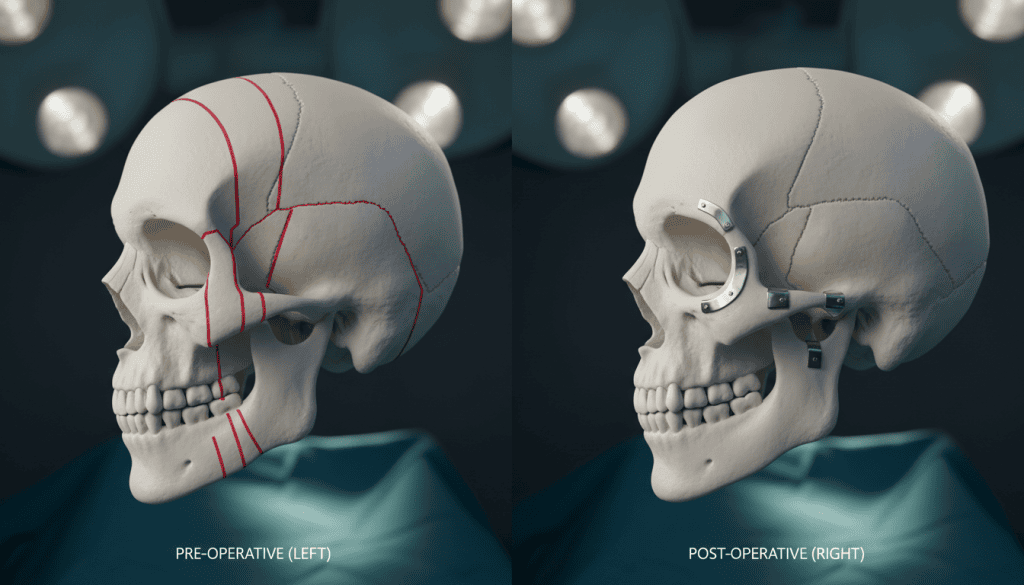
Effective zygoma reduction involves complex maneuvers of the zygomatic body and the zygomatic arch. At View Plastic Surgery, we employ the “High-L Osteotomy” and 3D rotation to achieve maximum narrowing without compromising structural integrity.
High-L Osteotomy vs. Low-L Osteotomy
The clinical efficacy of the procedure depends heavily on the osteotomy line. A High-L Osteotomy is performed higher up on the malar bone, allowing for a larger segment of the bone to be repositioned inward. This is particularly effective for patients with significant lateral protrusion. Conversely, a Low-L Osteotomy may be used for subtle refinements. Research indicates that the High-L approach provides superior results in narrowing the overall width of the face.
| Feature | High-L Osteotomy | Traditional Shaving |
|---|---|---|
| Primary Goal | Structural repositioning & width reduction | Surface volume reduction |
| Width Reduction | Significant (up to 10-15mm) | Minimal (3-5mm) |
| Sagging Risk | Low (with upward fixation) | Moderate due to tissue detachment |
Preventing Malar Sagging
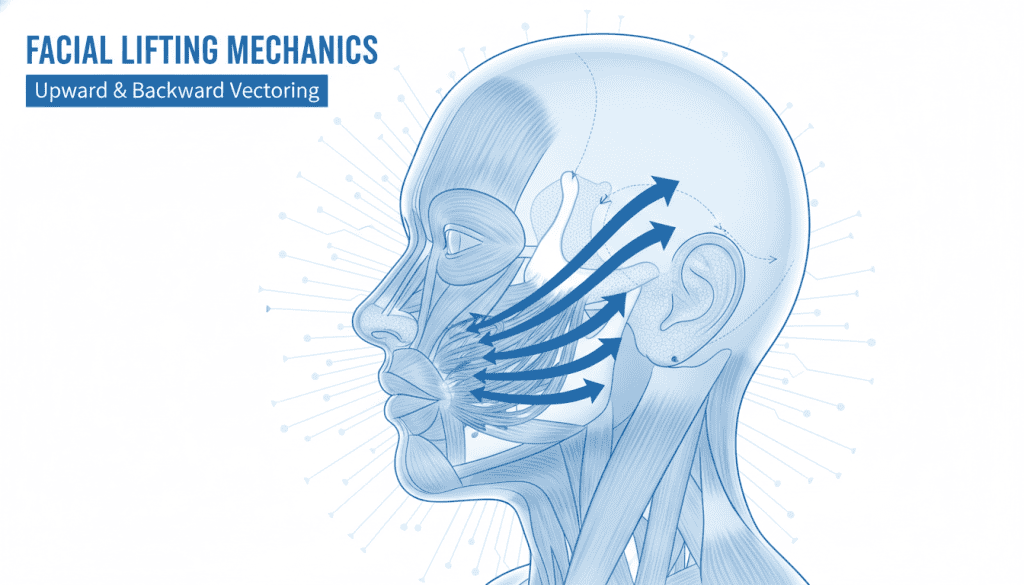
One of the primary concerns for patients undergoing Best Zygoma Surgeon Korea searches is postoperative skin sagging. This occurs when the soft tissue is detached from the bone without proper re-suspension. At View, we utilize “Malar Suspension” and tight subperiosteal dissection. By rotating the bone segments superiorly and posteriorly before fixation, we create a lifting effect on the mid-facial soft tissues.
3. Why Precision Matters: 3D CT Diagnostics for Safe Zygoma Reduction Seoul
Safety in facial contouring begins long before the first incision. The use of 3D Computed Tomography (CT) allows for a high-fidelity mapping of the patient’s craniofacial anatomy. This includes identifying the exact thickness of the cortical bone and the precise pathway of the zygomaticofacial nerve.
Virtual Surgical Planning (VSP)
Using the data from 3D CT scans, our surgeons can perform a virtual simulation of the surgery. This allows for the calculation of the exact degree of rotation required to achieve symmetry. In cases where the patient is also considering V-line surgery, VSP ensures that the new cheekbone position harmonizes perfectly with the refined chin and jawline.
[[VISUAL_2]]
4. Designing Harmony: Balancing the Cheekbones with Your Facial Features
A successful zygoma reduction is not about making the face as small as possible; it is about proportions. The “Golden Ratio” in facial aesthetics suggests that the mid-face width should be approximately five times the width of one eye. Our surgical design process considers the relation between the zygoma and other facial landmarks.
Synergy with Lower Face Contouring
Many patients find that reducing the zygoma alone can highlight a wide lower jaw. Therefore, we often recommend a holistic approach. For instance, combining cheekbone reduction with square jaw surgery creates a seamless transition from the mid-face to the mandibular angle, resulting in the coveted ‘V’ or ‘slender U’ shape.
5. Recovery Timeline: Managing Swelling and Aftercare in Korea
The recovery from zygoma reduction is a multi-phase physiological process. Understanding this timeline is essential for patient peace of mind.
- Days 1-3: Peak inflammatory phase. Swelling is at its maximum. We utilize Hilotherapy (controlled cooling) to manage edema.
- Days 7-10: Major swelling begins to subside. Stitches in the sideburn area (if any) are typically removed.
- Weeks 2-4: Most social activities can be resumed. Residual swelling may still be present in the malar area.
- Months 3-6: Bone healing (osteointegration) is largely complete. The final contour becomes visible as soft tissues settle.
View’s Specialized Aftercare System
To expedite healing, View Plastic Surgery provides a dedicated recovery center. This includes high-frequency ultrasound treatments and deswelling laser therapy (Healite II), which stimulate lymphatic drainage and cellular repair. For international patients, our dedicated WhatsApp support is available 24/7 to answer post-operative queries.
6. Trust the Experts: “Safety-First” protocol
Choosing a clinic for zygoma reduction Seoul requires more than just looking at before-and-after photos. Security and safety protocols are paramount.
Anesthesiology and Emergency Readiness
We employ full-time, board-certified anesthesiologists who monitor patients throughout the entire duration of the general anesthesia. Our facility is equipped with Uninterruptible Power Supplies (UPS) and advanced emergency kits to handle any rare complications. For those ready to begin their journey, we invite you to book a personalized online consultation with our facial contouring specialists.